
To answer this, I thought of how people interact with video games today.
Usually seated in a couch, voice chat with friends, using a controller they’re familiar with and being a safe distance from the screen.
I’ve concluded that for VR to become a widespread entertainment device, it should borrow some of the same principles.
1. Ergonomics
Anything that goes on your face, has to be comfortable.
Think about buying a new pair of sunglasses, only to learn 2 hours later that they’re too tight on your jawline. An uncomfortable experience can ruin a great product.
Battery life, heat, weight, build quality, price — all of these must be considered when designing for the human face. The last thing we need is another Samsung Galaxy scenario, but this time on people's faces.
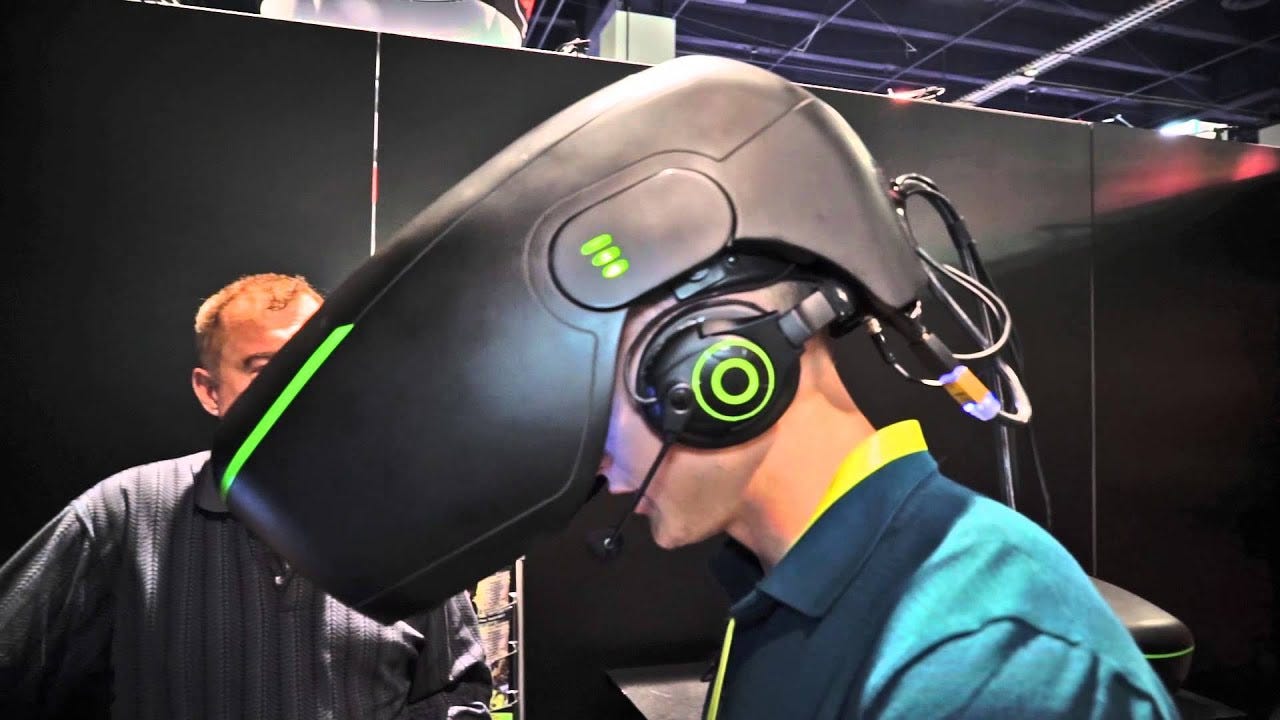
Billionaire Alki David trolling at CES with a cute VR helmet
2. Network Effects
Games like Fortnite and Animal Crossing are transcending play, becoming social platforms in their own right.
In April 2020, players of Fortnite logged in to watch a 3D digital avatar of Travis Scott teleport around a beach, tower against a blood-red sky, and launch audience members into outer space. It was all part of a 10-minute virtual concert, the game’s biggest event ever, and 12.3 million players were reported to have tuned in. The Travis Scott attendance surpassed the previous Fortnite milestone for the over 10 million players who logged in for an in-game Marshmello DJ set in 2019.
These artificial experiences become more engaging than anything in the real world!
3. Health Impacts
Virtual Reality is the first device that offers auditory + visual immersion.
Unfortunately this has also tacked on some new problems we’ve never dealt with before.
“Many people report headaches, eye strain, dizziness and nausea after using the headsets. Such symptoms are triggered by the VR illusion, which makes the eyes focus on objects apparently in the distance that are actually on a screen just centimetres away.”
– Science Focus
Personally, I can relate to this the most.
Although I love VR and the incredible use cases, the screen is far too close to my face and my eyes can not handle the strain.
Battery life, heat dispersion, weight, materials — all of these are extremely critical to creating a safe experience for VR.
Conclusion
Even today with all the unknown health risks, the number of VR users are growing and people are enthusiastic about this technology.
Eventually the costs of hardware and manufacturing will decrease, thus bringing about affordable consumer level VR headsets, on that day we should ask ourselves: will our virtual memories becomes greater than our earthly ones?






