
If you've played any kind of fleet game then you know your supply lines matter to keep a campaign going. Far From Home is no different; your ships need fuel to move around. Managing that fuel becomes a critcal factor in your success and continuing ability to find valuable ore and resources from the game. However, Far From Home isn't as simply as stopping at a fuel pump and filling up. A player actually has to worry about three different metrics to keep going smoothly mission after mission. This has become a key factor in the game's recent preseason event, clearly separating players into different levels of fleet expertise.
Understanding the Fuel Gauges
Each ship has three metrics that are fundamental to its use: Repair, STL, and FTL. The first one, repair, is as simple as it sounds; you have to maintain your ships which suffer wear and tear with each trip out into space and return. The wear, if ignored, ends up making your ships useless if ignored. And it gets more costly the longer you wait. Fortunately, this metric is easy to deal with since player just pays direct game currency, Soren, for each restoration.
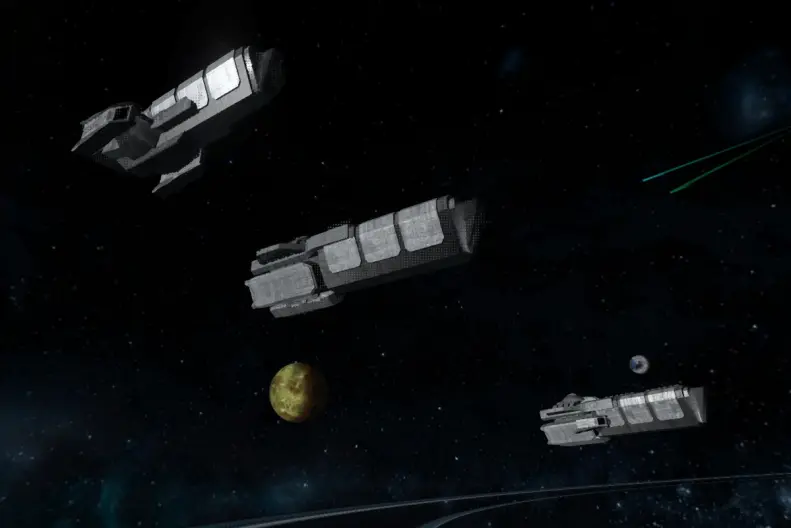
The second two are tougher. First off, there is no magic fuel pump. You have to refine different types of ice mined from asteroids to then secure the elements needed for a given fuel. Then the elements have to be refined to produce the actual fuel units. Planning ongoing production of this two-step process quickly becomes apparent when your fleet starts running down. Again, waiting long periods ends up costing much more, with T3 ships being complete gas hogs, and small T1 ships being easy, low-cost and nimble.
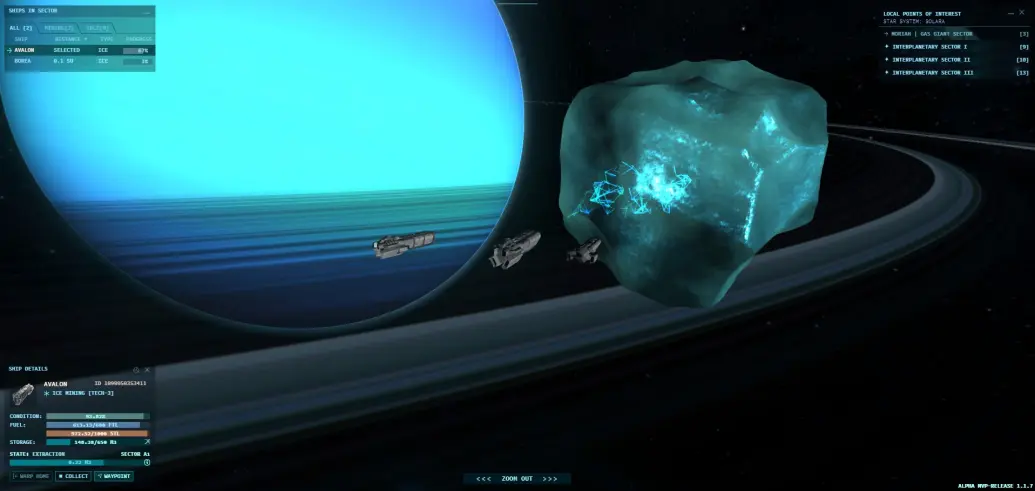
As can be seen in the screen above, fuel status for each ship is displayed in the bottom right corner of the star system screen tab when in-game. The top bar is repair condition, and the second two are your fuel types. FTL is for long warm jumps. This is essential to get from the hanger station to your system destination. Once in the system, you then need sufficient STL for local drive and travel to the asteroid target itself where you do your mining. As noted above, one of your mining targets is fuel for your fleet, so ice mining ships are an essential tool to be able to function in Far From Home. Without them, you can't mine ice for the fuel elements needed. The only other options is to buy fuel or the elements for it on the secondary WAX market (NFTHive, AtomicHub, NeftyBlocks etc.), which can get quite expensive.
Mining Fuel
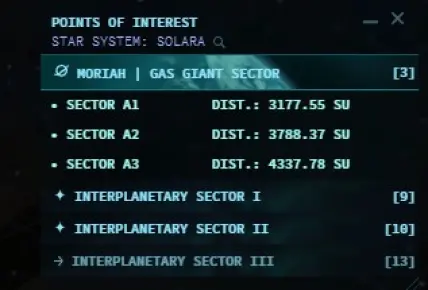
Of course, with everyone needing fuel, mining the specific asteroids can be a bit of a chase. There are only certain ice asteroids that help. Each asteroid category is identified as a type and becomes visible as a Waypoint once your ice mining ship is inside a given system. You press the Waypoint button on the bottom left panel, and on the right side of the screen will appear all the ice asteroids in that system. They will be labeled with an asteroid ID and a Type description. For warp fuel, Type IV Fusion Ice asteroids are key. For short term local fuel, Type VI Azure ice are desired. Gas ice asteroids can help, but the prior two are the best.
Competition
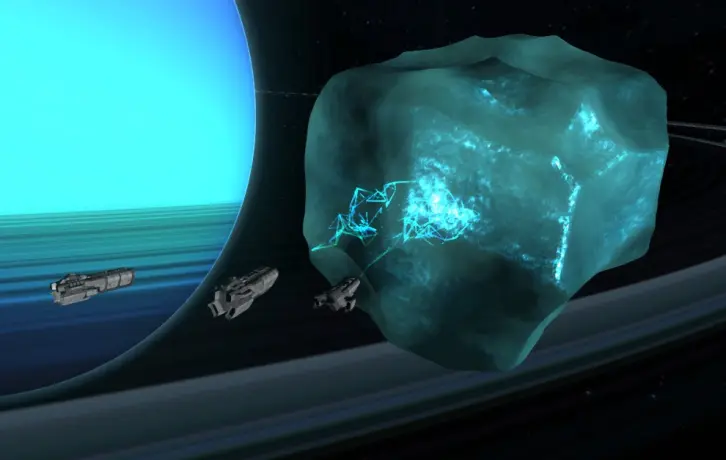
Don't be surprised if, upon arriving at a valuable asteroid, you find a crowd. The fuel-generating targets are in high demand and constantly being mined. If you find a new, untouched ice asteroid, it's your lucky day. The high majority of Type IV and VI ice asteroids tend to be in Gas Giant Sector, but I've found untouched asteroids occasionally as far out as Sector I, with far less traffic and more harvesting results.
How much ice your bring back impacts your ability to refine and stay fueled. A fleet's capability really depends on the consistent work of an ice mining ship, which usually works out to a ratio of 1 T2 Borea to every three or four mining ships if rationed carefully. Anything more than that, and you're going to end up continually in deficit. A T3 Avalon ship obviously supports more, being three times the harvesting capacity of a Borea. However, the T3 takes much longer to mine and harvest, so the window in between returns can be dry points too. Having a combo of both ice mining ships is ideal.
Types of Fuel
To make matters even more interesting, there are two fuel categories based on ship type.
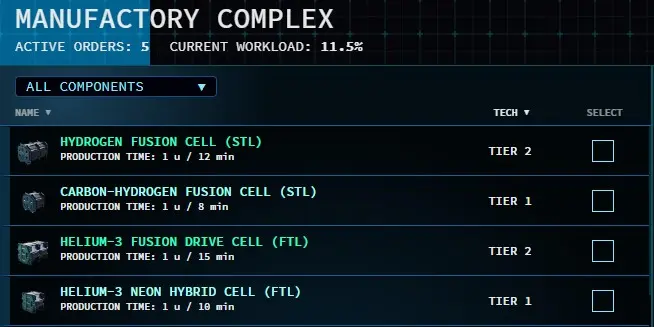
Tech 1 or T1 ships require Tech 1 FTL and STL fuel to operation. Tech 2 and Tech 3 ships need Tech 2 fuel. They cannot use Tech 1 fuel at all and vice versa. Tech 1 fuel is easier to find, and less costly to refine, but it does no good if your fleet is entirely bigger ships. Again, fleet management and planning has a big impact on a player's gaming success in Far From Home.
So, happy travels, keep the tank filled up, and watch out for heat leeches! (Oh wait, that's a different game, lol...)

Other Articles on WAX's New Intersteller Game, Far From Home, and How to Play
See here for valuable quick start guides and how to get into space smart instead of being confused:
- Getting Started (Far from what?)
- Ship Navigation (how do I steer this darn thing?!?)
- Market Linking for Economy Players (get your sales going!)
Where to find ships on the Wax Network:
- How to get started with Wax
- Wax markets: AtomicHub, NeftyBlocks, NFTHive (buying ships and resources)






