
Eat the seeds. They are nutritious, low calorie, high fiber, and eating them with the shells will give you extra fiber.
My usual winter squash is acorn squash and I always roast the seeds. So when I cut a fresh pumpkin for the Thanksgiving Day Pumpkin Pie, I just had to roast the seeds. Here is what I did.
Step 1 – Soak the Seeds
I start by soaking the seeds in salt water at least 7 to 8 hours.
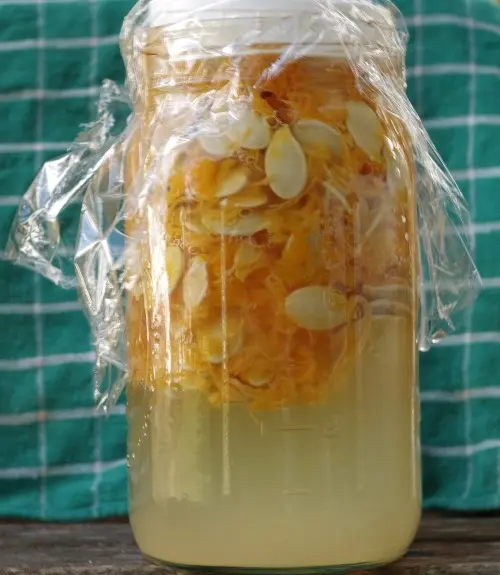
These seeds have been soaking at room temperature for a couple of days.
Here the seeds are still attached to the membranes. I put the seeds in a quart jar with 2 tablespoons of salt, filled the jar to the brim with water, and stirred to mix. The seeds float so I put an upside-down lid on the top to hold them under the water.
Step 2- Drain the Seeds
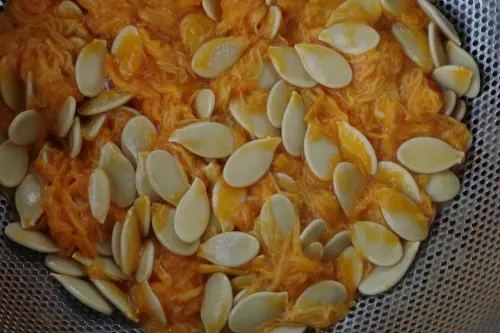
I dumped the seeds with membranes into a colander to drain and separated out the seeds. (Membranes went into the compost pile.) I rinsed the seeds with water and let the water drain off.
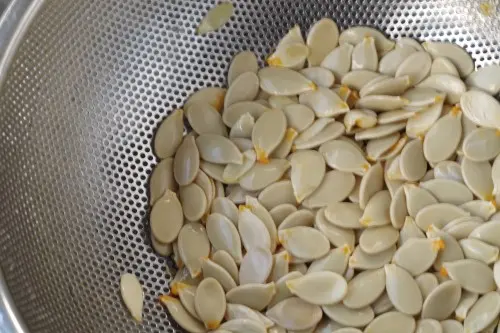
Step 3 – Roast the Seeds
Everything up to this point is the way I prepare my acorn squash seeds. Since pumpkin seeds are larger, I increased the oven temperature to 350˚ F/ 177˚ C (from 325˚ F/ 163˚ C that I use for acorn squash.)
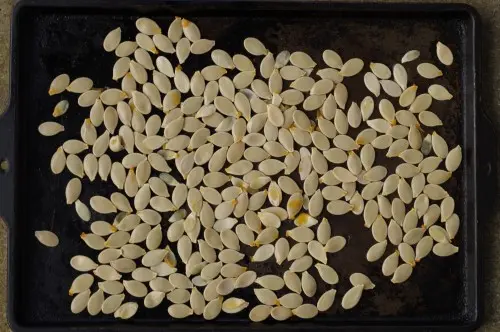
Preheat the oven to 350˚ F/ 177˚ C. Spread seeds in a single layer on a cookie sheet and roast for 25 to 30 minutes. The roasted seeds usually come away from the pan with little sticking so I didn’t bother oiling the pan first.
The Results
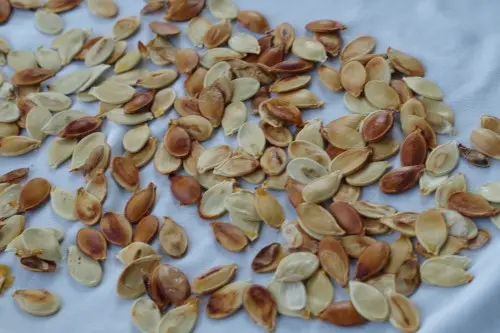
The seeds have just the right amount of salt. However, they didn’t toast uniformly. I had seeds ranging from dark golden brown to pale ivory. The dark golden brown seeds are the crunchiest, the pale seeds are a bit chewy, but still good. Note to self – periodically stir the pumpkin seeds while roasting!
Here are some links to pumpkin seed nutrition info.
https://nutritiondata.self.com/facts/nut-and-seed-products/3141/2
https://www.medicalnewstoday.com/articles/303864#nutrition
https://www.healthline.com/nutrition/can-you-eat-pumpkin-seed-shells#preparation






