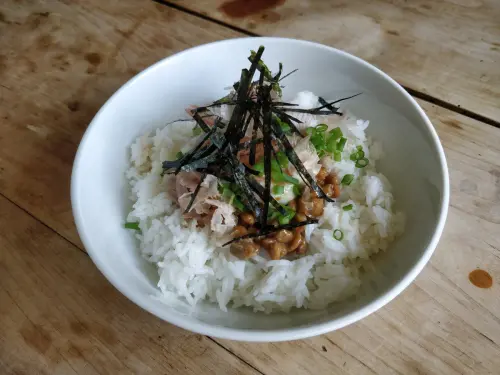
This is a Japanese breakfast food that's satisfying, but won't make you feel bloated -- something typical of Japanese breakfast foods. If the star of the show is natto, then the onsen tamago deserves an Oscar for best supporting actor.
"Onsen tamago" means "hot spring egg", which is how they were originally cooked. If you don't have a hot spring in your home, no worries because there's a way to make them on the stove. They are soft, much like poached eggs, but in my opinion easier to make.
Ingredients
- 1 bowl of fresh rice
- 1 pkg natto
- 1 egg --We're going to make 4 in this recipe because it's easier to get the temperature right. You can eat the others later with some soy sauce and green onions.
- katsuobushi
- nori
- chopped green onions
- soy sauce
Method
- Put 5 cups of water in a pot and bring it to a boil.
- Once boiling, turn off the heat and add 1 cup of cold water.
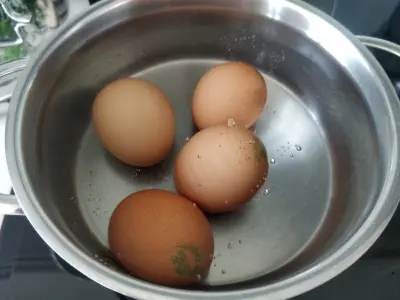
- Gently lower 4 eggs into the water with a spoon.
- Cover and let sit for 18 minutes.
- Remove the eggs and let them sit for another 5 minutes.
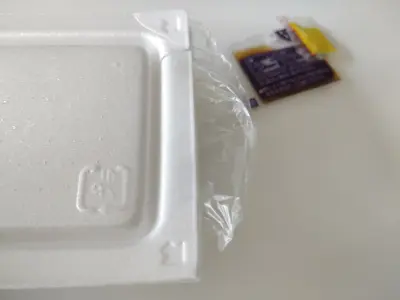
- Open the package of natto and remove the sauces that come with it. (Typically dashi soy sauce and karashi -- hot mustard.)
- To remove the plastic film on top, pull a bit of it out so it hangs over the side.
- Hold the lid down and pull the film the rest of the way out.
- Add the sauces that come with the natto and stir it with chopsticks until in becomes frothy.
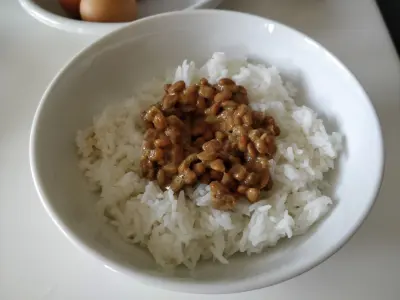
- Put fresh rice into a bowl and make a well in the middle.
- Add the natto into the well and make another well in the natto.
- Gently crack an onsen tamago into the natto well.
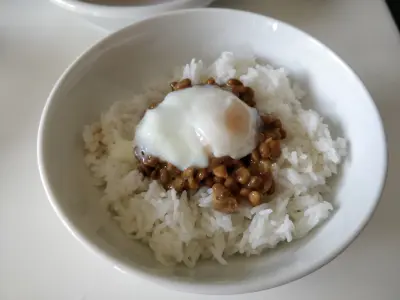
- Add a splash of soy sauce onto the egg.
- Top with katsuobushi, chopped green onions and some nori cut into thin strips.
If you have this with miso soup, you'll be so Japanese that <insert own Japanese quirk>.
The extra onsen tamago can be kept in the fridge and warmed later using slightly hotter than lukewarm water. Try not to cook them too much.
Itadakimasu!






