
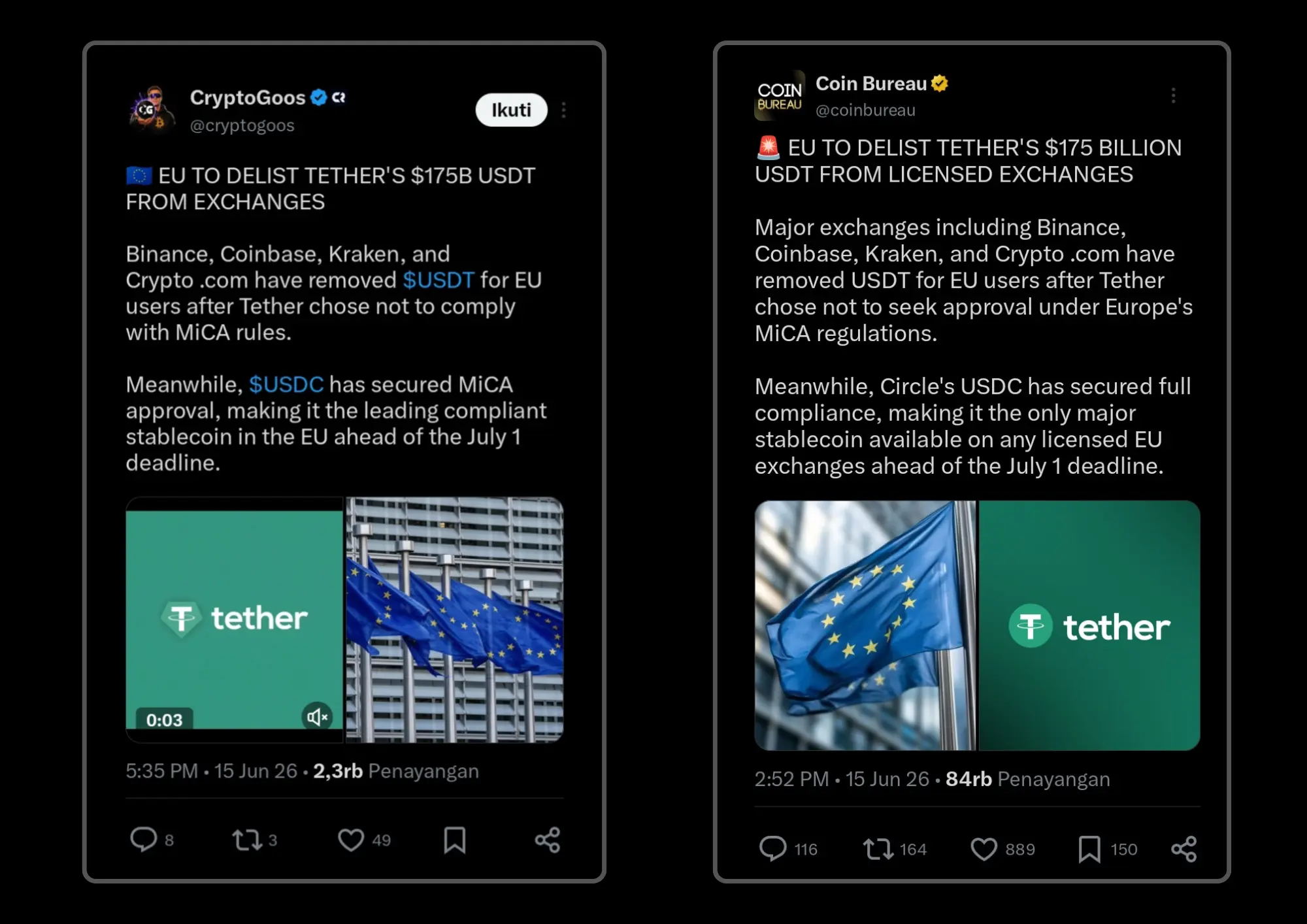
The global cryptocurrency market is currently processing a major regulatory shift coming straight out of Europe. Under the newly implemented Markets in Crypto Assets framework commonly known as MiCA, stablecoin issuers are now required to meet strict licensing standards. Because Tether decided not to pursue this specific compliance path, top tier crypto exchanges including Binance and Coinbase had to take swift action by removing or restricting USDT access for their European client base.
This structural change immediately triggered a fascinating wave of data across derivatives platforms. Looking closely at the Tether OI Weighted Funding Rate on Coinglass, we can see that the funding rate took a sharp dive straight into deep negative territory. This clear visual trend indicates that short sellers rapidly entered the market during the peak of the announcement due to widespread anxiety regarding a potential de pegging scenario.
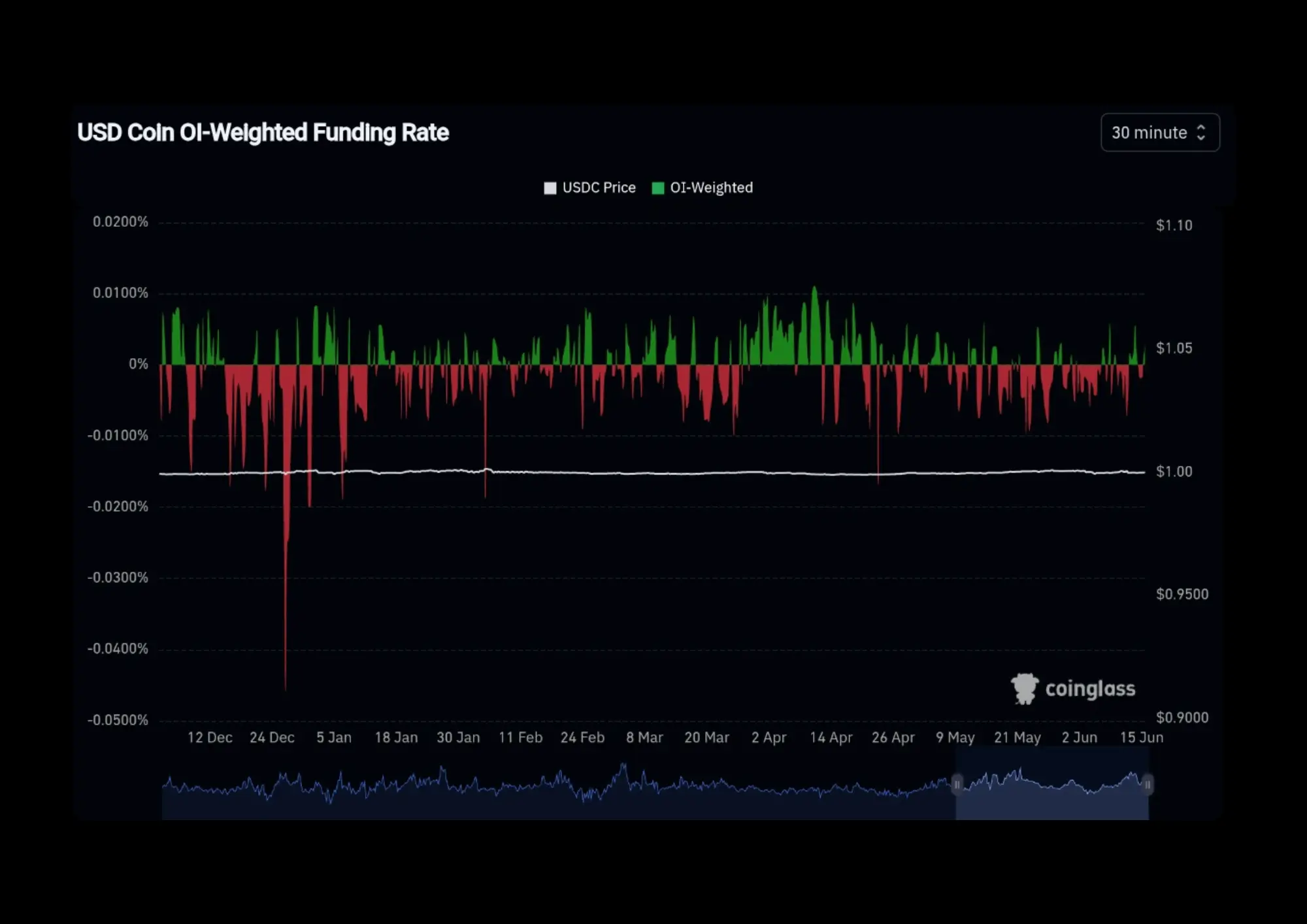
 Interestingly, the broader market sentiment showed a completely different face when examining competing assets. The USD Coin OI Weighted Funding Rate chart shows that USDC funding rates maintained a highly stable position within the positive green zone. This divergence proves that while futures traders were busy shorting or fleeing Tether, their confidence in USDC remained completely intact.
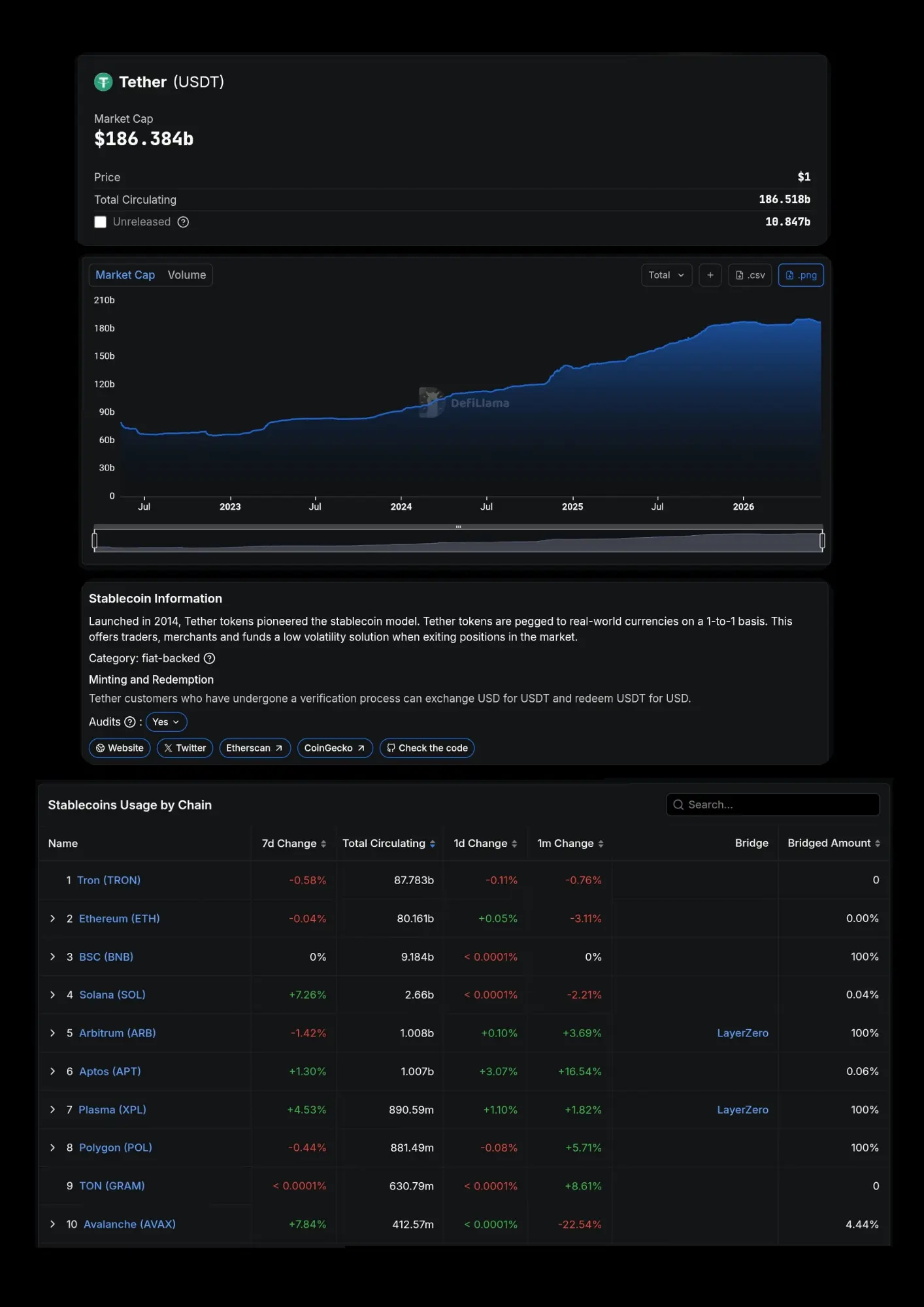
To truly understand why this regulatory crackdown will not destroy Tether, we need to dive into the on chain distribution metrics available on DefiLlama. Currently, Tether (USDT) commands a massive global market cap of $186.384b. The vast majority of its supply is heavily concentrated within the Tron network at $87.783b and the Ethereum network at $80.161b, making it the undisputed liquidity lifeline for global retail traders outside western jurisdictions.
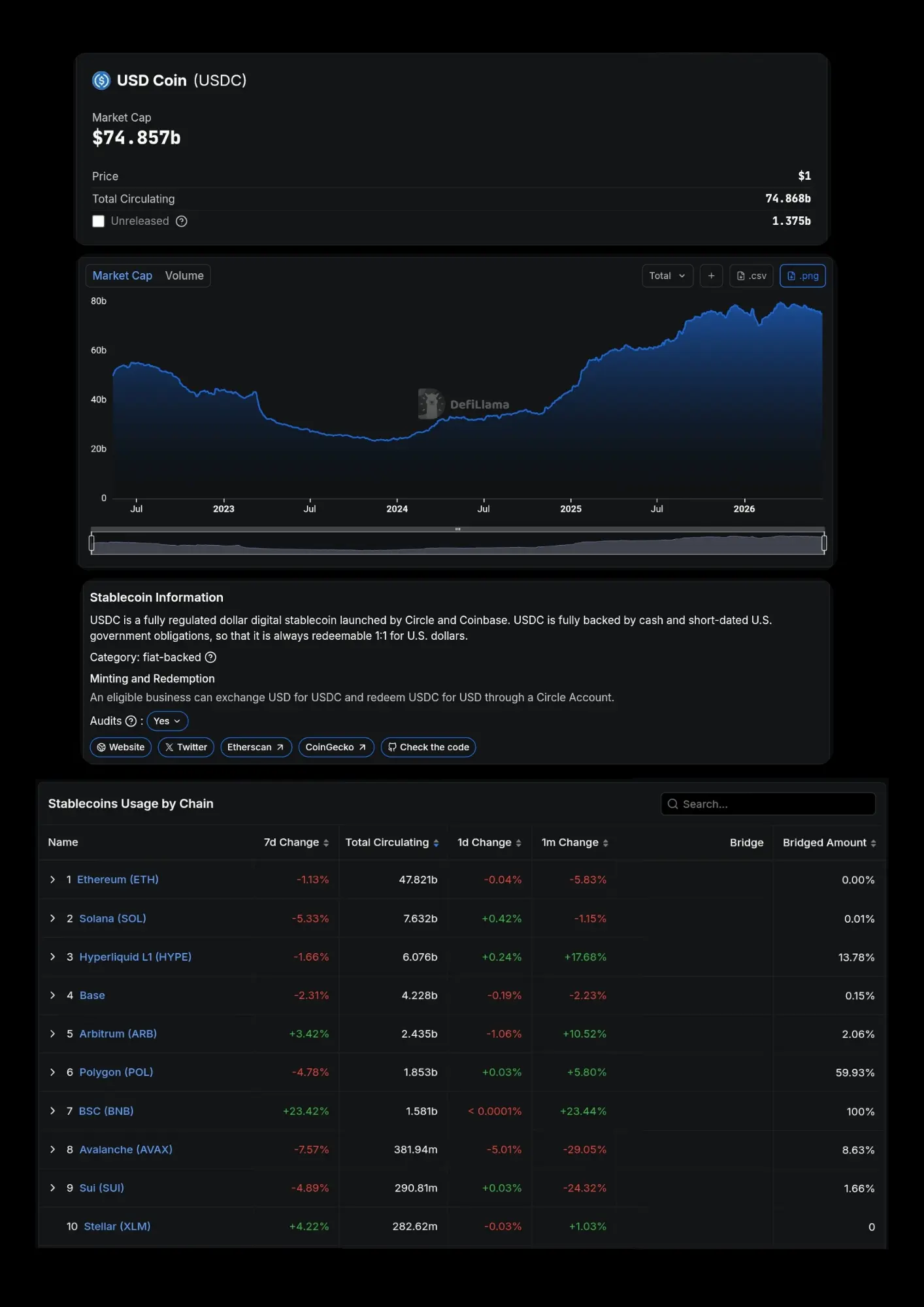
On the flip side, USD Coin (USDC) holds a global market cap of $74.857b with its absolute stronghold built directly on top of the Ethereum network at $47.621b. What this tells us is that USDC has successfully positioned itself as the institutional grade choice for decentralized finance applications and regulated entities that operate heavily within compliant frameworks.
My Opinion
From my perspective, the ongoing enforcement of MiCA in Europe is a healthy evolution rather than a death sentence for the crypto space. The market is simply undergoing a natural maturation phase where different stablecoins are forced to find their true long term utility.
The restriction of USDT across European exchanges will not trigger a bankruptcy event for Tether. Instead, it draws a clear line between two distinct financial territories. USDT will likely continue to dominate global trading liquidity and everyday peer to peer transfers across emerging markets via Tron due to its low fees. Meanwhile, USDC will solidify its role as the dominant corporate and DeFi stablecoin backed by strict legal compliance.
For all of us trading well outside the European borders, this new law brings absolutely zero direct risk to our everyday portfolio activities. USDT trading pairs remain fully operational on our regular accounts. My best advice for the global trading community is to ignore the sensational social media headlines, stick strictly to your personal risk management protocols, and perhaps hold a balanced mix of both USDT and USDC to stay completely prepared for any future regulatory updates.
Click here to read my authentic and original analysis
Source






