
First Happy Holidays and I wish you all a Happy New Year!
Second this post is a 2H 2026 invite to a hosting of Full Reserve RWA Backed Liquidity PoC "Proof of Concept"extended to all the Smart Contract Developers out there in the cryptosphere.
The steps in this post is really culminated in my years long research and design effort now being converted next year into a code writing effort with the goal getting the #BIGFIX MVP working by 2027, available to anyone in FOSS Free Open Source Software form, hosted on Codeberg.
The caveat being, a lot of other tech efforts have to come together to make the above PoC then MVP Possible.
The reward? Say good-bye to TVL 'Total Value Locked' crap, staked annual returns
and
say 'Hello' to better annual returns on your SC DEFI Loans issued and generally the opportunity to convert your cryptocurrency project to be backed by 'buying power protecting' full reserve money, where RWA is backing up Smart Contract DEFI issued cryptocurrency loans, not worthless government IOU fiat currencies all governments print designed to eat your buying power daily.
How? Get Lower competitive cost of collateral via Elastic Liquidity Certificates 'ELCs' backed by RWAs hosting storage nodes on Autonomi Network.
Under the Hood,
Some code tinkering is required to finally get to Full Reserve Fungible "FRF" Tokens working, for the people.
Our ELC PoC 'Proof of Concept' will feature FRECH (also our AVACOT , part Avatar and Part Mascot)

A Full Reserve Enabled Computer Hardware based Utility Token
It's important to note our ELC PoC features FRECH, really a Franken token (akin to Frankenweenie) which is nothing more than a re-rigged ERC-721 token designed to self burn, issue ELCs and when the term is over reconstitute it's full value tethered to your computer hardware doing some useful work, in this case running Autonomi Network 'antnodes'.
Before we even get to the ELC PoC
The following 'Things to Do' need to be completed:
AUTONOMI MVN '26 - The Minimum Viable Network in Production Mode really starts to work by 2H 2026
Autonomi Network made good progress doing some important market learning as to what software developers of all types really need to successfully host new value on the Autonomi Network.
Much was learned in 2025 having an Operational PoC, at scale, Autonomi Network run the past nine months with about seventy-five plus operators hosting on their own home hardware thousands of "ant nodes" providing in aggregate multiple petabytes of storage while earning rewards for running these nodes (enough to pay for the node's electricity use in most places and cases). There were few uploads because until now the upload and download capabilities where in their infancy at the start of 2025, where as now, at the end of 2025, both uploads and downloads work at scale and with speed and relatively low latency.
That said, Maidsafe and the Autonomi Community having finally figured out uploads and downloads at scale with speed, auto-updates are the next hill the Maidsafe core developers climb, the key to network reliability. The other hill both the Autonomi foundation and the Community must also climb in 2026 is the governance DAO to manage community input and, prioritize voted adds to the Autonomi Network's early list of impressive capabilities (more on this topic in another future post).
In Second Half of 2026 It will be the 20th anniversary of the SAFE Network Dream(now called Autonomi) when it was first posited by David Irvine the inventor, some two or possibly even three years before Bitcoin's arrival. If anything the core team and early community members have been dogged (if not a little 'pig headed') to keep the faith and see this project to fruition, the goal of which has always been "your keys, your data".
Good on Maidsafe, and good on the Autonomi Network Community for sticking with it and largely delivering at the end of 2025!
Sure there were mistakes, but heck it's software written by Humans! (The majority of which are in Scotland.)
FRECH FRF TOKEN
FRECH as a concept is relatively complete as described in the evolving whitepaper found on Codeberg.
FRECH's value is realized by genesis and re-genesis(annual) logic which is driven by the main DLO Node Requestor program, which itself is background secure daemon driven by Ansible playbook instructions driving all functions and operations of the DLO Node Requestor program and logged by same. The appreciating utility value of the FRECH token is driven in the same manner, reading the OS logs to determine local Node Runner Operator's antnode health/reliability. This same process is used by inquiring 'close group' DLO Nodes joining dynamically to approve loan quotes made in response to SC ELC Requestors publishing and event message requesting ELC liquidity, once approved a randomly designated Consensus node forwards the approved quote to the SC Requestor code, which is a secure binary responding to API calls from the SC.
ERC-721 FRF HACK
Next Steps are to re-wire the ERC-721 example smart contract logic to include api calls to a secure binary to request and stake ELC Value, to back what will be a sample term loan bearing interest. I am no smart contract developer so this will require some learning on my part to get this going and have a working example running between virtual machines network my notebook, one MS WIN11 vm and one Ubuntu 24.04.2 LTS vm, each with their own private local address communicating over QUIC HTTP3 and UDP.
Wish me luck!
Next up:
ELC PoC CODE
Related to the FRF Hack and developed and tested concurrently, this amounts to the DLO Node Orchestrator daemon being triggered by the secure Ansible daemon to execute the a partial or whole FRECH value burn and, ELC value gen/send, ELC Burn and FRECH value retire/restore sequence that runs both local and over QUIC HTTP/UDP to the SC locally secured Requestor Binary. While the concept is reasonably well described in the whitepaper, its now time to gen a code framework for each and then hand tune them and test them. Much coffee will be drunk.
INTERVAULT NUC
Earlier in the year I earned my incus and ansible stripes automating the idempotent setup of containers and antnodes on the Autonomi Network. Written in Bash, you guessed it the PoC will have an Ubuntu 24.04.2 LTS Linux HOS Host Operating System, and have incus as instructed by the ansible playbook mount LXC systems containers with privsate IP addresses running Alpine Linux, into which the same ansible playbook will install and update Autonomi Network Nodelaunchpad and launch full storage antnodes on the target hardware, with, or without humand intervention.
As for the NUC hardware , as of today I am leaning toward the Beelink meMini, for now (more on that in a later post).
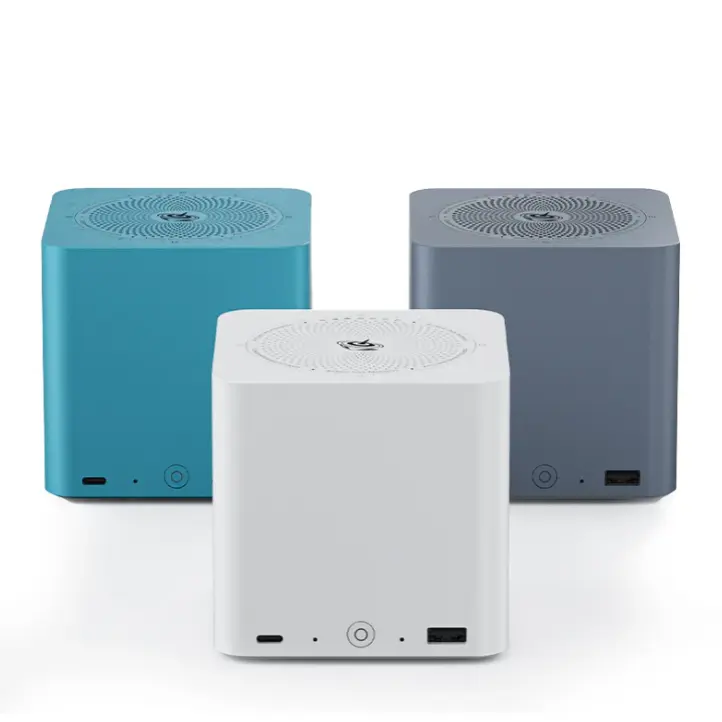
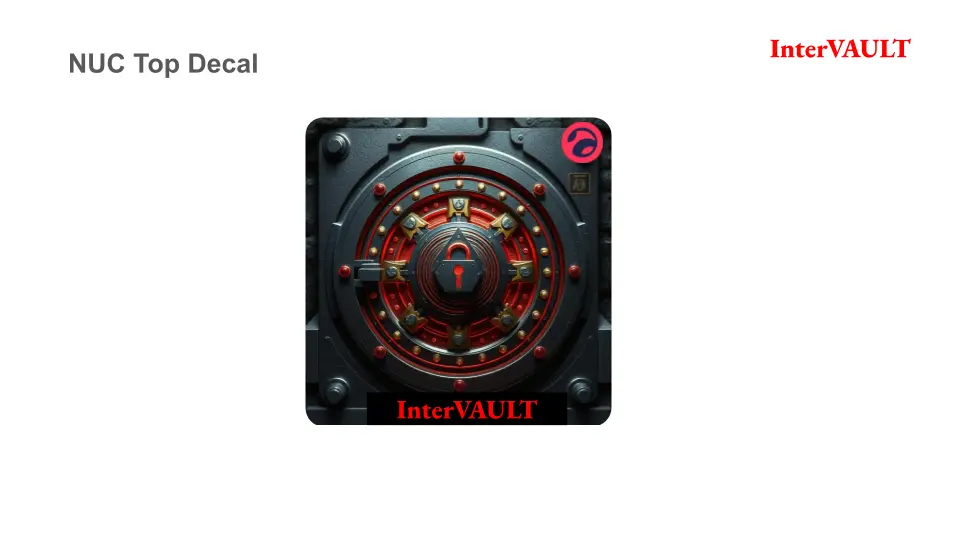
Yup, I have a decal created:
CANMAN
I worked on this early in the year and submitted the project as possible contender to win some funding to actually realize the capabilities listed here
It's on the shelf now ready to be tested and improved to MVP FOSS levels when the Autonomi Network is ready and I will post it to Codeberg, when all said and done for anyone to use.
Canman in brief is really a web browser driven interface to allow users to easily manage antnodes and other software running in incus managed containers. The Canman WEBUI does this by way of JavaScript calls to the python Flask web server which uses OS calls to tickle both a bash daemon that gets the Ansible daemon involved to get Incus to do LXC or OCI container things and also have Flask tickle Incus directly to get it to show a few WEB pages of its own to the administrator of the InterVault.

InterVault will be hosting Canman on Ubuntu 24.04.2 LTS by @H 2026, as to which hardware, I will solidify that choice end of 1Q 2026. Canman can have several users running their own fleet of antnodes spread out over multiple InterVaults, with one or more owner administrator(s) in charge of these antnode and third party software operators. (Think Mom and or Dad managing what and how much the kids host on these InterVaults to earn their own income streams)
MICROBANK
Is really a decentralized mesh of MicroBanks with one or more Intervaults running the above software serving some Smart Contracts SCs, each connected via api to the DLO ELC Requestor binary.
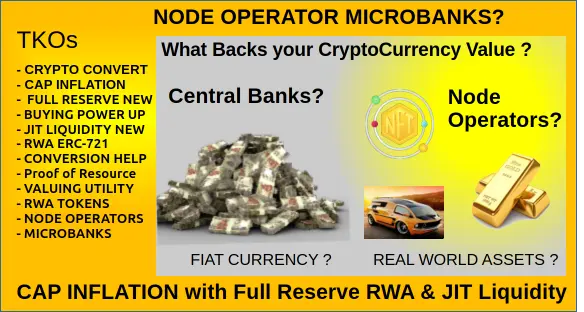
These MicroBank InterVault instances can be anywhere, yet all use the same single source of truth secured "whitelist", accessed via QUIC HTTP3 over UDP to appear as single marketed MicroBank with the same ELC rates published to all interested parties.
POC to MVP in 2026
That is the planned progression, given a few spare moments I have on the weekend to do all of the above. Day jobs do get in the way. :)
+ BUYING POWER IN '27
That's the goal. Help create more of it for anyone involved with DLO and FRECH.
- PRICE INFLATION
Part of the same goal, stop inflation in it's tracks based on the depreciated value of your hardware. Anything net new created is real main street revenue earned by the appreciating utility (up-time reliability) of your hardware and related power systems (UPS, off grid battery charging or backup diel powered electricity power acting as prime mover of power to your computers, etc..), Getting Smart Contract DEFI developer on board with the concept of FRF means trying it out first as seeing is believing, as FRECH and its ELC capability representing Node Operator Hardware RWAs also helps the developer understand Full Reserve Value managed 'by the people' versus the government and Central Bank controlled fractionalized reserve value , which is essentially the value of your homes and cars they own (you dont own your house until you have paid in full and have the chattel or deed in your hand up, all of it valued in today's fiat IOU currencies, which themselves erode in value daily.
x FIAT
The end result desired, stop using Fiat for anything SC DEFI related.
TK over and out!
*****






