
It has been a while fellow wealth seeking voyagers... But alas a return to this fine jaunt it is, as we slip into a world where the digital monolith Bitcoin could stampede into the lofty halls of American finance and buy U.S. treasuries - litorally buying American debt.
1. Why Bitcoin for U.S. debt?
By mid‑2025, the U.S. Treasury debt sits around $36 trillion - and growing. Meanwhile, Bitcoin's total market cap hovers near $2.1 trillion. In contrast, governments like China and the UK hold significant BTC: the U.S. itself around 198,000 BTC (about $23 billion worth), the largest among state holders.
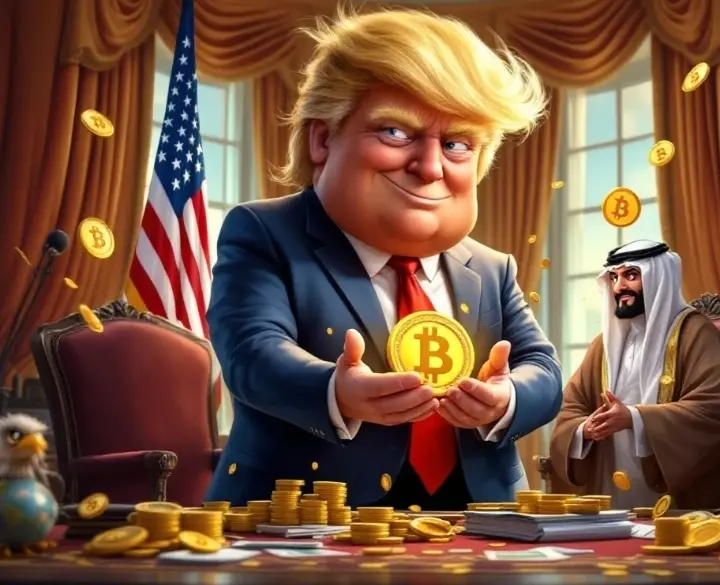
U.S. President Trump’s March 2025 executive order created a Strategic Bitcoin Reserve funded by confiscated coins - and mandated not to sell them, hinting at future uses including debt offset strategies.
VanEck's “BITCOIN Act” proposes acquiring up to one million BTC over five years -potentially offsetting 18% of U.S. debt by 2049, assuming remarkable appreciation. Yes... that is potentially a huge amount of financial gain, and also a bit of risk.
2. How it fits together
In 2025, companies like Strategy (formerly MicroStrategy) and Tesla, plus nearly 126 public firms, treat Bitcoin as a treasury asset - buys measured in billions of dollars. This corporate embrace signals revolutionary legitimacy for BTC.
Ray Dalio, watching global debt spiral, suggests investors allocate in the region of 15% of their portfolios to gold or Bitcoin as a hedge - casting BTC as a safe‑haven bulwark against fiat weakness.
3. A real‑world working example: El Salvador trades BTC for U.S. debt exposure
While no nation has literally swapped Bitcoin for U.S. Treasuries, El Salvador offers a compelling model. The government holds roughly 6,000 BTC ($611 million as of January 2025) and publicly mined additional coins via revolutionary geothermal energy - but has also suffered some economic fallout, prompting IMF negotiations to scale back BTC usage.
Now imagine a scenario in which El Salvador, energy‑rich but debt‑heavy, mines BTC using sustainable geothermal power, then uses proceeds to buy short‑term U.S. Treasuries through swap agreements. It trades bitcoin gains or hash power returns in exchange for exposure to U.S. yields. That’s a plausible working mechanism - nation A uses government‑mined BTC to acquire U.S. debt holdings, hedging national debt while diversifying reserves... Genius!
4. Imagine a volcano

Once upon a future... A volcano in El Salvador pops out Bitcoin, the government swaps it for U.S. bonds, and the U.S. Treasury grins at foreign appetite for its IOUs. It’s like trading home‑grown beer for banknotes - only the beer is blockchain ready, and the debt… tales will be told!
5. Um's & Ah's
-
Good Old Volatility: Bitcoin swings wildly. Using BTC for debt seems heroic - or suicidal. Congress would need to approve actual purchases beyond confiscations, this is almost certainly to cause headaches.
- Scale mismatch: With $36 trillion debt and BTC supply fixed, even one million BTC only offsets a fraction - unless BTC hits astronomic valuations (e.g. $21 million per coin by 2049 per bullish extrapolations).
- Political and regulatory hurdles: Trump’s executive order foresaw a reserve, but legislative approval remains uncertain. Many economists worry such a strategy could destabilize fiscal systems.
So here we stand... A plausible world where Bitcoin isn't just a corporate treasury asset or digital store of value - but a medium through which sovereign debt is acquired, mitigated, even swapped. It's nascent, bold, volatile, mercenary - and that’s the point.
Would you trust Bitcoin as currency for debt diplomacy? Let’s philosophise... If a nation could really buy U.S. Treasuries using mined or held BTC, what would that mean for global financial order and future national reserves?






