Harmony.one is approaching the concluding stage to provide an open infrastructure based on blockchain which has the potential to offer scaling and processing transactions at a very high speed that has not been found anywhere with unbelievable low-fee consensus platform. There are a lot of similar projects that have made several attempts in providing this kind of solution. At the forefront are the Cardno, EOS, Zilliqa, Thunder and Hashgraph. Others also include Dfinity, Seele, Kadena, Algorand and High-Performance Blockchain. Harmony approach is different with the application of full stack approach in solving consensus with high scalability to power decentralized economies. The founding engineering team has deep experience in building large-scale open infrastructure for the world's data that will accommodate the global-scale market place platform and enabling decentralized and trustless economies.
HARMONY TECHNOLOGY
The mantra at Harmony is believing and building. At all times, the team has been heads down building the Harmony Blockchain Platform, a decentralized ledger technology promises to make data open and immutable. There are a lot of things that can be hosted on top of this platform, to mention a few are AI Data Marketplace, uncheatable gaming, decentralized exchanges and other waves of scientific innovations which are yet out of reach on today's' system.
-
Consensus Protocol: This is the process in which all the nodes in the blockchain reach a consensus. The decentralized blockchain does not rely on any central control which makes it for all nodes in the network to agree on the validity of the transaction and this is exactly the role that consensus played in a decentralized economy. The consensus protocol of Harmony uses sharding and pipelining to parallelize transaction processing. This enables their throughput to scale with the size of the network. The key features are :
- The adoption of Kademlia routing protocol for reducing the communication complexity lightened the network load in the shard-driven approach of the blockchain
- The packet loss and latency spikes are combated with RaptorQ fountain code
- In the blockchain, each state holds a subset of the shard, with the current design they are able to scale to millions of TPS
- The Omniledger prevents reshuffling all nodes in the shards at a fixed time interval called Epoch which prevents the corruption of the shard
- With the Harmony proof os stake,
- The Systems: Harmony team is developing a lean and kernel specific to run their protocol with increased CPU performance and security to allow a broader set of devices to participate in the consensus for a more decentralized network
- The Network: The in-depth understanding of network topology allows the Harmony's team to run a highly concurrent protocol by the implementation of network engineering techniques for smarter message propagation and faster consensus. Their focus is mainly on the efficiency of network utilization. The following were proposed to deal with real-world networking scenarios
- Kademlia-based Routing: The mechanism will be mainly used for cross-shard messages which is a situation where every node in the network maintains their routing table. When a message needs to send from one shard to another, let's say A to B, the node in shard A will look at the routing table and propagate to the node with closest shard ID.
- Efficient Broadcasting with Erasure Code: This is mainly used to lower the network node of the broadcast sender. In harmony, the sender encodes the message with erasure code and then send chunks of the encoded message to each neighbor.
- Support for Home Nodes: Harmony’s P2P layer detect the network translation behind the node operation and apply suitable workaround mechanism such as STUN, TURN, IGDP, etc
- Support for Locator Mobility: Harmony introduces a strategy to identify when a node changes its IP address, some type of nodes does this often than others. The introduction of node locators and node identity allows a node to change over time while keeping the node identity, with the provision of mechanisms for locator discovery.
Harmony Testnet Launched
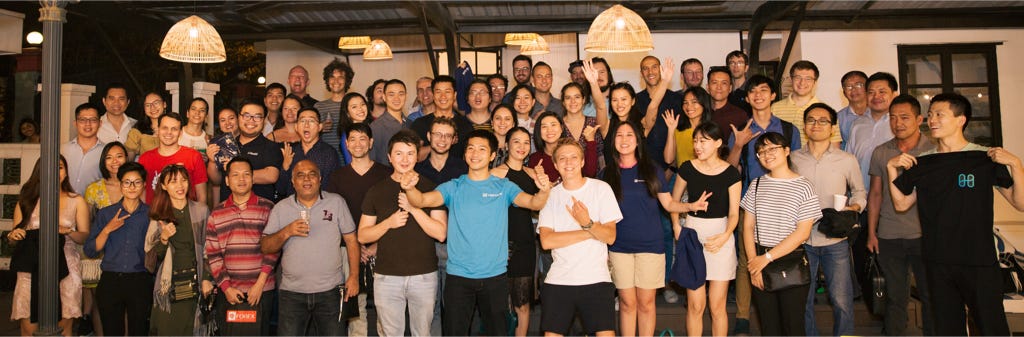
The much-awaited Harmony Testnet is live and running. The external contributors and the team of engineers have worked effortlessly to deliver the feature of scalability which has the following characteristics:
- Faster consensus using BLS multi-signatures & gossiping broadcast
- Node staking on beacon chain using smart contracts
- Secure resharding with Cuckoo Rule
- Robust peer discovery via libp2p bootnodes & Kademlia routing
Contribution is being sorted for to improve the test pipeline and increasing the coverage. Interested individual can join and collaborate with the development effort via Gitcoin bounties!
The Harmony Mainnet is set to launch in the coming months according to the stages as provided below:
- Token Transfer: genesis block, consensus with beacon chain, rate-limited transfer
- Open Mining: node staking, block rewards, data aggregation
- Open Governance: network resilience with 50% external nodes
- Scalability: sharding with thousands of nodes, country-fencing for GDPR
- Data Sharing: identity resolution & range queries via zero-knowledge proofs
- Performance: fast routing, rateless erasure code, libunison, wasm
Partners are already awaiting Harmony as a data sharing platform. There are already 200+ community members and they have engagement during Asia Tour with 15 partners
The team behind the Harmony
The team comprises of experienced engineers from Microsoft, Amazon, Google and Apple coming together to build a bockchain evolution - Harmony
 Stephen Tse has been obsessed with protocols and compilers since high school. He reverse-engineered ICQ and X11 protocols, coded in OCaml for more than 15 years , and graduated with a doctoral degree in security protocols and compiler verification from the University of Pennsylvania.
 Nicolas Burtey founded a VR video startup in 2012 that grew to 40 people and raised $10m. Orah served the needs of thousands of professional content creators in 70 countries by selling GPU-driven live stitching software and 360° cameras.
 Alok Kothari worked on deep learning models for natural language understanding at Apple’s Siri. He conducted research in natural language processing, information retrieval machine learning and published at top conferences like SIGIR, ICWSM and EMNLP. His research paper won the best dataset award at ICWSM 2013.
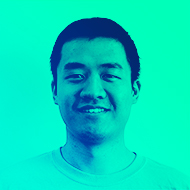 Rongjian Lan was a search infrastructure engineer for Play Store at Google. He published over 10 academic papers on spatio-temporal querying and map-based visualization. Rongjian started researching on decentralized protocols since early 2017.
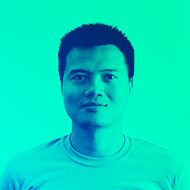 Minh Doan worked on Google’s Assistant, Play and Plus for 5 years. He was a former champion at USA Computing Olympiad Open and many other Informatics Olympiads. Minh holds the patent for “Publisher Click-Ring Fraud Detector” at Google.
 Nick White holds bachelor’s and master’s degrees in electrical engineering from Stanford University, where he focused on signal processing, optimization and control. As a graduate teaching assistant at Stanford, he researched artificial intelligence and applied mathematics with Prof. Bernard Widrow.
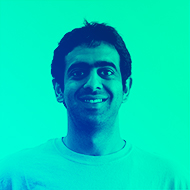 Sahil Dewan is a graduate of Harvard Business School, where he served as president of the blockchain and cryptocurrency club. He has worked at Draper Dragon Fund and advised several blockchain projects.
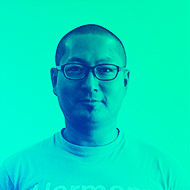 Leo Chen led a team of 8 engineers at Amazon Web Services. There he built high-throughput storage virtualizations for more than 200k EC2 instances. At Amazon Lab126 , Leo built the first generation of Kindle Fire and architected FireOS for all Amazon devices. At Ericsson and Broadcom he worked on their Linux kernel, embedded systems and large-scale distributed systems.
 Eugene Kim developed advanced networking protocols during his 15-year tenure at NTT and his 3 years in the networking infrastructure division of AWS. Eugene also built server-side software at Activision Blizzard for the next-generation MMORPG that eventually became Overwatch.
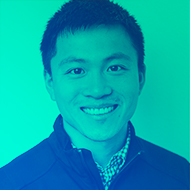 Li Jiang has founded a logistic startup during college with the highest revenue. During his six years at GSV Capital, Li organized Pioneer Summit and Global Education Summit with 1,500 attendees including Bill Campbell and Barack Obama.
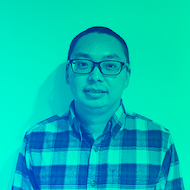 Chao Ma was a machine learning scientist at Amazon. He worked on marketplace abuse prevention, retail products pricing and natural language processing. Chao implemented an IPFS prototype in early 2017.
 Helen Li was a chief writer at CBN Weekly and senior journalist at Bloomberg Business Week. For over a decade, she interviewed tech leaders including the founders of Lenovo and Baidu and wrote over 50 cover stories for CBN Weekly. Since 2018, Helen has led PR & marketing for blockchain projects in both China and the U.S.
Harmony Roadmap 2018 - 2019
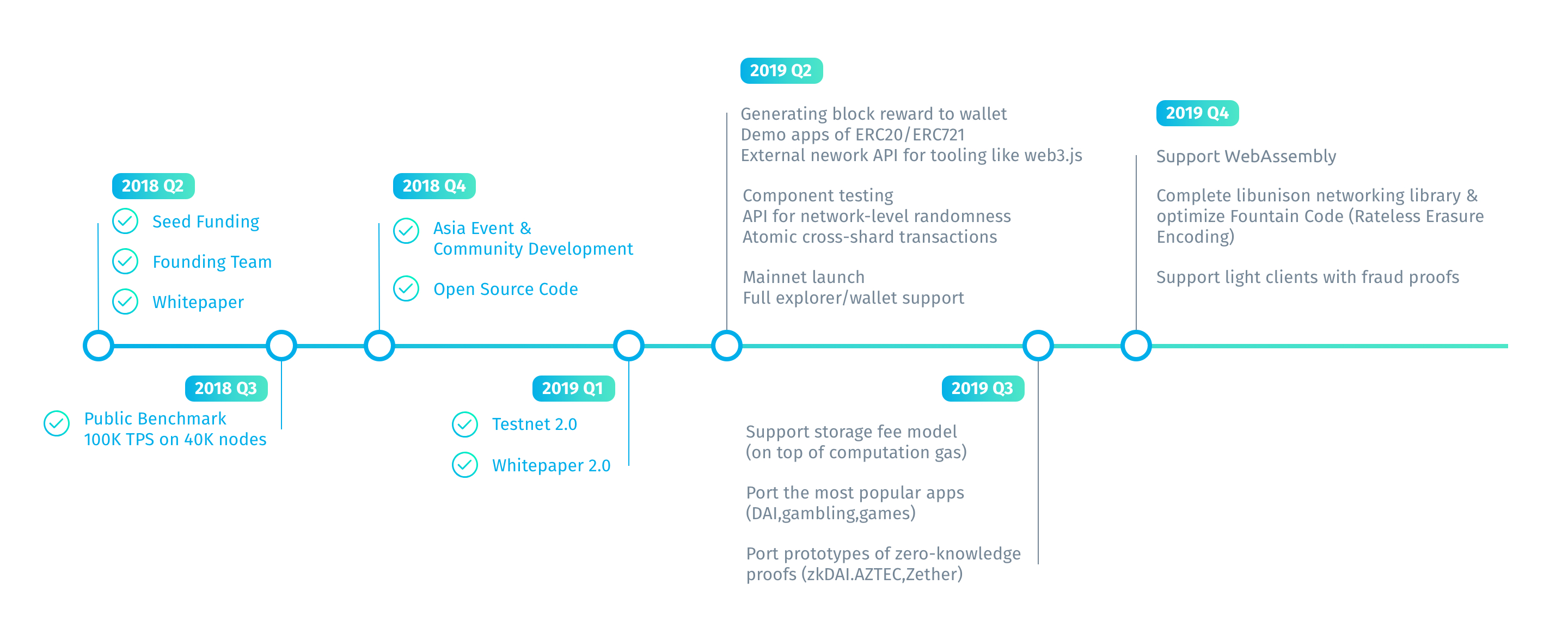
With the list of an experienced team to deliver according to the roadmap and the evolution of harmony, this is the project that all investors should keep an eye on.





