
It's estimated that 1 out of 10 people globally will fall ill each year due to food contamination.
As global supply chains become more integral in the way we live and consume, the demand for provenance, transparency, and traceability, especially in the food we consume, becomes even more essential:
- As a consumer, how can you be sure that the "organic tofu" you're eating is truly organic?
- As a retailer/distributor, how can you minimize storage and transport costs, but without sacrificing safety and quality?
- As a manufacturer, how do you know if your food sourcing infrastructure is even sustainable?
How can consumers, retailers and manufacturers even trust that the food they grow, transport and consume is what it claims to be?
In this regard, blockchain can help manufacturers gain more trust and control over their processes, help retailers prove the provenance and assurance of their products, and help consumers decide with confidence what food to buy.
Enter VeChain, and the Internet of Things
The "Internet of Things" is distinctly different from the "Internet of People" that we have today, where humans interface with the internet to transact with one another. In the "Internet of Things" ecosystem, everyday objects can interface with the internet to transact with each other.
How does this work? Imagine that you have a company that manufactures soy sauce:
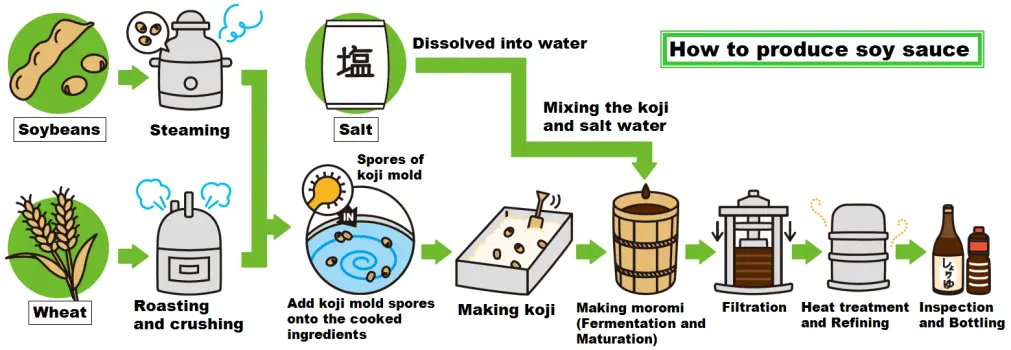
Imagine also that at each phase of manufacturing, you have machines with sensors that can detect environmental conditions such as temperature, humidity, sunlight, air pressure, ventilation, etc.
Now imagine that those sensors are IoT sensors which send that data into the blockchain. You essentially have an immutable tamper-proof "snapshot" of the manufacturing conditions for a particular batch of soy sauce. To be even more granular, say there's a specific machine whose job it is to disperse mold spores into a batch - not only can IoT sensors alert when an incorrect quantity of mold is distributed, but that alert can also be broadcasted onto the blockchain as a food hazard warning issued to the public.
So the machines have sensors. But what about the products?
Ultimately, the consumer receives their soy sauce in a bottle or jar. So how does the bottle "talk" to the Internet of Things?
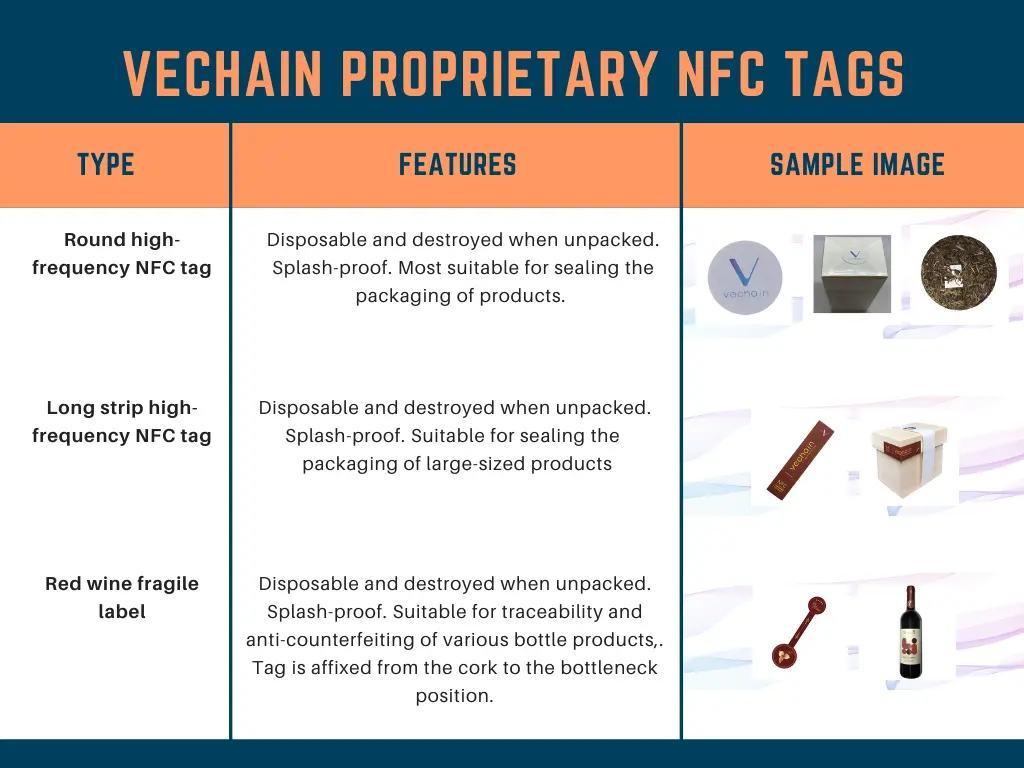
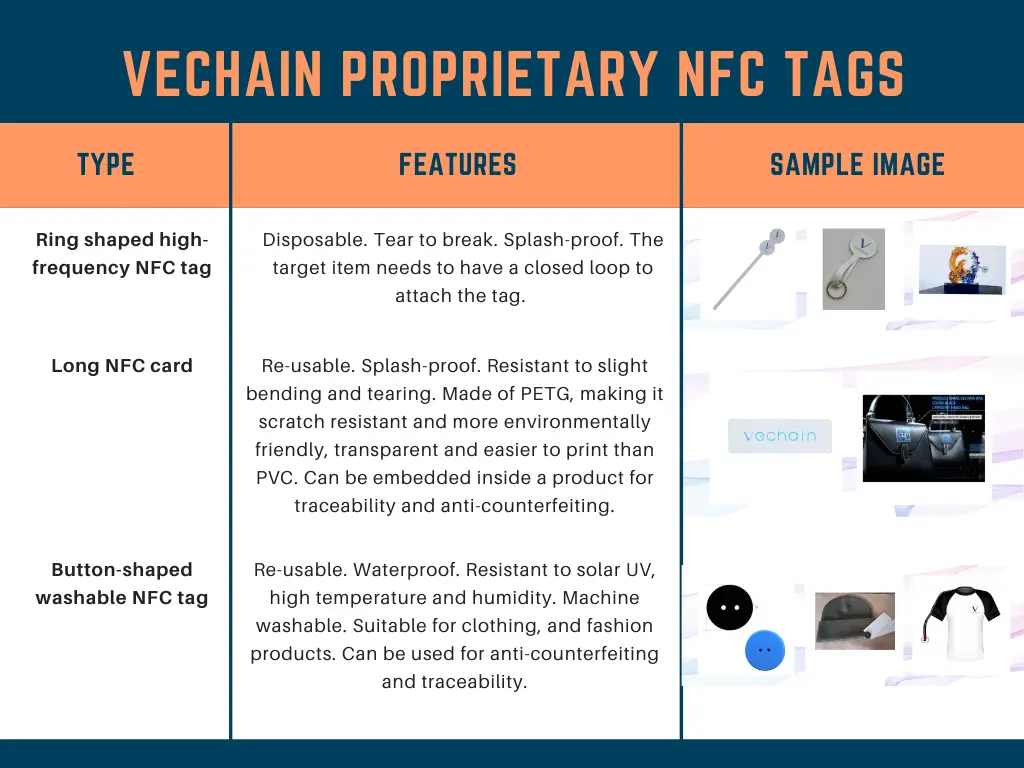
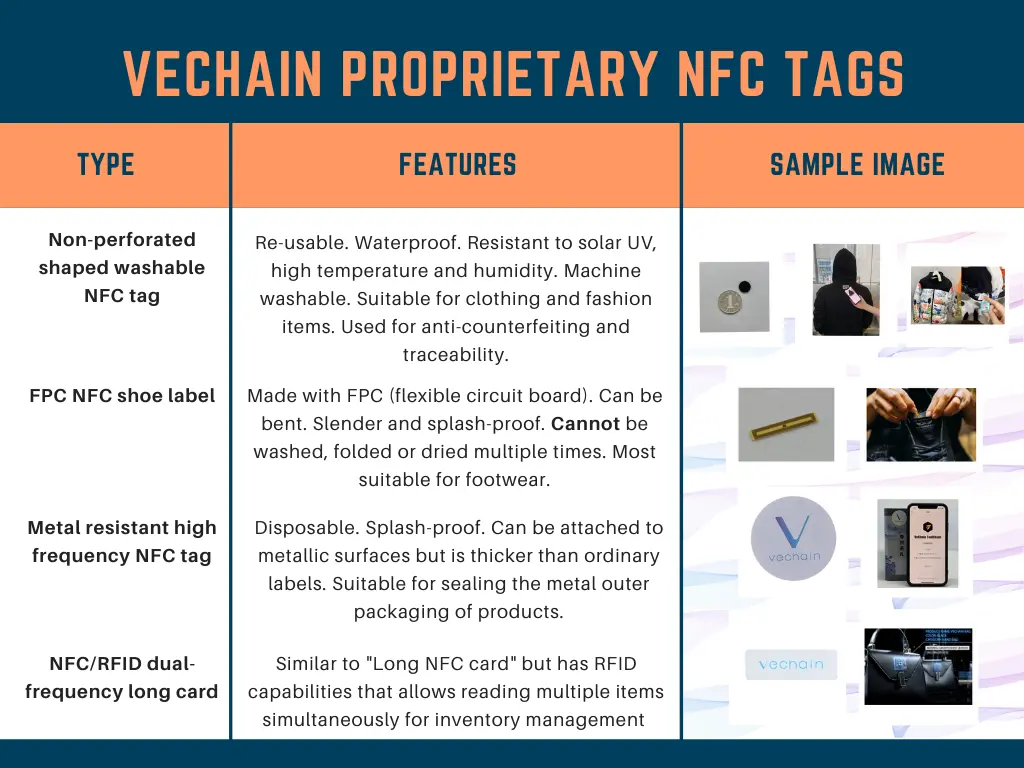
VeChain, short for "Verification Blockchain", is uniquely equipped at solving this problem. They've developed their own proprietary QR, RFID and NFC tags that can be attached to packaging, boxes, cans, even bottles of wine. These devices uniquely identify the items they are attached to on the blockchain.
VeChain has even developed a turn-key BaaS (Blockchain as a Service) solution called ToolChain, which allows any business to get started with minimal downtime. ToolChain streamlines blockchain adoption with zero developmental cost to the business.
So how does this affect the VET and VTHO token holders?
If VeChain manages to solve the problems addressed above, how do its token holders benefit? Holding VET isn't like holding a stock in VeChain, so how does VeChain's success translate to our success?
Each time a transaction is written on VeChain's blockchain, the required VTHO (VeChain's gas token) is permanently burned - in other words, VTHO is required for the blockchain to even function. And, staking/holding VET is the only way for the VeChain ecosystem to generate VTHO.
As more and more VTHO is burned than is generated per day (~37M), the value of VET inevitably rises. And that supply of VET is hard-capped at 86B - no more can or will ever be created.
Are those bullish signals for VeChain? You be the judge.





