
Partnership with Google?
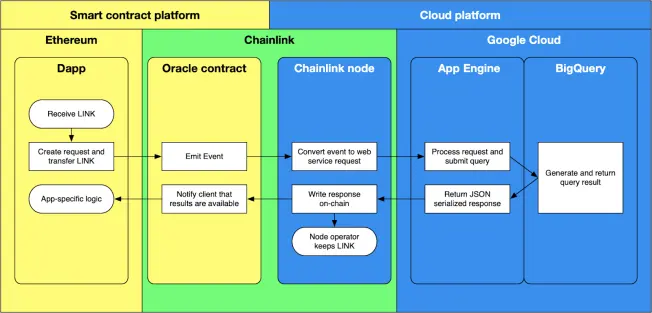
On June 14, Allen Day, a Google Cloud Developer Advocate wrote a blog post describing how BigQuery data can be made available to an Ethereum smart contract - using a Chainlink oracle smart contract. He demonstrated how Chainlink, as the middleman can serve as a communication bridge between Ethereum and Google’s enterprise cloud data warehouse. Now that it is made possible for dApps to access real-world data easily, it opened up a new realm of use cases where they are highlighted in the blog post.
Speculative bets on popular events like sports or future events are the most obvious use case for prediction marketplaces. With a decentralized oracle network to retrieve actual data feeds, the bet can now be effectively settled on-chain as it feeds the smart contract accurate information about the outcome of events taking place in the real world. This could give a huge boost to the usage and reliability of prediction marketplaces.
As the decentralized finance ecosystem quickly gaining traction, the health of the network is becoming increasingly important to DeFi projects building on Ethereum. Different aspects of the blockchain network such as block times and gas fees are important information that developers require in order to reduce their exposure to the possible risks that might be created. All this data can be accessed through the interaction of the smart contract with the data warehouse using the help of oracles.
As transaction privacy is often targeted as a weak point of blockchain and the demand for it is starting to grow, submarine sends is a mitigation strategy implemented to conceal transactions to keep your on-chain activity confidential so as to prevent exploitation of data. However, this causes blockchain bloat which is a growing pain for maturing blockchains. With an oracle, not only will there be no bloat produced, the operating scope is extended to all historical chain data rather than limited to the constraints of the Ethereum smart contract.
With how big the scale of this announcement was perceived by the public especially with a tech giant like Google involved, the market reaction was hardly a surprise as prices skyrocketed 70% within an hour of publication. This served to be the big push that LINK needed to reach its new all-time high at $1.95 USD. There is definitely more than meets the eye to Chainlink as opposed to most cryptocurrencies where it is speculator-driven hype. Google integrating Chainlink as its approach to building hybrid blockchain/cloud applications is a testament to its potential in bringing smart contracts one step closer to widespread adoption.
What is Chainlink trying to solve?
To understand the magnitude of the problem that Chainlink is trying to solve, we must first understand a few technical terms that could be daunting to a newbie in the crypto world.
Smart Contract
A smart contract is a digital agreement that self-execute based on specific conditions that are written into the code when they are met. Since it is run on a decentralized blockchain, it is tamper-proof as it is irreversible and transactions are traceable which makes it fully transparent.
Decentralized Oracle
A blockchain cannot access data outside of the network due to the way consensus is reached around blockchain transactions. This is where the oracle steps in and plays an important role by supplying information to the blockchain so it can be used to trigger smart contract execution when the pre-defined conditions are met. It is a data feed provided by a third-party service, designed for use in smart contracts. To put it simply, oracles act as data sources for smart contracts.
However, it is possible that the information supplied by the oracle is inaccurate. If so, this would directly affect the smart contract and might cause errors in execution. This would then defeat the purpose of the smart contract. A decentralized oracle network will consist of multiple oracles that will minimize the chances of false reporting. By having multiple oracles transmitting information, it eliminates the single point of failure. Probability-wise, the information provided is more likely to be correct.
Now that we have a greater understanding of the terms above, let's talk about the issue at hand.
Importance of Chainlink
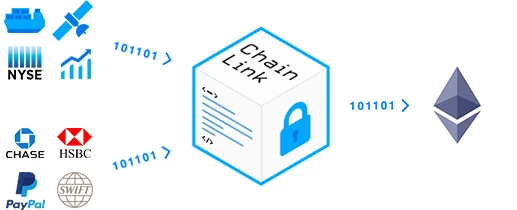
Smart contracts enable financial instruments to be built on the blockchain which gives rise to an ecosystem of decentralized finance where projects are working on different financial instruments - insurance, lending, leverage trading, etc. The reason for the recent popularity that decentralized finance is gaining can be attributed to the fact that it is more transparent than the traditional financial system and the control & access of financial instruments are not just limited to the big players, giving everyone an equal playing field.
However, the biggest issue with smart contracts today is that they are unable to interact with any external resources outside of the network and this technical limitation is a headache to developers as it hinders many potential functionalities that dApps can offer. This is a huge concern to be tackled if we want to attract more developers to build their products on the blockchain. The majority of the dApps requires external data sources for their smart contracts to execute protocols. Here is when Chainlink comes into play - by connecting both the outside world and the blockchain so that smart contracts are able to utilize the data residing in the legacy systems.
In the case of Chainlink, they will have a large number of node operators to provide a decentralized oracle network. The nodes will undertake jobs to retrieve and provide data to smart contracts. They are rewarded with LINK tokens and build up their node reputation if they do their job properly. (supplies the correct data with no downtime) Their node reputation will be penalized if they are providing false data. Since node operators are incentivized with the payment of LINK tokens for work done and their reputation is at stake, it would be of their best interest to provide the correct data required to the smart contract. With a good node reputation, the operators are more likely to receive more requests of data from smart contract creators and the integrity of the oracles is also ensured.
Case study: Synthetix
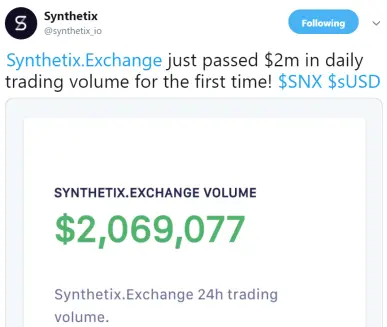
Synthetix is a partner of Chainlink and has its own trading platform for synthetic assets. Synthetix Exchange has recently been experiencing huge growth in the volume of synthetic assets being traded and just passed $2 million daily trading volume for the first time which is a huge milestone for the exchange. This is a strong affirmation that the market demand for synthetic assets is definitely increasing. However, as it is gaining traction, one crucial factor to take note is that maintaining an accurate price for all synthetic assets is a must - no one wants to buy above or sell below the market price. (in reference to the weighted average of prices across all exchanges)
Currently, the team controls all the price oracles and the nature of the oracle is kept secret to prevent manipulation or attacks on the integrity of the price oracle. We as users of the exchange have to trust that the oracle used is providing correct information of the price and is constantly updating it with 100% uptime. The team is aware of this weakness and this is where the partnership with Chainlink comes in handy. They planned to decentralize price feeds by allowing people to run chainlink nodes to supply price feeds for the exchange. With a variety of price feeds and the node operators being financially incentivized to always be honest, the price of each synthetic asset will be more accurate in comparison to the real-time market price. This is a huge stepping stone for Synthetix towards the path of complete decentralization.
Conclusion
To answer the title question, it would be a yes from me. Chainlink has the first-mover advantage and their competition is nowhere near to what it has achieved. Many reputable crypto projects are partnering with Chainlink as it is positioning itself to become the bridge between blockchain and real-world applications. Google's integration of Chainlink further solidifies this statement and I personally believe it will lead the way to building a new generation of smart contracts by empowering it with new capabilities. Chainlink will be one of the key players in facilitating the adoption of blockchain technology and become the standard for decentralized oracle solutions.
Follow me on Twitter @TwiceCrypto for future updates on articles being posted on the platform! :)
I would love to hear your views on the comments down below! Have a safe day out there trading in this wild wild west!





