Inflows into ETFs based on the leading cryptocurrency continue to influence its price, while firms holding digital asset reserves have little to no impact. This was stated by Vetle Lunde, Head of Research at K33.
According to the report, the coefficient of determination (R²) between Bitcoin’s price and inflows into spot exchange-traded funds is at 0.8. This accounts for approximately 80% of the variance in Bitcoin’s 30-day returns.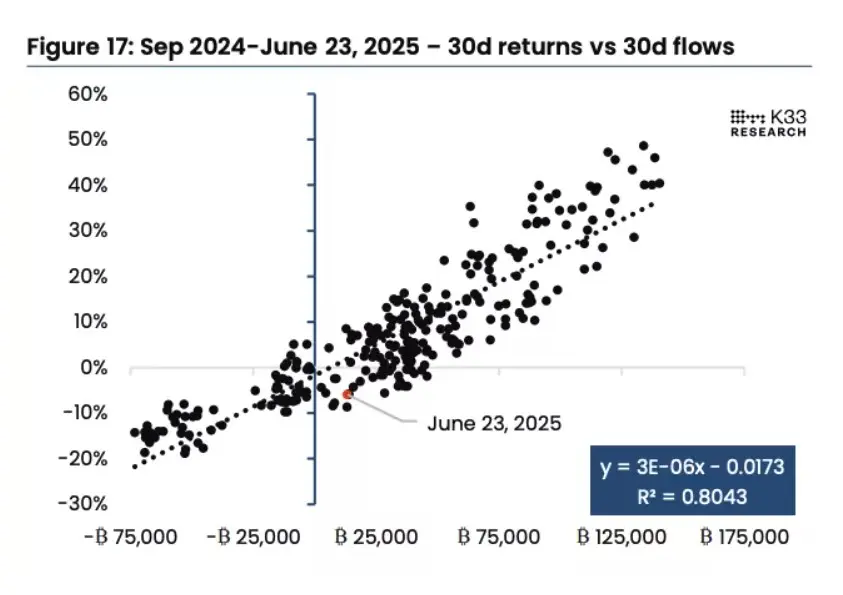
The Coefficient of Determination Between ETF Inflows and Bitcoin Price. Source: K33
According to Lunde’s observations, over the past month, Bitcoin ETFs have collectively added 13,000 BTC — the weakest 30-day inflow since April 23. This trend closely reflects the behavior of digital gold itself, which is currently trading sideways.
In contrast, the growth of companies holding crypto reserves has had a noticeably weaker impact on market prices. Data shows a low correlation between corporate Bitcoin acquisitions and the asset’s price.
While firms like Strategy continue purchasing coins directly from the market using borrowed or equity capital — thereby affecting demand — many new entrants are taking a different route. The K33 analyst pointed out that more than 50 new treasury initiatives have launched over the past three months, many of which acquired Bitcoin through in-kind stock swaps with large holders.
For example, the company Twenty One, which has accumulated 37,230 BTC, received its assets by exchanging its securities for coins held by Tether and Bitfinex. This model generates virtually no net market demand and therefore has a far smaller effect on price compared to ETF inflows.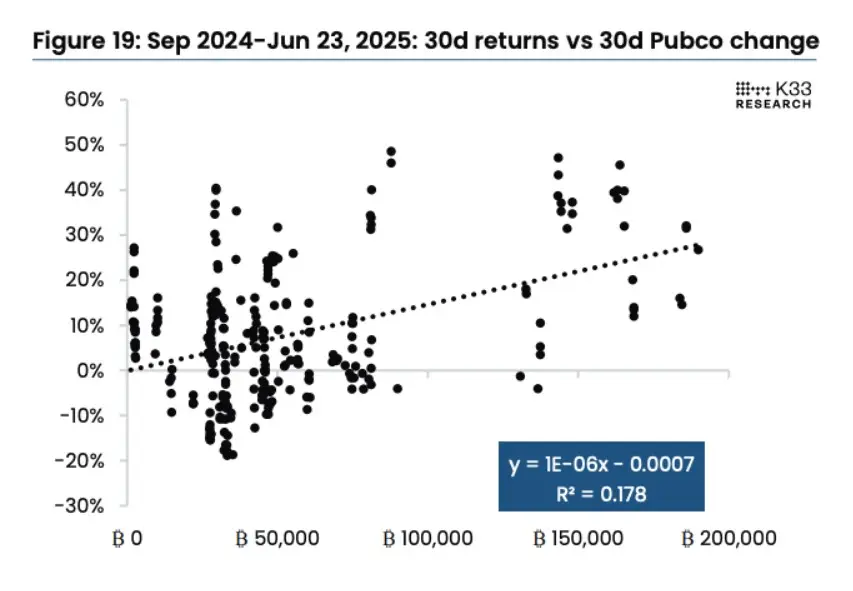
Coefficient of Determination Between Inflows into Crypto Companies and Bitcoin Price. Data: K33
“Such structures weaken the impact of inflows into corporate treasuries and may explain the low R² of 0.18 between their 30-day inflows and Bitcoin’s returns,” Lunde added.
Other Factors
On June 22, Bitcoin fell below $100,000 amid escalating conflict between Iran and Israel but quickly recovered to around $108,000 following de-escalation. Despite high volatility, the weekly decline was just 1%.
Although the armed conflict’s impact on the crypto market may seem limited, it prompted investors to reassess their risk management strategies, Lunde noted. This triggered the largest single-day drop in open interest for Bitcoin perpetual futures since August 2024 — on June 23, an outflow of 17,394 BTC was recorded.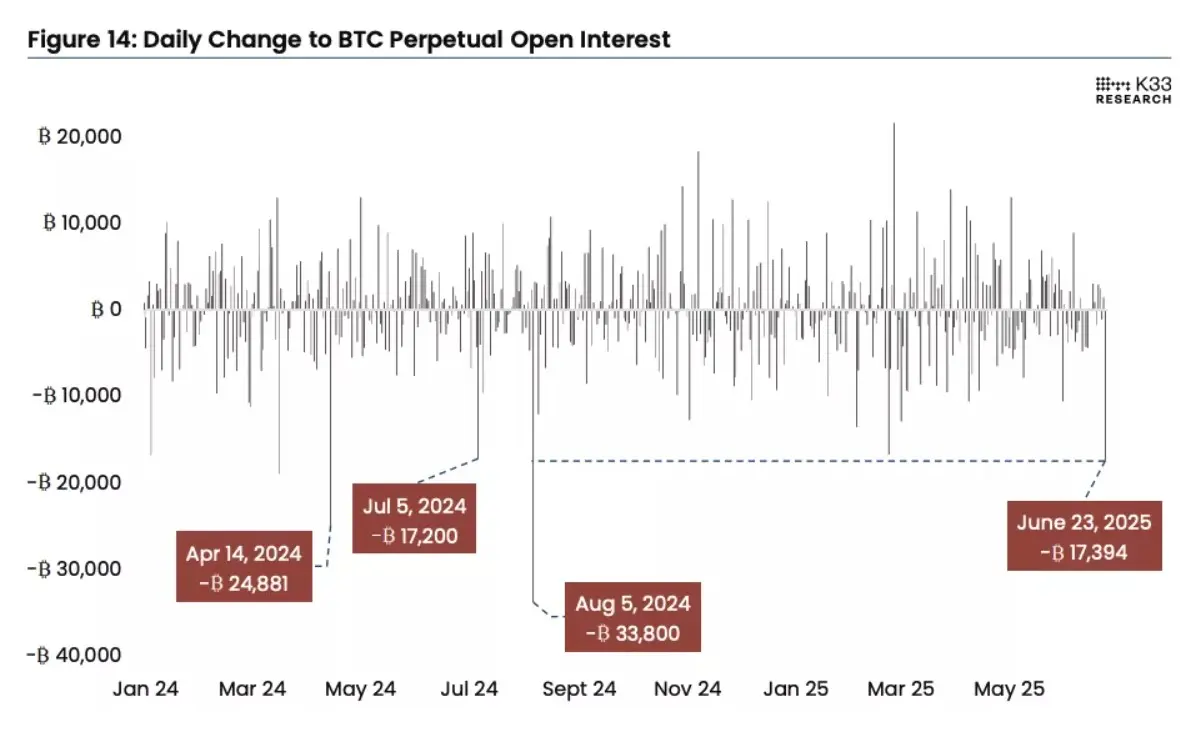
Open Interest in Bitcoin Futures. Data: K33
The sharp reduction in leverage was driven by fears of a broader conflict and the potential closure of the Strait of Hormuz — a key artery for oil shipments.
A ceasefire will likely calm investors, but upcoming events in the U.S., including President Donald Trump’s budget bill and the July 9 tariff deadline, could trigger heightened volatility in the crypto market, Lunde concluded.
As a reminder, analysts at Presto stated that the growing popularity of corporate crypto reserves marks a new era in the financial sector, comparable to the emergence of leverage and ETFs, but it also carries hidden risks.