
First thing we have to do is define the difference between a social media platform and a publishing platform.
Social Media: forms of electronic communication (such as websites for social networking and microblogging) through which users create online communities to share information, ideas, personal messages, and other content (such as videos)
Social Media Platforms are to be safe for free speech and they cannot be censored unless it violates criminal statues such as, Pedophilia, Call for violence, ETC…
Web Publishing Platform: Web publishing is the process of publishing original content on the Internet.
The process includes building and uploading websites, updating the associated webpages, and posting content to these webpages online. Web publishing comprises of personal, business, and community websites in addition to e-books and blogs.
The content meant for web publishing can include text, videos, digital images, artwork, and other forms of media.
Publishers must possess a web server, a web publishing software, and an Internet connection to carry out web publishing.
Web publishing is also known as online publishing.
Publishing Platforms do not have the protection under section 230. They are liable for the content they allow to be published. This is why most authors on these sites give resources, or references of where they got their information before they publish an investigative article.
What is Section 230?
At its core, Section 230(c)(1) provides immunity from liability for providers and users of an "interactive computer service" who publish information provided by third-party users:
What this means in Layman's terms, is that Social media platforms would have liability protection from people posting things that one group may find offensive. That means that anything can be posted, and not censored for any reason other than criminal as explained above.
Social Media Overstepping it’s boundaries.
It has been proven as of late, that the Social media companies such as: Twitter, Facebook, YouTube, and others have been overstepping their original boundaries outlined in section 230.
With Social media Platforms banning Q-Anon groups, this is a direct violation of that section. In other words, just because certain individuals or groups do not agree with the content that is posted, the social media platforms cannot remove such posts, by Law, unless it is criminal activities intended to commit crimes.
President TRUMP Calls for Repealing Section 230.
In a recent Tweet By the President of the United States, He has called for the repeal of section 230.
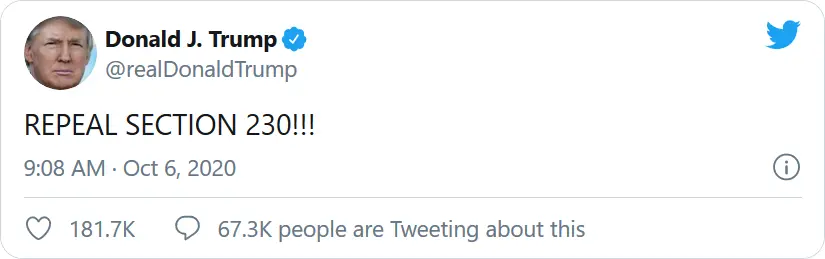
What this will mean for the Social media Platforms, is that since they have clearly violated the free speech that was intended under the communications decency Act, they will no longer have liability protection and the Thunderous herd of class action lawsuits will end up destroying their entire company.
In reality no one will ever miss Twitter, Facebook, YouTube or any other platform censoring free thought and ideas. With the end of these tyrannical Platform owners free thought can be seen, debated, scrutinized freely in order to make our world not only free and independent, but a well rounded educated population.
REFERENCES:
Communications Decency Act Section 230
https://en.wikipedia.org/wiki/Section_230
BREAKING: 'REPEAL SECTION 230!': Trump sends a warning to social media companies who continue to censor him
https://thepostmillennial.com/repeal-section-230-trump-sends-a-warning-to-social-media-companies




