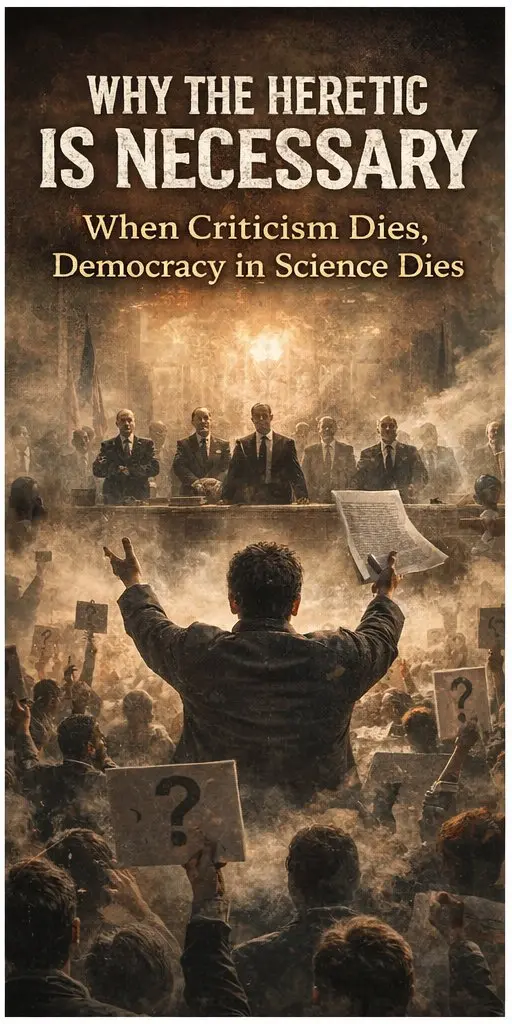
The heretic has never been simply a rebel.
In every era, the heretic is first of all a priest of truth and freedom.
Not a destroyer of order, but a guardian of the most fragile thing a society owns:
the right to think, to doubt, to criticize, and to imagine something better.
Without freedom of thought, information, and the courage of constructive confrontation, democracy does not evolve—it collapses inward. Science stagnates. Culture becomes propaganda. And a dangerous single thought takes over: one that serves not the public good, but private and often unspeakable interests.
History teaches us this again and again.
Italy is once again facing a familiar narrative:
the rebirth of the Messina Strait Bridge project.
The government has approved a new decree to revive the process after the Court of Auditors rejected earlier plans due to unclear documentation, financial inconsistencies, and environmental issues. The Ministry of Infrastructure now promises technical updates, European negotiations, environmental reassessments, and procedural corrections to finally move the project forward.
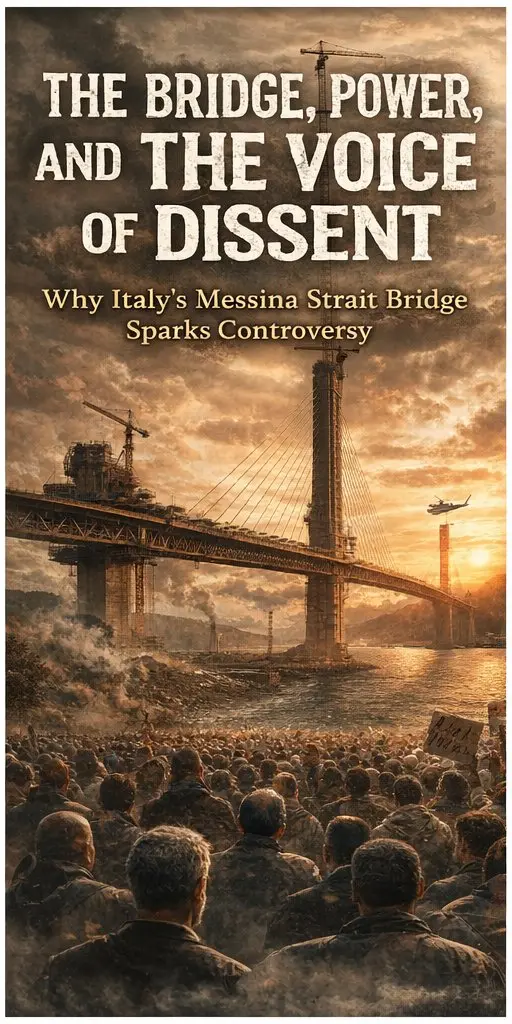
On paper, everything sounds responsible.
In reality, it reveals something deeper:
> Power always tries again.
> And the heretic always asks: “But at what cost?”
The Court of Auditors had already stopped the project once. It highlighted missing data, weak economic calculations, and unresolved environmental risks. And yet, instead of stepping back and rethinking the vision, the political machine simply reboots the narrative with new paperwork and new language.
This is not just about a bridge.
It is about how power reacts when truth interrupts its momentum.
The heretic is the one who refuses to accept progress without conscience.
The one who asks questions when everyone else is applauding.
Not because they hate development—
but because they understand that real progress is not measured in concrete and steel alone.
It is measured in:
• Transparency
• Environmental responsibility
• Respect for institutions
• Protection of public interest
• And above all: intellectual freedom
Without these, any “great work” risks becoming just a monument to ego, speed, and political storytelling.
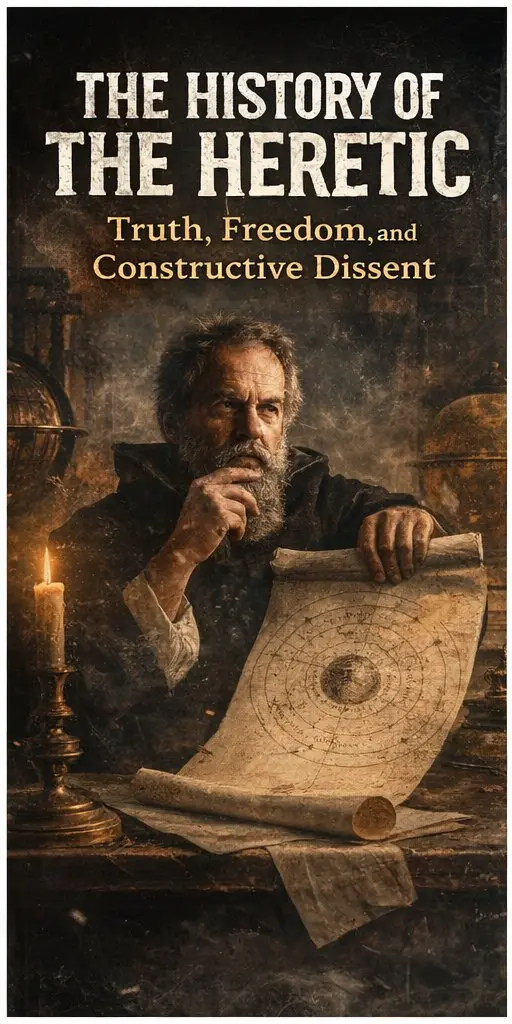
Every major leap forward in human history was born from someone who said:
> “What if the truth is different from what we’re being told?”
From science to civil rights, from art to philosophy, heretics were the ones who cracked the surface of imposed reality and allowed something new to breathe.
They were not enemies of society.
They were its immune system.
And today, in a world dominated by algorithms, spin, and accelerated narratives, the role of the heretic is more necessary than ever.
The bridge may or may not be built.
But the real question is not if we connect two lands.
It is whether we are still able to connect power with truth,
progress with ethics,
infrastructure with freedom of thought.
Because when criticism dies, democracy in science dies with it.
And when heresy disappears, only obedience remains.
And obedience has never built a future worth living in.
So the whole days in the long, uncertain
sleep moan! But then when the brunette
night the stars in the sky call and the moon,
and the cold air of silent shadows is covered;
Where wooded is the most deserted floor,
allor, slow I wander, one by one
I feel the sores so that royal luck,
and love and the world have my open core.
Tired I just lean on a pine tree,
and now, prostrate where the waves burst,
with my hopes I speak and delirious.
But for you mortal wrath, and destiny
often forcing, to you, woman, I sigh:
light of my eyes who is hiding me?
🌹🥀🌹🥀🌹🥀🌹🥀🌹🥀🌹🥀🌹🥀
Marekiaro
Digital Artist & Content Creator
Publish0x