
Gold has served as a store of value for thousands of years. In periods of monetary uncertainty, inflation, or financial instability, investors tend to return to it almost instinctively. The logic is simple. Gold is scarce, globally recognized, and historically resistant to currency debasement.
Yet something curious happens when people actually try to buy gold today. Despite living in an era of digital finance, global markets, and instant settlement systems, accessing gold in a simple and sovereign way remains surprisingly difficult.
The reality is that most modern investors do not actually own gold in the way they believe they do.
Understanding why requires looking at how the gold market has evolved over the past decades.
Gold Still Responds to Monetary Instability
The relationship between gold and inflation has been studied for decades. While gold does not move in perfect correlation with inflation in the short term, long-term cycles repeatedly show the same pattern: during periods of rising monetary pressure, gold tends to reprice higher.
The following chart illustrates how gold has moved alongside inflation in recent decades.
Press enter or click to view image in full size
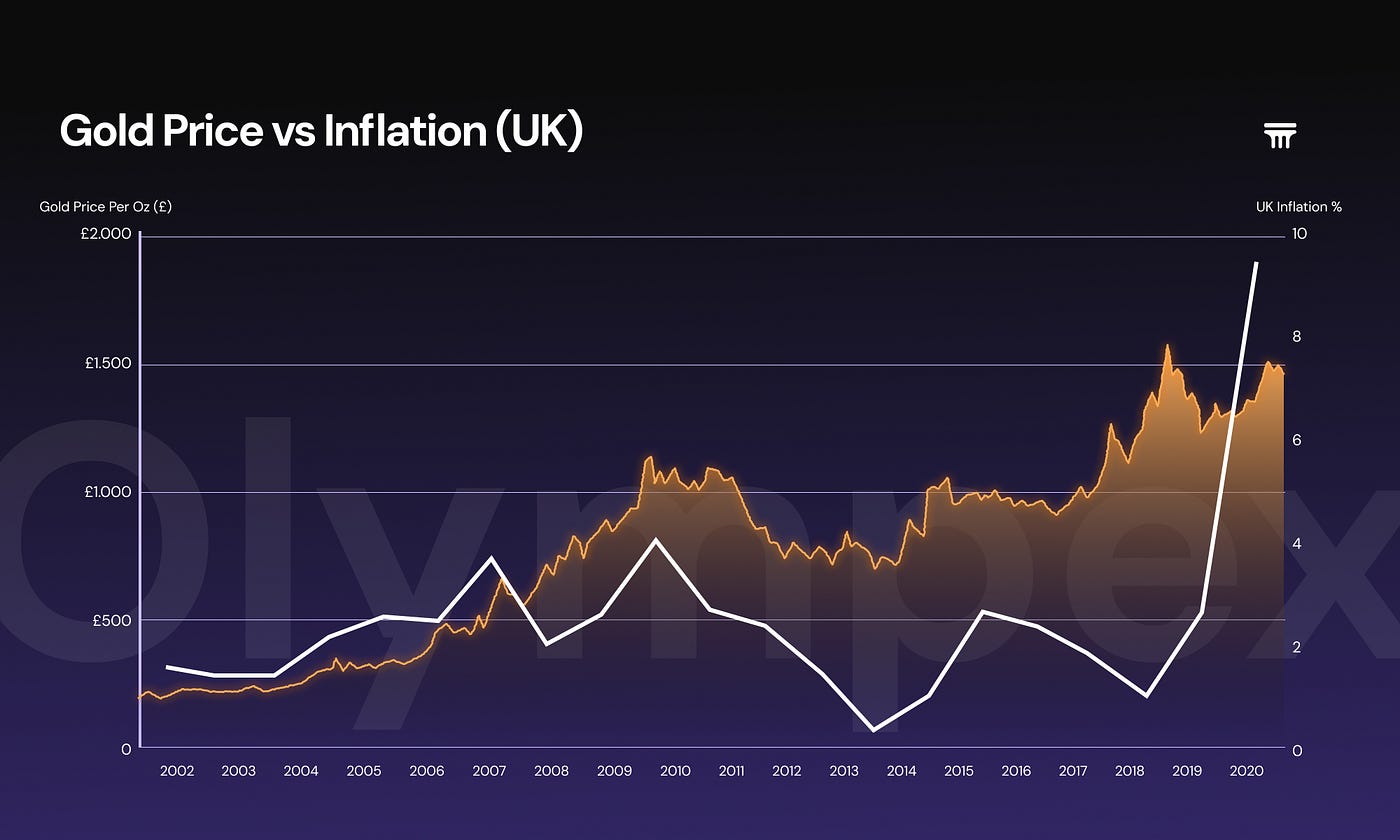
What this chart reveals is not merely price appreciation. It shows that gold remains deeply connected to the stability of the monetary system itself. When inflation accelerates or when confidence in currencies weakens, capital frequently rotates toward hard assets.
This is precisely why central banks continue to accumulate gold reserves and why institutional investors still view it as a structural hedge.
But if gold remains so important, the next question becomes more interesting.
If investors want gold, how are they actually accessing it?
The Modern Gold Market Is Built on Intermediaries
For most investors today, buying gold rarely means taking direct possession of the asset.
Instead, exposure is typically obtained through financial products. Exchange-traded funds, custodial vault programs, broker accounts, and derivative instruments have become the primary access points to the gold market.
The chart below highlights a striking trend in recent years.
Press enter or click to view image in full size
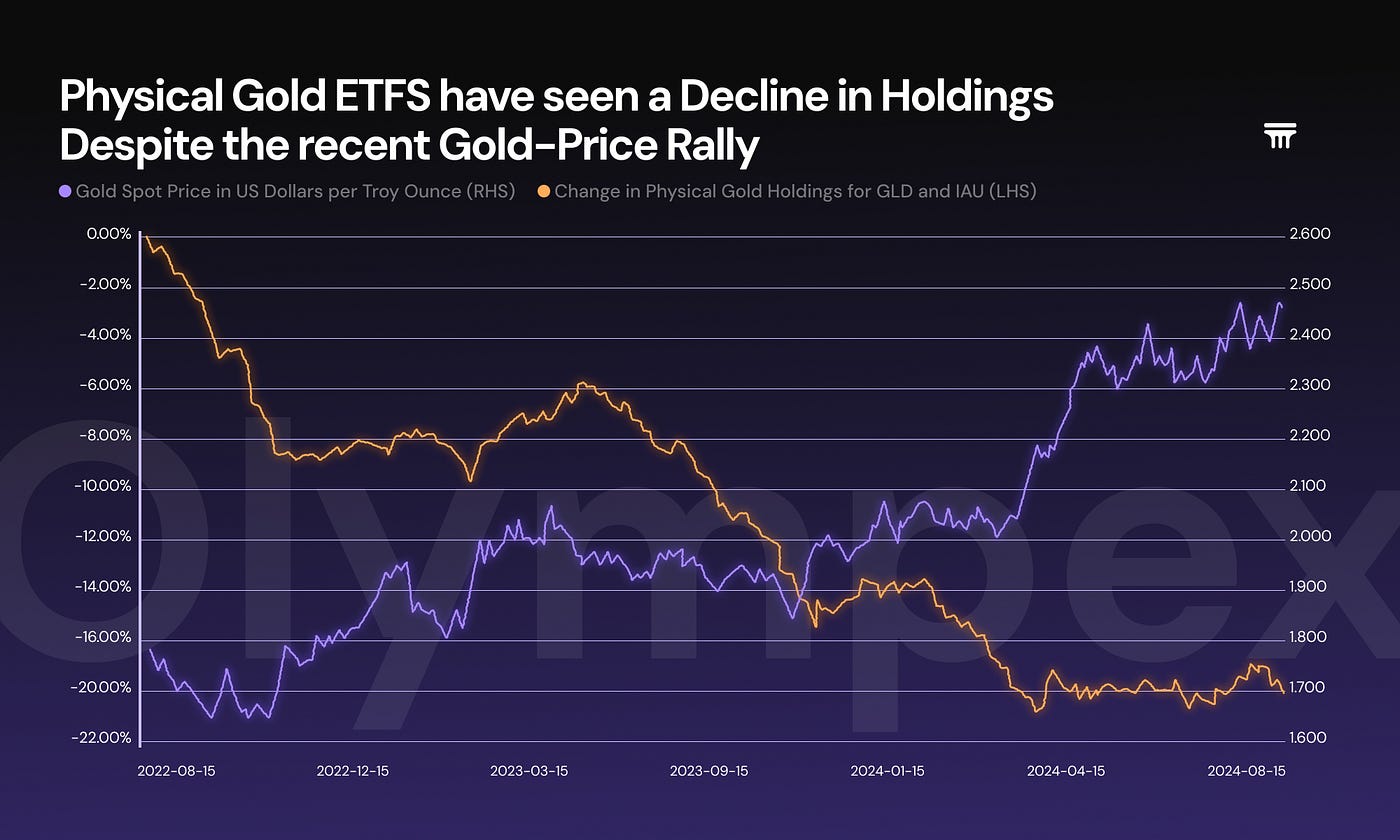
Despite gold prices rising, holdings in major physical gold ETFs have declined. This divergence reflects a structural shift in how investors are thinking about custody and ownership. ETFs made gold easier to trade, but they also introduced an additional layer of financial infrastructure. Investors often hold shares that represent claims on gold rather than direct control of the metal itself.
In other words, convenience came at the cost of sovereignty.
For decades this trade-off seemed unavoidable. If you wanted liquidity, you needed intermediaries. If you wanted direct ownership, you had to deal with vaults, transportation, and physical custody.
But that assumption is beginning to change.
A New Infrastructure for Gold Is Emerging
Over the last few years, a new segment of the market has started to grow rapidly: tokenized gold.
Tokenized gold represents physical gold stored in vaults but issued as blockchain-based tokens that can be transferred, traded, or held in self-custody wallets.
The growth of this market has accelerated dramatically.
Press enter or click to view image in full size
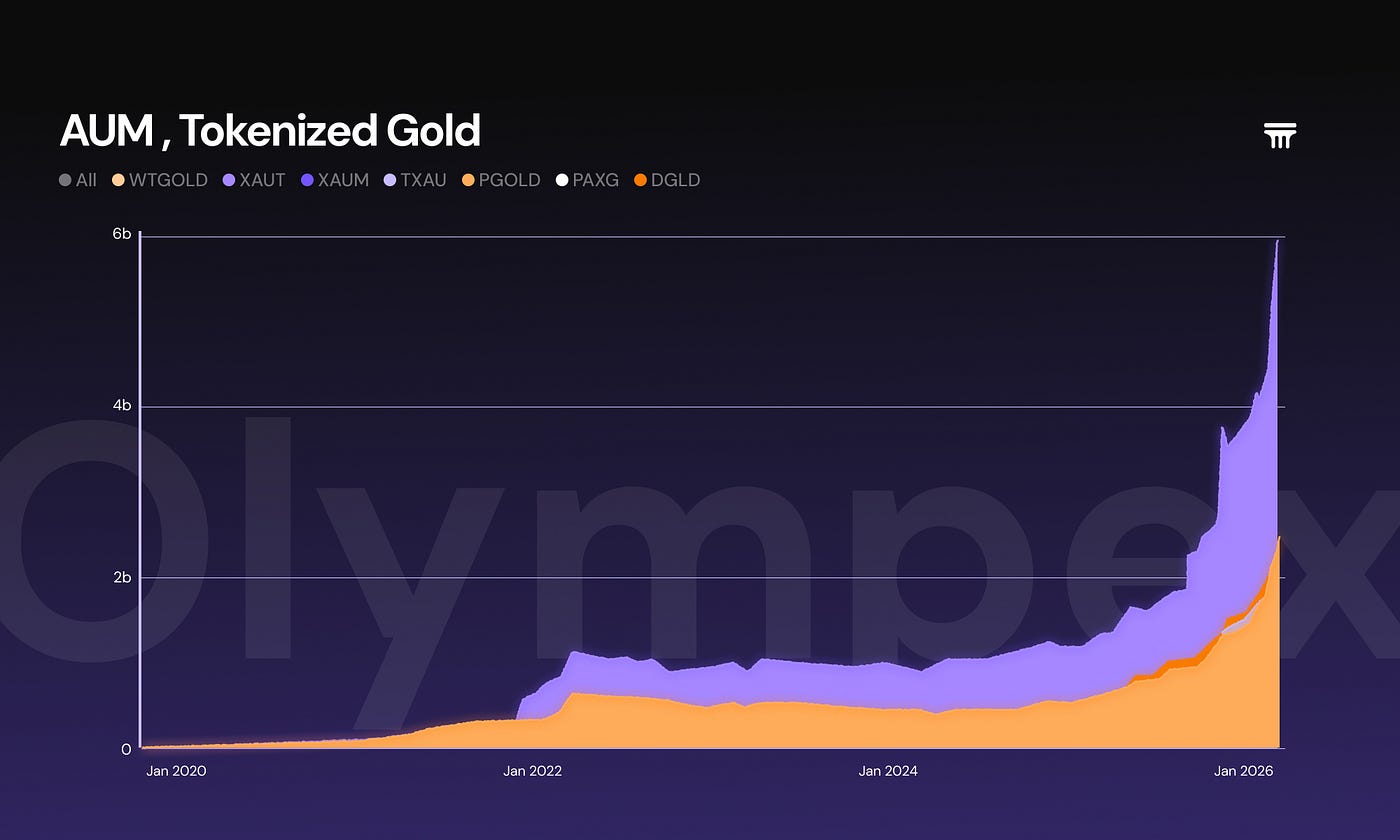
What began as a niche experiment is now becoming a meaningful financial infrastructure layer. Investors can access gold markets with the speed and flexibility of digital assets while still maintaining exposure to physical bullion.
More importantly, tokenization introduces a possibility that traditional financial infrastructure struggled to provide: Direct ownership without reliance on centralized custodians.
This changes the way investors think about precious metals entirely.
Instead of choosing between liquidity and sovereignty, it becomes possible to access both.
From Intermediated Finance to Self-Custody
The evolution of gold markets reflects a broader transformation occurring across financial systems. Investors increasingly question the layers of intermediaries that sit between them and the assets they own.
Self-custody, transparency, and programmable financial infrastructure are no longer abstract ideas. They are becoming practical tools.
For precious metals, this shift opens a new path. One where investors can hold gold exposure directly, move it globally, and interact with it through decentralized infrastructure rather than relying exclusively on legacy financial institutions.
This is precisely the transition we explore in our upcoming session.
Webinar: Investing in Gold and Silver with Privacy
In our upcoming webinar, we will explore how modern financial infrastructure is transforming access to precious metals.
We will discuss how investors can access gold and silver markets while reducing intermediary risk, how self-custody changes the structure of ownership, and how new technologies enable operational privacy without the complexity traditionally associated with physical bullion.
The goal is not simply to understand gold as an asset.
It is to understand how the infrastructure around gold is evolving.
Because in the next decade, the way investors access precious metals may look very different from the systems that dominated the last fifty years.





