We’ve been sold the idea that connecting blockchains is the final frontier. But the real challenge isn’t just interoperability, it’s integration.
Bridge ≠ Experience
Over the last cycle, bridges became the holy grail of cross-chain infrastructure. If you could move assets from Ethereum to Avalanche, or from Arbitrum to Base, you were “interoperable.”
Projects like:
- Stargate focused on unified liquidity pools.
- LayerZero proposed a lightweight messaging layer.
- Wormhole built universal message-passing frameworks.
- Axelar promised secure cross-chain communication for apps.
They solved part of the equation: transferring assets.
But DeFi users don’t just want to move tokens.
They want to act on them. Instantly. Across chains. In one place.
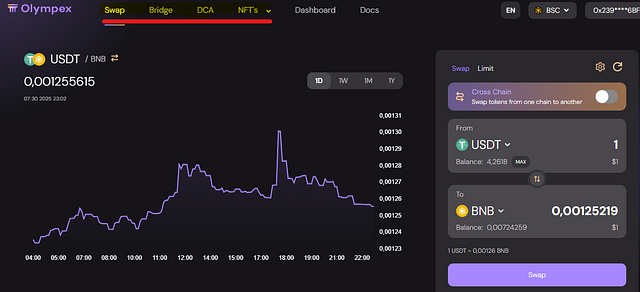
Cross-chain ≠ User-centric
Imagine this:
- You bridge $500 from Optimism to Polygon.
- You wait 3–8 minutes.
- You sign 2–3 wallet transactions.
- You access a new interface, connect again, swap, and maybe finally farm.
That’s not interoperability.
That’s multistep friction, interface fatigue, and UX fragmentation.
The result?
Only whales, bots, or degens with time to kill actually benefit. Everyone else pays in time, risk, or complexity
Interoperability was only step one.
The real leap is functional integration.
It’s not enough to move assets between blockchains.
What matters is being able to operate seamlessly across them.
- Swap on Chain A and receive on Chain B.
- Set a limit order on Ethereum for a token living on zkSync.
- Deploy a DCA strategy that pulls from BNB Chain and executes on Base.
- Stake cross-chain LPs without jumping 4 protocols and 6 UIs.
No bridge does that.
No aggregator does that.
Until now.
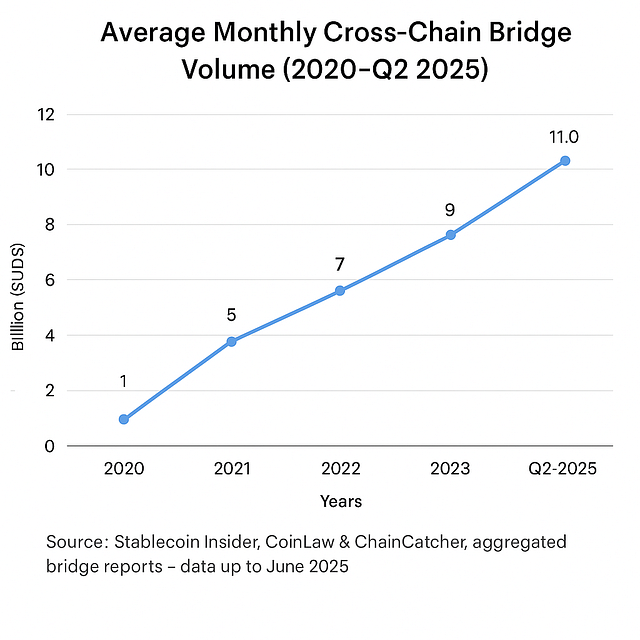
Average Cross-chain bridge
Olympex: From Cross-Chain to Cross-Function
Olympex was not built as a bridge. It was not designed as a DEX aggregator.
It’s an execution infrastructure built on the premise of connectivity ≠ usability.
✅ It integrates the routing logic of swaps, bridges, and strategies into one modular core.
✅ It lets users move and act on their liquidity, across chains, in one transaction.
✅ It abstracts the complexity, but keeps control and transparency in the user’s hands.
It’s not just about moving tokens.
It’s about orchestrating liquidity, regardless of where it lives.
Interoperability = Infrastructure. Integration = Experience.
DeFi doesn’t need more bridges.
It needs composability across contexts, not just chains.
That’s why Olympex is stepping beyond routing, beyond bridging, and the aggregator mindset.





