
The arrival of crypto exchange-traded funds (ETFs) has redefined how the traditional financial world views digital assets.
For years, cryptocurrencies existed at the edge of institutional portfolios, admired for their potential, dismissed for their volatility, and ignored for their regulatory uncertainty. That changed dramatically in 2024, when U.S. regulators approved the first spot Bitcoin ETFs, triggering a wave of institutional inflows that exceeded $1 trillion in trading volume within 18 months (Bloomberg).
For the first time, legacy investors, from pension funds to private wealth managers, could gain direct exposure to crypto without touching a wallet or navigating on-chain infrastructure. The effect was immediate: credibility, liquidity, and visibility surged across the entire ecosystem.
What Are Crypto ETFs and How Do They Work?
A crypto ETF allows investors to track the price of cryptocurrencies such as Bitcoin or Ethereum through shares traded on traditional exchanges.
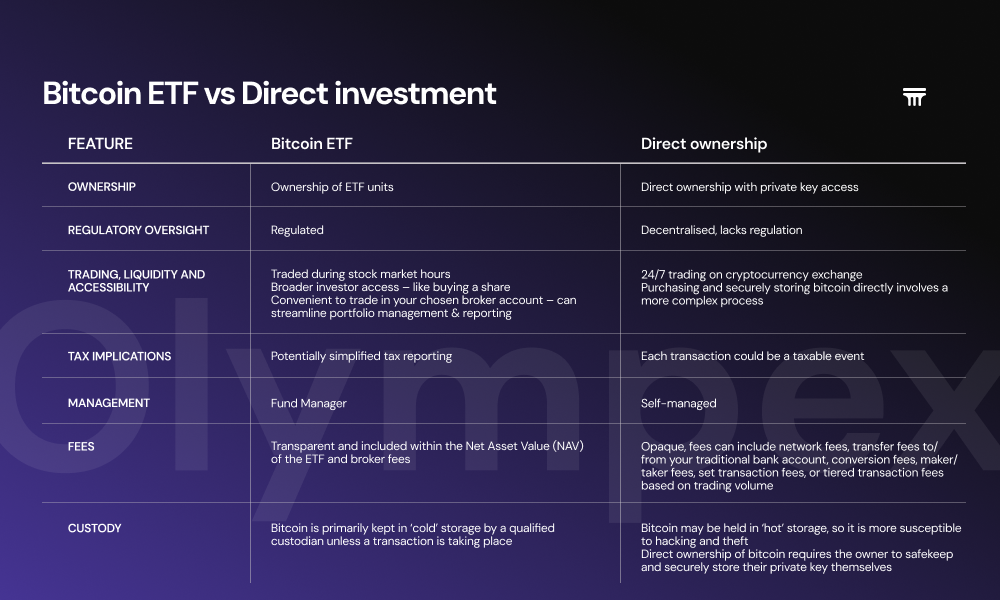
Instead of buying digital assets directly and managing private keys, investors purchase ETF shares that represent a proportional claim on the underlying holdings.
The mechanics are simple but powerful. ETF issuers buy and store the crypto assets with a regulated custodian. Market makers then create or redeem ETF shares to keep prices aligned with the real asset value. Investors can trade those shares through familiar platforms like NASDAQ, NYSE, or Euronext, just as they would with stocks or gold ETFs.
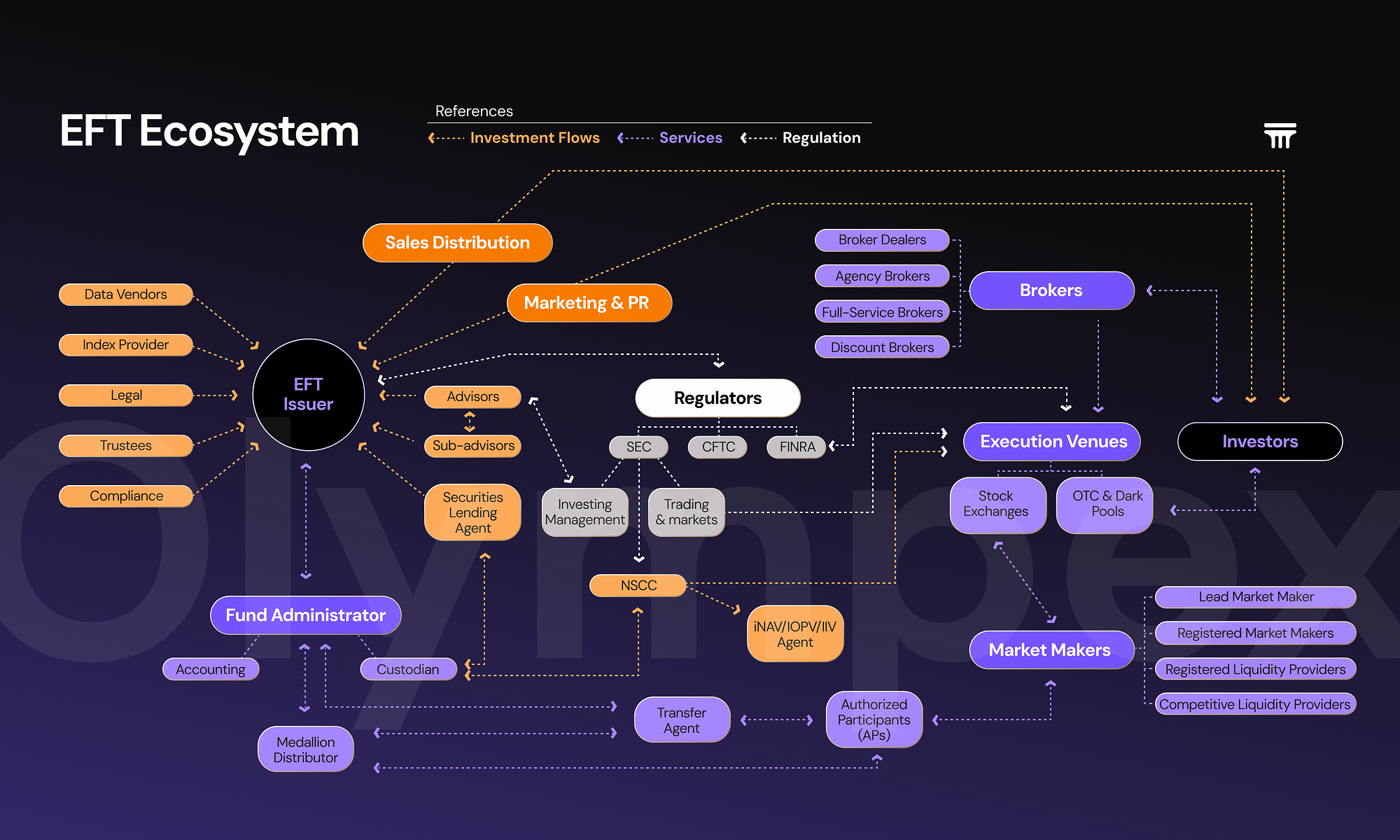
Source: https://www.etftrends.com/etf-ecosystem/
The Bridge Between Traditional Finance and Crypto
Crypto ETFs are more than just new investment products, they are the missing bridge between two financial worlds that have long operated in isolation.
For traditional finance (TradFi), ETFs translate the complexity of blockchain into a regulated, tradable format. For crypto, they inject institutional capital and legitimacy into an ecosystem historically driven by retail participation.
This bridge has created a two-way flow of innovation. While TradFi gains exposure to high-growth digital assets, crypto benefits from improved governance, standardized reporting, and the credibility of established financial intermediaries.
In essence, ETFs are not replacing DeFi, they’re paving the road that leads more investors toward it.
Why Traditional Investors Are Paying Attention
For investors who are used to operating in regulated, familiar environments, crypto ETFs provide something the broader digital asset market has struggled to offer: clarity. These funds package crypto exposure inside a structure governed by institutions like the SEC, ESMA, or ASIC, giving both retail and institutional investors the reassurance that comes with established oversight. Instead of navigating wallets, seed phrases, or exchange accounts, they can access digital assets directly through the same brokerage platforms they already use for stocks, bonds, or retirement portfolios.
ETFs also simplify diversification. Investors no longer need to piece together complex portfolios across multiple crypto exchanges; instead, they can gain exposure to Bitcoin, Ethereum, or even multi-asset Web3 indexes through a single product. The liquidity and simplicity of trading ETF shares, buying and selling them during market hours like any other equity, removes significant friction for conservative participants. In many ways, this convenience is exactly what large institutions needed before taking their first step into digital assets.
Risks and Limitations
Yet, as accessible as crypto ETFs are, they come with important limitations. Investors do not actually own the underlying crypto, they own shares of a fund. That means they cannot transfer their assets on-chain, participate in DeFi, or use the tokens in any digital-native way. The fund structure also introduces the possibility of tracking discrepancies, where ETF prices may drift slightly from the real market value of the assets due to fees, liquidity, or custody timing.
Another challenge is trading hours. While crypto markets operate around the clock, ETFs remain tied to traditional exchange schedules, reducing flexibility during fast-moving periods. And finally, regulatory environments vary significantly by region. Some countries move quickly to approve new products, while others delay or reject them altogether, creating uncertainty for issuers and investors alike.
Source: https://www.vaneck.com.au/blog/vectors-insights/btc-etf-why-it-works
Real-World Examples of Crypto ETFs
1. BlackRock iShares Bitcoin Trust (IBIT): The largest Bitcoin ETF globally, with over $52 billion in AUM and consistent inflows.
2. Fidelity Wise Origin Bitcoin Fund (FBTC): One of the first ETFs to achieve regulatory approval and deep liquidity.
3. ARK 21Shares Bitcoin ETF (ARKB): Known for transparent management and low expense ratios.
4. Purpose Bitcoin ETF (Canada): The pioneer of spot Bitcoin ETFs, setting early precedent before U.S. approval.
5. CSOP Bitcoin Futures ETF (Hong Kong): Expanding crypto ETF access to Asian markets under robust local regulation.
Together, these funds illustrate a global trend: Crypto is no longer a niche asset; it’s an emerging macro asset class integrated into traditional portfolios.
The Role of Regulators
Regulators are now shaping the pace of adoption. The SEC, ESMA, and HKMA have established frameworks for ETF approvals, focusing on investor protection, custody standards, and market surveillance.
While critics argue that regulation slows innovation, it has actually provided the credibility needed for institutional participation.
This oversight transforms crypto from a speculative frontier into a structured asset class, and ETFs are the instrument making that transformation tangible.
How Crypto ETFs Accelerate Institutional Adoption
Institutions move on trust, not hype. ETFs provide that trust by combining familiar operational standards with the upside potential of crypto assets.
Asset managers can now build balanced portfolios that include Bitcoin exposure without breaking compliance rules. Pension funds can allocate small percentages to crypto without compromising fiduciary duty. Even conservative investors can hedge inflation risk through regulated digital exposure.
This shift is reshaping the financial landscape, crypto assets are no longer seen as alternatives, but as components of diversified global portfolios.
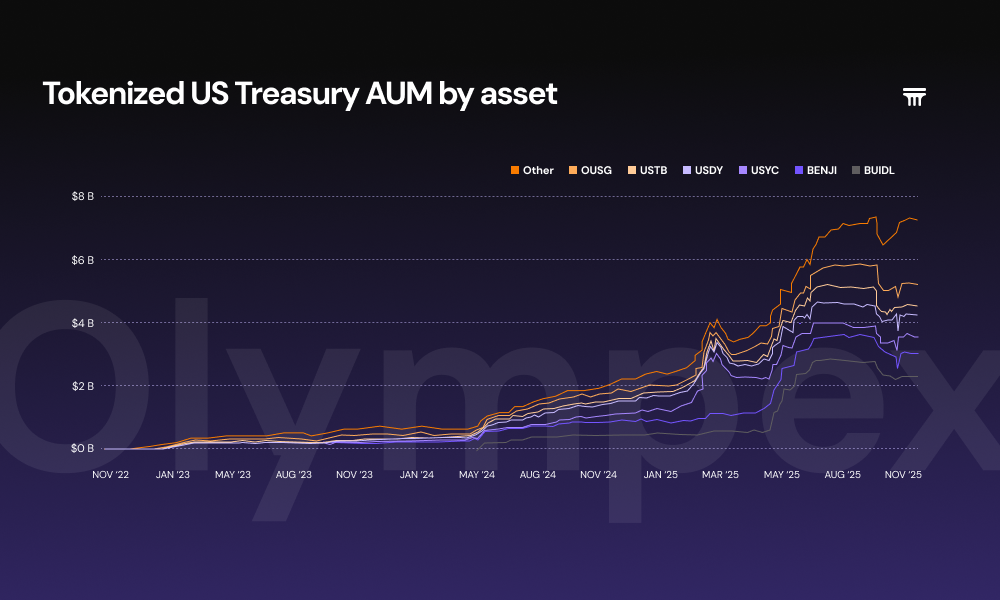
Source: https://www.chainalysis.com/blog/north-america-crypto-adoption-2025/
Final thoughts
The success of Bitcoin ETFs has done more than introduce a new investment product, it has opened the door to an entirely new category of crypto-based financial instruments. With Bitcoin now firmly established in traditional markets, attention is shifting toward what comes next: Ethereum ETFs, Solana ETFs, and eventually multi-asset funds that track entire segments of the Web3 economy. It’s easy to imagine thematic ETFs emerging around DeFi infrastructure, tokenized real-world assets, or even cross-chain liquidity networks, giving investors exposure to parts of the crypto ecosystem that were previously accessible only to on-chain participants.
Looking further ahead, the boundaries between ETFs and blockchain technology may blur entirely. As tokenization expands and fund structures evolve, we may see the rise of on-chain ETFs, fully transparent, programmable investment vehicles that update, rebalance, and distribute value through smart contracts. These products would combine the reliability of traditional finance with the efficiency and auditability of decentralized systems.
This is the direction the industry is moving toward, and it is the environment Olympex is preparing for. By building infrastructure focused on transparency, intelligent liquidity routing, and smart asset management, Olympex is positioned to bridge traditional markets with emerging on-chain financial rails.
The next generation of investors won’t choose between TradFi and DeFi.
They’ll navigate both seamlessly.





