In Part 1 I looked at user intent. In Part 2 I looked at user Gestalt grouping. In Part 3 I looked at operant conditioning. In Part 4 I looked at schemata. In part 5 I looked at semiotics. This article will rely heavily upon the rest of the series having been read, so I strongly recommend you check those out before proceeding.
Part 6: The big picture
By now I’ve taken you through what I consider to be the most important principles for crafting a better cryptocurrency wallet user experience. If I’ve done a decent job of it, you should have some idea not only on the nature of these principles, but also have a rudimentary concept of how they can be harnessed. In this final article of the series, I’m providing you with a commonplace example of these principles being used to draw inspiration from, as well as sharing some extra ideas and final thoughts.
You’re likely familiar with electronic slot machines. These are a great demonstration of principles I’ve covered being employed—albeit unscrupulously—dialled up to eleven. Careful design turns what’s essentially a ‘press button/pull level to lose money’ machine into something psychologically rewarding to use. Let me address what may quickly become the elephant in the room by pointing out that this is a form of gambling. I’ll be not be focusing on the addictive and gambling related aspects in this article, but simply user engagement design.
Choosing a machine
Slot machines are usually clustered closely in casinos or other such venues. This phase perhaps differs most from crypto wallets, as the scenario here is more of a ‘kid in a candy store’ battle for attention. If you recall the anecdote I prefaced this series with, this situation is much the same. The target audience is bombarded with attention grabbing melodies, illustrations, and colourful flashing lights not unlike at carnivals and fairs. What is it then that captures people’s attention within this mess?
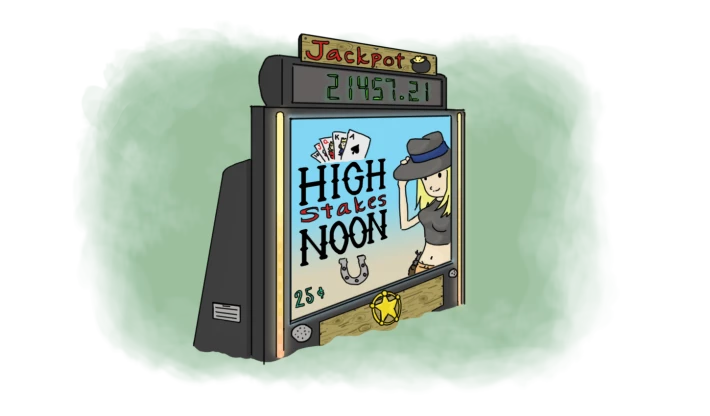
Recall from part 1 the practice of placing the most important information at the forefront. Looking at the illustration of the machine above, you’ll see the most eye-catching features are the theme, the jackpot, and the machine’s cost. They’re central, high, and large—though which takes precedence varies between machines.
The jackpot display is simple enough, as it’s an appeal directly to the audience’s desire to win a great sum. Weighing this jackpot value against the machine’s cost helps some people feel they’re making a rational decision on machine to play. Drawing the eye to the jackpot value and cost directly plays to audience intent: that being to gamble on a big win.
The theme is communicated through the title of the machine, the graphic design and illustrations, and melodies it plays. It’s important to recognise that these machines focus on the illusion of ‘free money’ and the excitement around it, so the theme present throughout each—from the iconography, to the aural cues—usually appeal to such schemata. Crypto wallets should present a more grounded picture in general, focusing presentation on security and professionalism over excitement.
Themes and styles can vary—cute, sexy, cool, fancy, etc.—as casinos can afford to cater to individual tastes due to the sheer volume of offerings—a ‘something for everyone’ mentality. A cryptocurrency wallet cannot take such steps indiscriminately, so must be as welcoming in theme and execution as possible, or cater intentionally to a carefully identified and understood niche. The latter takes more research and effort, but expanding from a niche comes recommended as the superior marketing practice by most experts.
Another consideration is that of convenience and accessibility, such as the inclusions of things like cup holders for drinks or coins, brail, large icons and text, and large face buttons on the machine. The physical elements may not apply to crypto wallets, but the appeal of such accessibility and convenience elements, such as colour blind mode, large text options, currency conversion, etc., is something to keep in mind.
First engagement
The audience has become the user now, and the machine must now embrace their intent by design mindful of the 3 don’t Ds from part 1. Slot machines generally display critical information around the playing area on the screen, distinct from the screen as graphics on the face of the machine, or both. This information generally includes the various symbols and their worth, general bonus and multiplier rules, and any other critical use points. The screen will typically also have credits, bet, and winnings values on display.
The display of critical information at all times is useful for the user. In this way, the machines fit well into the 3 don’t Ds. The user determines when this information is relevant, and can refer to it as they please without it getting in their way until necessity arrives. Some machines offer these explanations in the form of expandable panes accessible from the side of the screen, which I feel is a particularly fitting solution wallets should consider adopting rather than having users hunt through menus.
Upon inserting money, a machine will generally give a feedback stimulus; on top of the physical sound of the coin or token dropping down the chute to the bin below, these may include aural cues in the form of chimes or short melodies, and visual cues such as blinking lights or animations playing on the screen. Naturally, the credit balance will reflect the inserted amount also. In crypto wallets, the receipt of funds is generally a rather muted affair. There’s a balance to be struck, I feel, between the extant cautious pop-up notification, and the more exciting animations and melodies of the slot machine. A tangible wallet provides the visceral experience of inserting the money into it as feedback, so perhaps a digital wallet should target such an impact.
How to spin the reels should be very clear also, with the button (or nostalgic lever in some cases) being clearly marked and highly visible.
The reels themselves may be animated with easing in/slow in effects to communicate acceleration, and following through to communicate inertia on a sudden stop, giving a more physical presence to the reels. Animation in general is a very powerful way to spice up any user interface.
Winning spin
The iconography on the reels determine whether a spin is a win or not, with a win being determined by the number and formation of like symbols. As previously discussed, the value and bonuses of these symbols will be displayed somewhere on the physical machine or interface, though if well designed, there should be a decent ability to intuit their value. This is achieved by concepts of value the user is likely to attribute these icons based on semiotic interpretation and an associated schema.
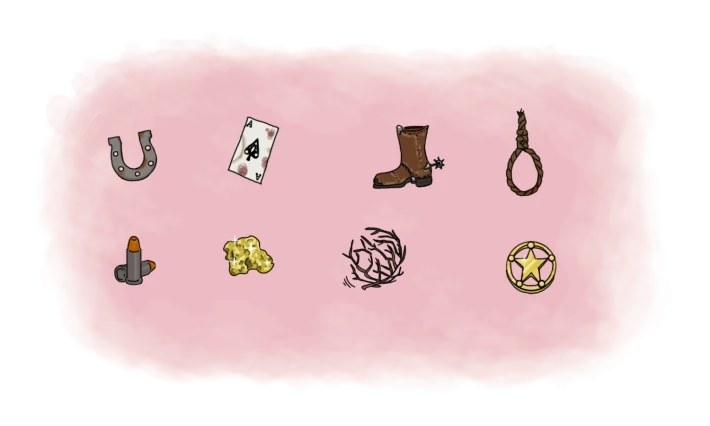
Consider the assortment of images above; ignoring position, which do you intuitively attribute more value to?
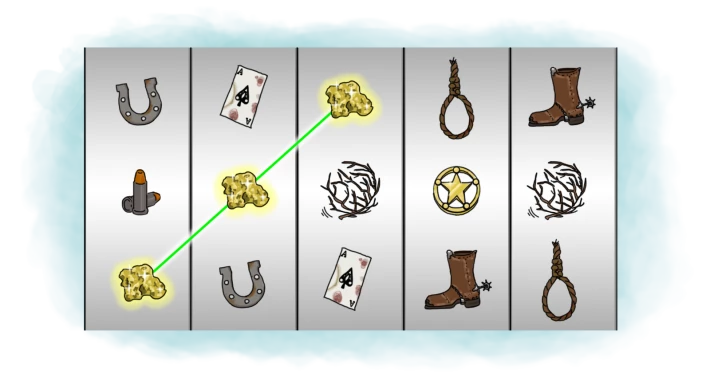
In the image above, a win of the minimum 3 aligned symbols has been hit. The symbols may glow, flash, or more substantially animate in order to have them stand out. A line also joins the winning symbols, grouping those using Gestalt principles to define them. Interesting is the hierarchy of grouping principles on display, as the visuals of the reels that hearken back to mechanical machines inadvertently group the columns, but are overpowered by the intended means of grouping.
The machine, upon registering a win, will usually play some kind of upbeat melody and animation, and funds displayed on the machine will increase. With significant increases, many machines will raise incrementally over time rather than in a sudden correction to exaggerate the winning and accompanying joy for the user. Another technique sometimes seen is the display of an arithmetical overlay for a similar high i.e. +20.00 appearing over the total and fading as the total adjusts. In a cryptocurrency wallet, I’d personally recommend the use of the latter method here if either is employed. The former could potentially work for a mining or staking reward, though subjectively at least I feel this would be overkill.
Another tactic electronic slot machines use is the presentation of fables and parables to present a narrative attached to the theme. For example, a jackpot may result in a genie granting you a kingdom, a miner striking gold, a horse winning a race, or the user reaching the pot of gold at the foot of the rainbow. This adds weight to the user’s intent being met and goal being achieved. Naturally, it’s rare and thus extreme in the case of a jackpot, but a cryptocurrency wallet could employ such in sparing measures to great effect should it match the project’s branding.
Losing spin
A losing spin on a slot machine entails the reels land on no combination of any value, with the user losing whatever the bet on the spin cost them. These are a frequent occurrence on slot machines, which, on average, take more than they give, returning only 82 to 98% of the money inserted back.
In the previous part I spoke as an aside about moving away from using red text on wallet spends as it communicates the wrong impression. I’ll go into something related here that gives some flesh to that statement; that being loss aversion<https://en.wikipedia.org/wiki/Loss_aversion>—the tendency of people to prefer avoiding losses to making gains.
In a cryptocurrency project I previously worked on that utilised proof-of-stake consensus, rewards were announced by OS alerts, added to the wallet, and then, in the case they became orphaned blocks (which is a natural part of PoS and happens often) the reward text turned red on the wallet overview. I worked with a developer to change the way orphans were displayed, having them appear greyed out instead. This subtle difference helps communicate the reward was ‘irrelevant’ rather than ‘a loss’, and went a long way towards pleasing those distraught at ‘losing’ money they never really had to begin with.
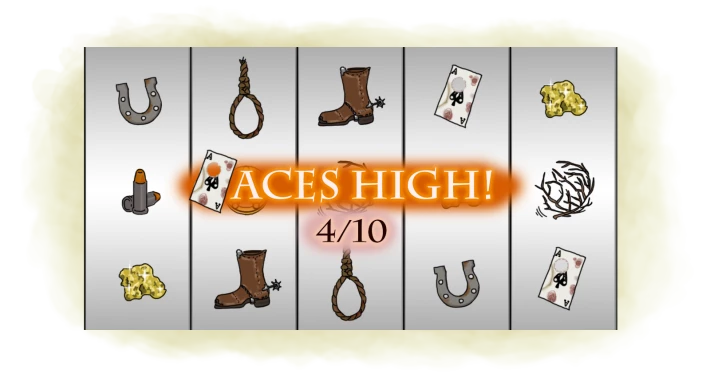
Let’s consider our fictional slot machine once more. Due to loss aversion, users hitting a streak of losing spins may feel inclined to quit. There are mechanisms, both seen and not, to protect against this. Pity timers protect from behind the scenes, and faux wins or consolations such as ‘free spins’—already factored into the machines pricing—balance the conditioning reinforcement schedule. This keeps users playing even when winning is not frequent. As a hypothetical example, in the image above, a losing spin with at least two of the ace of spades symbol could add towards a free spin bonus counter. When 10/10 is reached, a short animation of the machine’s character firing her gun upon the cards of a cheating poker opponent could play, adding spectacle to the achievement.
If then we now return to a staking wallet, the design could include a visual that communicated the likelihood of hitting a stake as determined by network statistics and probability. Doing so would doubtless help those securing the network with their node, but yet to hit a staking reward, feel there’s ample reason to keep staking.
So, I hope I've helped you identify how clever design using psychology and communication principles can turn something mundane into something engaging, compelling, and most importantly, pleasant to use. While slot machines take these principles to the extreme, understanding what they do and why should allow a cryptocurrency wallet designer to better accommodate and satisfy target users.
To conclude this series, I want to thank anyone who’s taken the time to read it through. I hope you’ve found it entertaining. Feel free to comment here, or reach out to me at my twitter account below. I'd be glad to hear from you.
 Strontium @Stronti55767802





