
A new wave of increased interest of the regulators towards cryptocurrencies and the restrictions in the operation of a number of crypto exchanges have led to a correction in Bitcoin’s price from $50,000 to $40,000. However, a number of indices signal a near correction end.
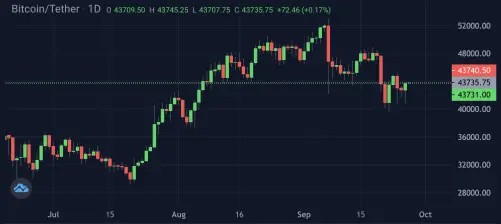
Extreme levels of the fear & greed index signal a nearing reversal. The greed was as its peak when Bitcoin was selling for $60,000, and then fear took over at the $30,000 price level. Now, the fear level is again close to the summer lows, which generates support at the current price levels.

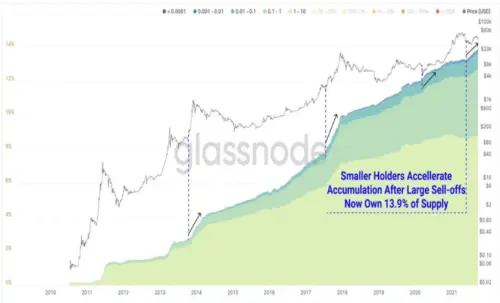
The most cautious holders are the ones with relatively small amounts (<10 BTC). After May’s drawdown, they have turned to buying again, having lifted their share to the historical 13.9%.
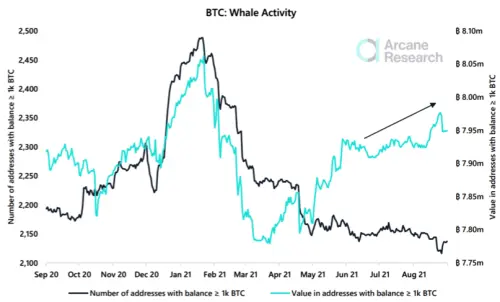
But the whales (≥ 1000BTC) continue to grow their reserves too. Their ranks have shrunk by 15% since February, but the reserves of those who remained have gone up on the average from 3,236 BTC in February to the current 3,722 BTC.
A notable example of a true holder is MicroStrategy, which bought additional 5,050 BTC for $48,000 in September. The company’s current reserve amounts to 114,042 BTC (≈$5 billion), and the average purchase price of the coin is $27,713. The company CEO Michael Saylor has written: ‘If I chose gold instead of Bitcoin last year, it would have led to multibillion losses.’
This is a really appropriate time: Jerome Powell at his last press conference went against the market expectations and once again did not establish a date for the winding down of the monetary stimulus program. The regulator continues to print new dollars in amount of no less than $120 billion a month, which continuously undermines the U.S. currency against most financial instruments.
Analytical group StormGain
(a platform for trading, exchanging and safekeeping cryptocurrencies)






