

Anyone mining HNT knows that a Helium hotspot is not a money printing device like it was a few years ago when it was possible to mine a few hundred dollars a day.
Earnings are much harder to come by since the first halving and the increasing number of hotspots on the network in the last year. Even if you are mining the same amount of HNT as six months ago your dollar value equivalent is a lot less since the HNT token has fallen approximately 95% off it’s all time high of $55.
Many of the circumstances are out of our control . What I can control is my mining setup and determining how to make the most of it.
Location
The key is to set up in an area that’s less saturated but still within range of other Helium hotspots. The greater the density of hotspots the greater the reduction in rewards. The rewards for witnessing are severely scaled back for more than four witnesses. Too many hotspots in close proximity will affect your transmit scale.
The only way to counteract the effects of a lower transmit scale is to improve your antenna setup (outdoors, higher gain, higher elevation) so it can witness beacons of Hotspots further away with potentially higher transmit scales. This ensures a low-scaled Hotspot can continue to earn at an optimal level.
TLDR: You must have a better setup than other hotspots around you !
Antenna placement
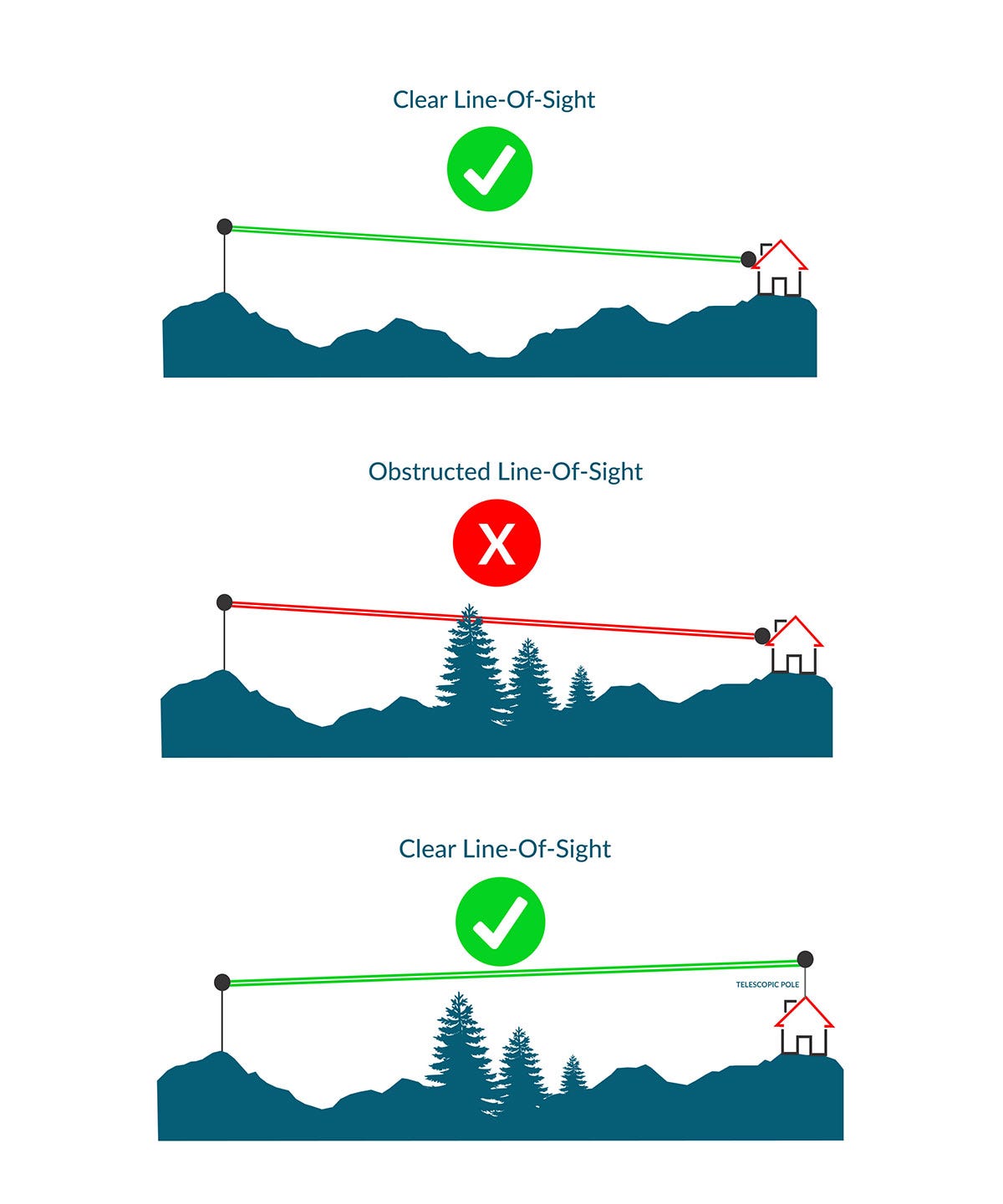
Getting your antenna outside and up high is critical to achieving maximum earnings. Everyone has seen the stock photos of an HNT miner sitting on a window sill with a stock antenna. Forget about that ! It’s purely marketing and earnings will only be a fraction of what they could be.
As obvious as it sounds, the importance of line-of-sight between transmitter and receiver antennas is often overlooked. Radio waves lose signal strength when traveling through dense materials, which explains why LPWAN performance in rural and urban areas greatly differ. Physical obstructions such as buildings, hills, walls, and metal blocks, absorb and/or reflect/refract the RF signal thereby reducing range.
High quality antenna cable
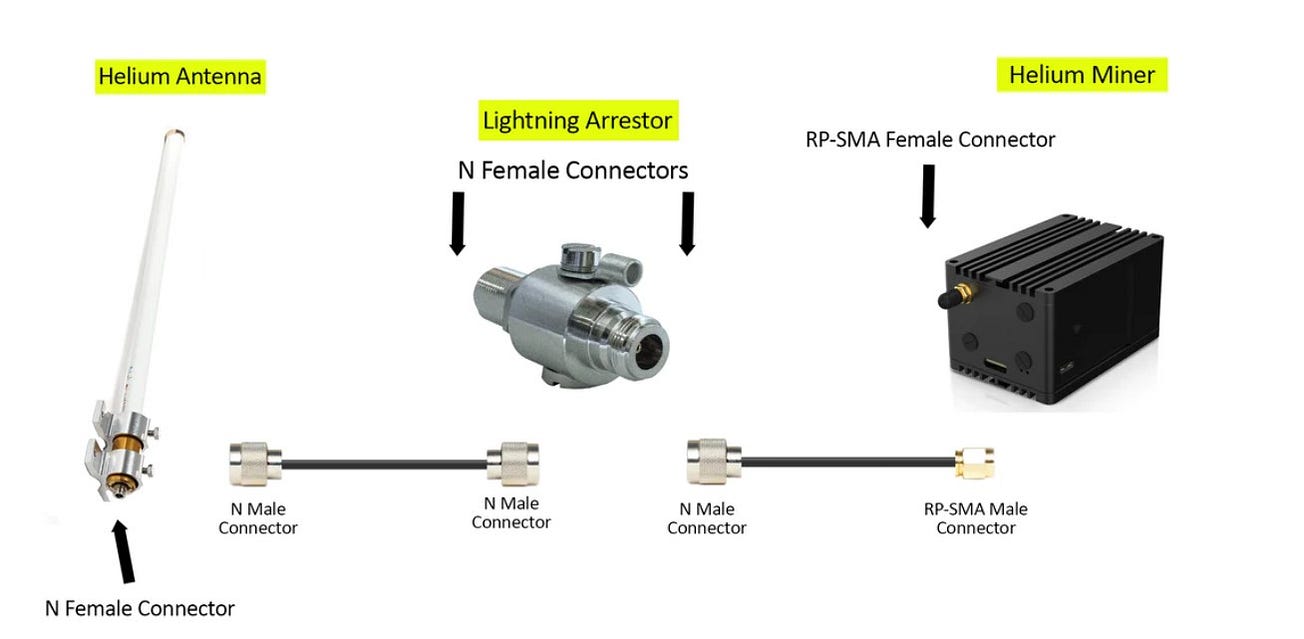
Antenna cables should be high-quality well-shielded coax that is kept as short as possible to prevent losses along the line.
Cables come with different shielding. While adding a cable between your miner and your antenna causes some signal gain loss, the loss can be kept to a minimum with LM400 grade low loss shielding. For example, a low-cost RG-58 shielded cable has a gain loss of over 3 dB at 20 feet for the 915 MHz band, whereas LM400 grade shielded cables have just 0.8 dB loss at the same length.
Also when installing an outdoor antenna you will need a lightning arrestor with a copper conductor running to an earth ground.
Selecting the best antenna for your location
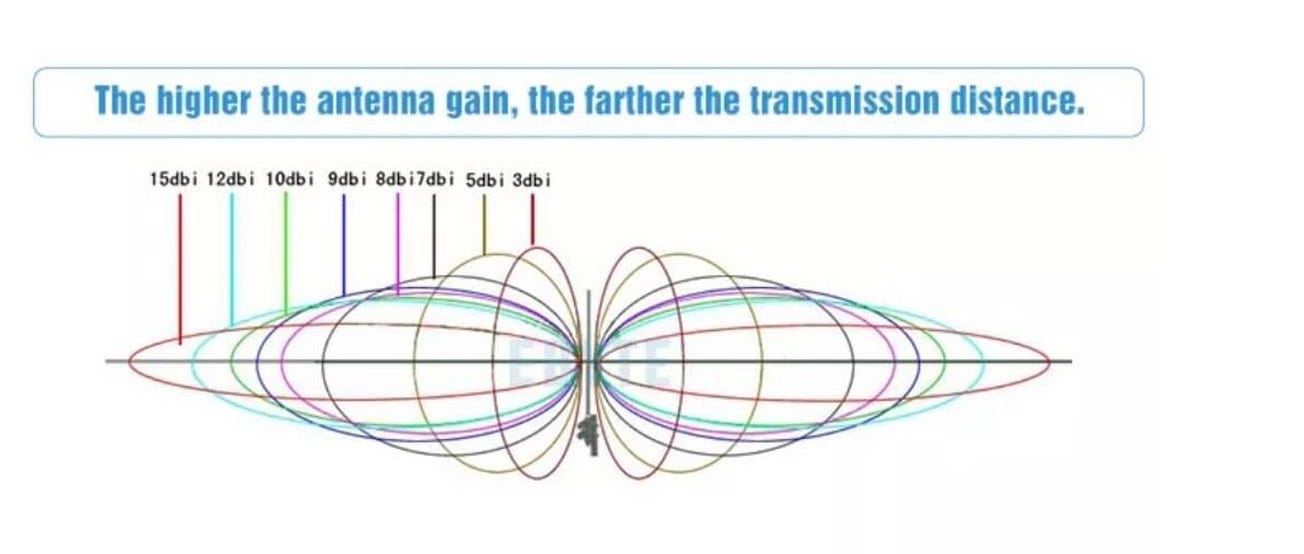
Several manufacturers sell antennas that can be added to Helium miners. Although some believe that a strong antenna (higher dbi) is always better, that is not necessarily correct. The antenna used should be carefully considered to fit your hotspots location.
Increasing the dBi of an antenna does increase the potential range of a signal, but that comes at a cost reducing the effective angle of coverage.
You can see clearly that although the signal will reach further, the angle at which it reaches becomes focused. This means that if you have a 12 dBi antenna mounted on your roof you could broadcast right over the top of a nearby hotspot.
Ethernet to your miner
Always connect your Hotspot to your router with an ethernet cable if possible. A hardwired ethernet connection is more stable than a WiFi connection. The advantage of Ethernet over WiFi is not due to speed but to the reliability, low latency and dependability of the connection.
Ready made ethernet cables are readily available in different lengths if you are willing to take the time to install the cable between your router and miner.






