
Today, the world reference is the dollar, whether to quote the purchasing power of a country's currency, to quote Bitcoin, Gold and mainly oil. In fact, it is only possible to buy Petroleum using US dollars. But how did he achieve the status of "dominant currency" in the world economy?
The answer to that is a little more complex than: “Simple, the United States has the largest fleet of aircraft carriers in the world”, which is a lie. But for those who want to understand in detail, it is necessary to investigate a little of the history of the money itself and the dollar.
The Dollar as a good currency
What is the dollar? The answer is simple, dollar is money. But what is money? It is this question that still "hangs" many people. Most of the population uses money all the time, but does not understand what it is.
For many, it's just numbers that appear on the phone's screen every day 5. But the Dollar, the Real and the Euro show a more complex mechanics behind it. Money is an asset that serves as a medium of exchange that is scarce, difficult to counterfeit, is a store of value, easy to carry and transfer and is universally accepted.
A good currency has all these characteristics to the highest degree, mainly scarcity and conservation of purchasing power (reserve of value). But how did the dollar get there? The American currency appeared in Europe in the 15th century, the “thalers” were still silver coins.

The thaler was a currency used mainly in the Austro-Hungarian empire, known for its high quality and purity in silver. It arrived in the United States and was gaining space, until it became the universal currency after the War of Independence in 1786.
After being “universalized”, it became paper currency convertible into gold at any bank. Convertibility ended at the beginning of the 20th century, when the Federal Reserve, the US Central Bank, was created. From that moment on, only banks could convert dollars into gold, but the ballast still existed.
The backed dollar comes to an end in 1971, with the rupture of the “Bretton Woods Agreement” and the convertibility of the dollar into gold comes to an end. As a result, the value of the dollar depends solely on confidence in the government's ability to pay its debts. From this moment on, we have the dollar that we know today.
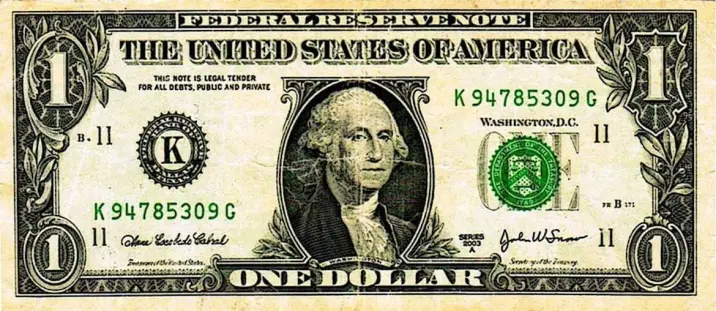
How to become a dominant currency?
When the convertibility to Gold was cut, it was agreed that oil could only be bought with US dollars. Since oil is the most demanded commodity in the world, it is easier to understand why the dollar is the dominant currency. In addition, many contracts are made in US currency outside the US.
In addition to oil, the USA is the largest economy in the world and also has the greatest military power. The Americans managed to do something similar to the periods of Pax Romana and Pax Britanica, in which an empire was able to establish a world hegemony without being disturbed, something like a forced peace.

However, American PAX is a little more weakened compared to the previous two periods, especially when there is a country like China fighting for world economic leadership. Trade wars and oil wars are no accident. The United States wants to maintain its hegemony, while China and Russia challenge.
Millennia ago, to become a dominant currency, it was enough to be chosen by the market as the most reliable currency. That is, that currency that has the best characteristics of value reserve, scarcity and malleability. Today, the country with the largest economy, the largest fleet of planes and the largest number of nuclear warheads wins.
But even the country, however hegemonic it may be, is likely to see its currency decline if it is unable to maintain the credibility of its currency.
How does a coin come to an end?
In antiquity, a coin declined when the falsification and adulteration of the metals used in coinage was proven. Inflation was one of the greatest enemies of the Roman Empire. The emperors tried to turn iron into gold, as they could not, they simply forced the population to use the money coined by the empire.
During the minting process, another metal was added next to Gold or Silver to increase the coin's weight and dilute the most expensive metal. As a result, the currency lost its purchasing power and fell into disrepute because of inflation.

In modern times, a currency loses credit when confidence in its issuer is shaken. Today, the world economy still relies on the United States' ability to pay off its debts. For this reason, the dollar remains the currency with the most credit and dominance.
Currency destruction happens when a country defaults on debt or prints far beyond what it should. To do this, just look at countries like Argentina and Venezuela. Its currencies are collapsing and not even the population wants to use them as a store of value, due to the very high inflation.
In general, credibility at the issuer is still a crucial factor in maintaining the universal acceptance of a currency.






