
Grayscale is the investment company behind the Grayscale Bitcoin Trust.
It acts as a bridge between the traditional market investor and digital assets, through investment products with a more conventional guise to attract and serve this audience.
In addition to Bitcoin, it also offers products related to Ethereum, Litecoin, Stellar, Cash, Bitcoincash and Ripple.
The Wall Street company, the largest in the business related to digital assets, has seen a significant increase in the interest of hedge funds and other investors for its products, as Bitcoin's perception as a potential hedge has increased amidst the macroeconomic scenario of instability and political implications by COVID-19, in addition to the unprecedented monetary stimuli seen in the past months.
The focus of these investors seems to be the same as that of many others, that of resorting to scarce assets that could be used as protection against inflation in a world where against inflation in a world where we face a flood of stimuli.
The company has reported exponential increases in funding for its cryptocurrency-related products. Just last week there was the funding of US $ 217 million, the highest to date for the period. In the first half of 2020, the company registered US $ 1.4 billion in new resources, an increase of 90%, driven mainly by institutions, reflecting the increased demand for digital assets, especially Bitcoin.
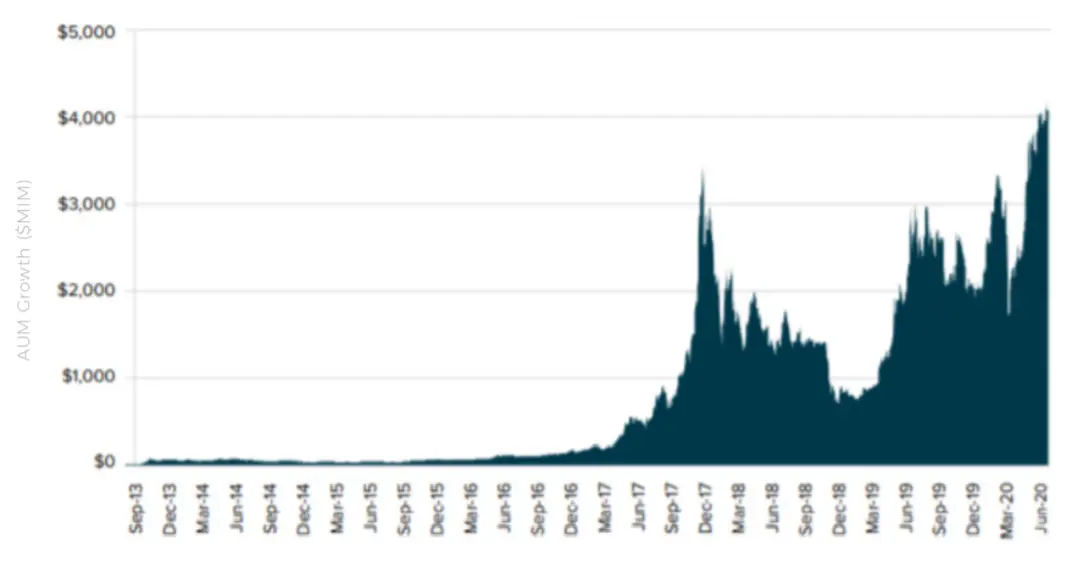
Total assets under management (AUM, Asset Under Management) of the Grayscale Bitcoin Trust increased to US $ 4 billion, an increase of almost 50% throughout the year. A significant jump from the $ 2.1 billion in May 2019.
We will check some data related to this growth and what the recent increase in the volume of funding of its products means for the market.
ASSETS UNDER MANAGEMENT
Grayscale's assets under management reached historic levels during the second quarter of 2020 (2Q20), are currently above US $4 billion. A broad reflection of the increased interest in digital assets.
QUARTERLY ACCUMULATED FUNDING FROM THE BEGINNING (SEPTEMBER 25, 2013 TO JUNE 30, 2020) TOTAL: US $2.58B.
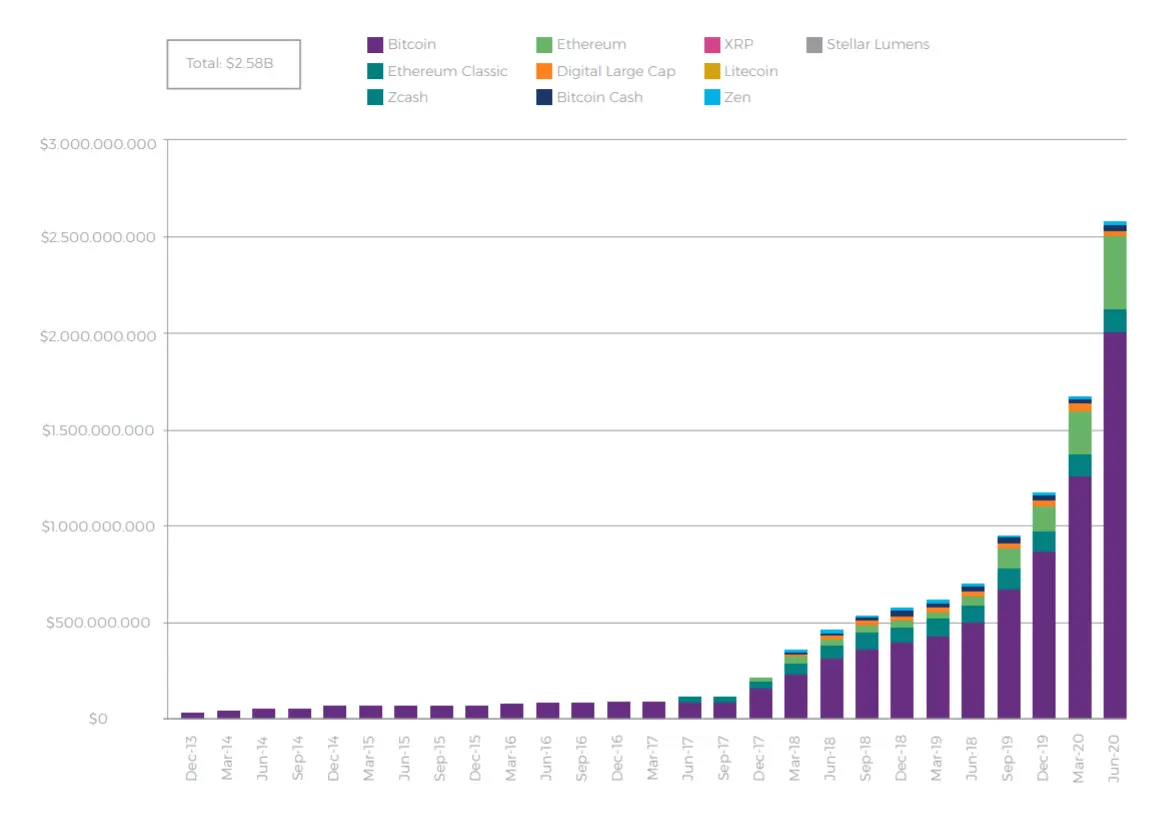
The graph shows the rapid increase in funding in 1Q20 and 2Q20.
The last quarters have been consecutive record periods.
Funding in the first half of 2020 represents almost 55% of all funding since the start.
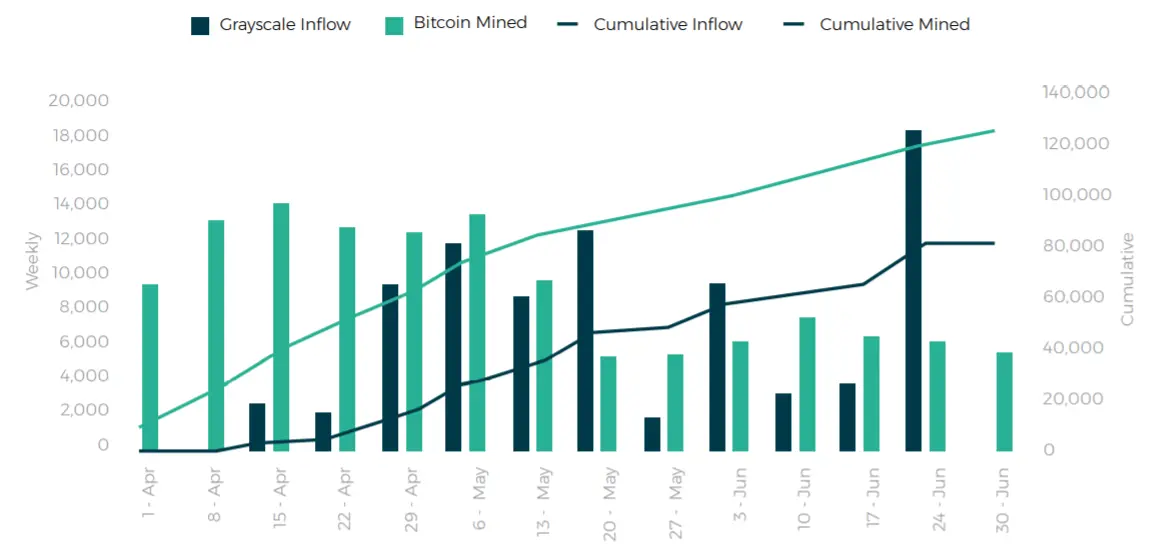
After halving in May, 2Q20's Bitcoin Trust entries exceeded the number of newly mined Bitcoin in the same period. As a result, there is a significant reduction in supply-side pressure, which may be a positive sign for Bitcoin's price.
NEW INVESTORS
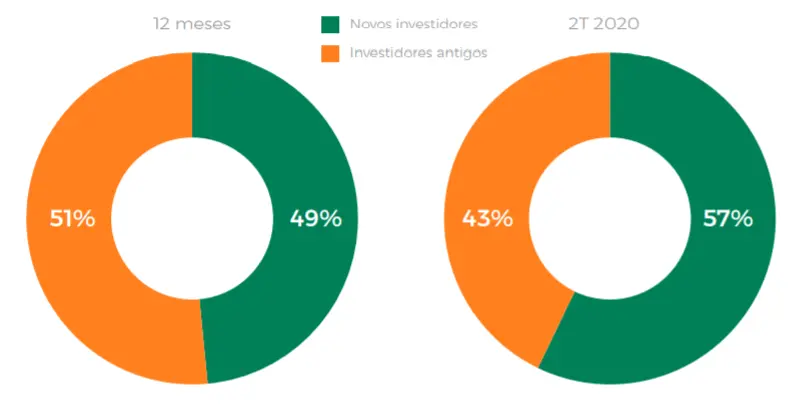
New investors represented 57% of Grayscale's investor base in 2Q20, a significant increase over the 12-month average, which reinforces the popularization of digital assets.
COLLECTION OF OTHER PRODUCTS (1 JANUARY 2018 TO 30 JUNE 2020)
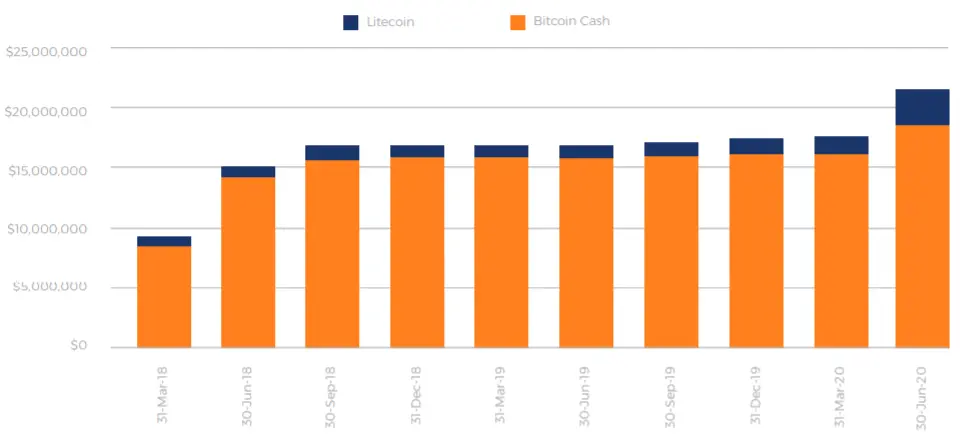
While the Grayscale Bitcoin Trust accounts for most of the funding, alternative products are also gaining momentum, with investors looking to diversify into this new asset class.
The Grayscale Bitcoin Cash Trust and the Grayscale Litecoin Trust also saw a marked increase in investor interest. The two funds together reached more than US $ 20 million in funding from the beginning to today.
Institutional investors continued to be the main source of funding. In 2Q20 they represented 84% and in 12M, 81%.
And that is one of the most important points, since the increased interest on the part of this class of investors is important for the consolidation of Bitcoin.
Through a survey conducted between November 2019 and March 2020, in which 800 investors in the US and Europe, including high-income individuals, were interviewed; financial advisers; family offices and hedge funds, Fidelity, another player that serves this class of investors, found that for almost 80% of investors there is something attractive in digital assets, with 26% of institutional investors having Bitcoin and 11% having ETH.
Of those who invested, 59% of institutional investors in the United States have direct exposure to cryptos, that is, they hold their own assets instead of futures, options or some other derivative.
Among the reasons cited for the increase in interest are: lack of correlation with other asset classes, exposure to innovative technology and high valuation potential.
Various metrics and empirical data show that institutional capital inflows to Bitcoin are continually increasing. Record flows reflect that investors have considered digital assets are increasingly seeking to diversify their portfolios, suggesting a shift in sentiment towards this asset class and that the financial market is starting to consider Bitcoin as a store of value.
Recalling that Grayscale and Fidelity are just two of the companies that serve institutional investors. About the other players and particularities of this subject, we will leave to address more details in the future, so stay tuned in the next reports.






