Ethereum can be defined as a computer network that operates as a decentralized global platform. This is where dApps and Defi protocols are developed and recently became famous for ICOs.
Enthusiasts believe that the Ethereum network will be responsible for being the platform where, through smart contracts and distributed protocols, the construction of the next generation will take place of the internet, Web 3.0. It will serve for the creation of decentralized applications and will allow greater privacy, freedom and control of the data itself by the users who today use mostly centralized platforms, with their data being used and manipulated without transparency by third parties.
However, for Ethereum to reach the level that developers want, to be a global computer and to be able to show all the potential network, it will need to develop a lot to allow greater capacity for processing transactions by second.
Today, the Ethereum network is dangerously close to reaching its technical limits. DeFi protocols are in evidence and the number of transactions on the network is coming close to a new historic high. Meanwhile, rates are reaching the ceiling and testing the capabilities of the platform, making sending transactions and using dApps more expensive on the network.
These transactions are measured in Gas and used to pay for operations on the network, whether to run smart contracts to carry out dApps operations. Most platforms running on Ethereum use Gas, so if their price goes up, their use becomes more expensive.
Ethereum was the first blockchain that offered a sufficient VM for the development of dApps, followed by NEO, EOS, Stratis, Lisk and many others. It is the leader for the number of dApps implanted, approximately 2.3k. This is more than the total number of dApps deployed on any other blockchain.
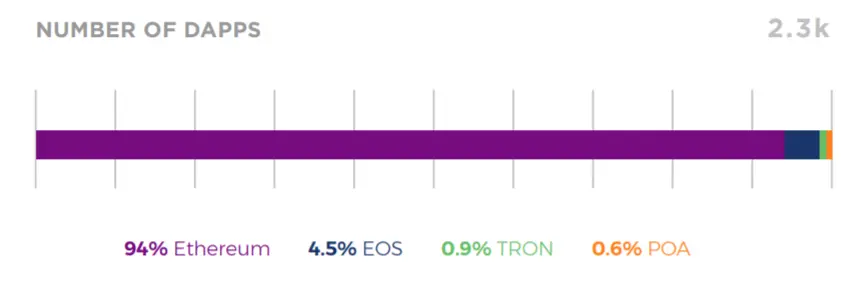
However, this growth, both in terms of number of users and in dApps, has overloaded the capacity of the network. In late 2017, a dApp game called CryptoKitties became so popular that it clogged the Ethereum network, preventing transactions from being processed.
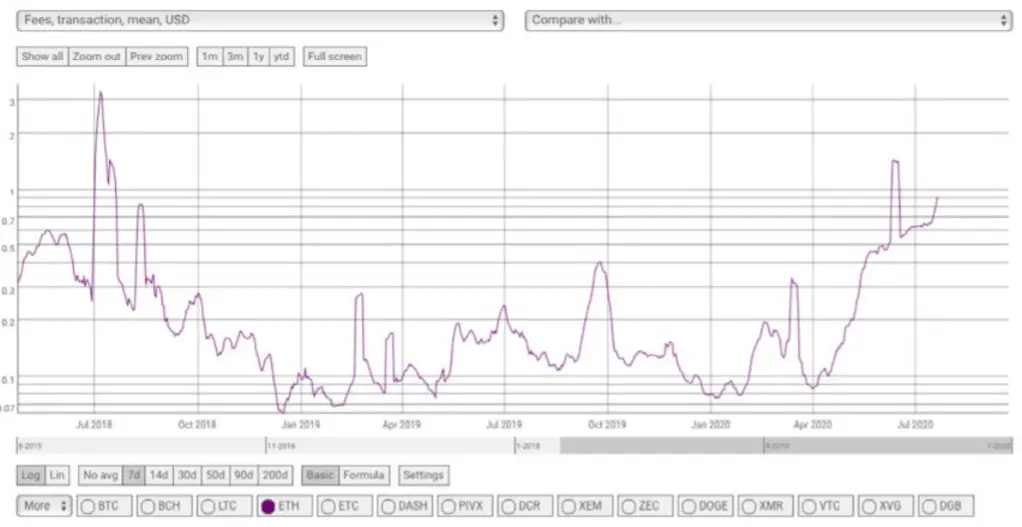
Rising congestion on the Ethereum network has raised transaction fees this year to the highest since the beginning of 2018.
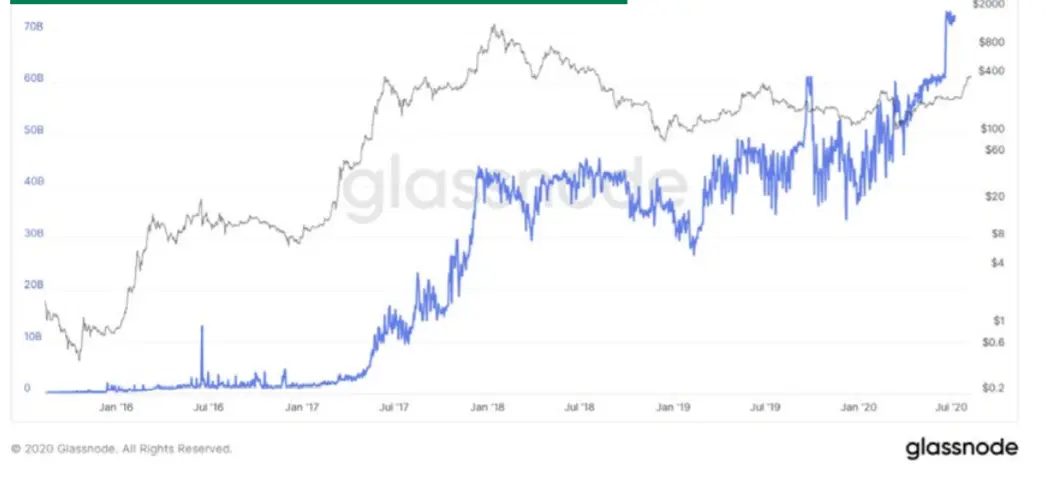
DAILY USE OF GAS IS HITTING ITS HISTORICAL MAXIMUM AND HAS BEEN ABOVE THE 70 BILLION BRAND SINCE THE LAST MONTH, TWO TIMES GREATER COMPARED TO THE BEGINNING OF THE YEAR.
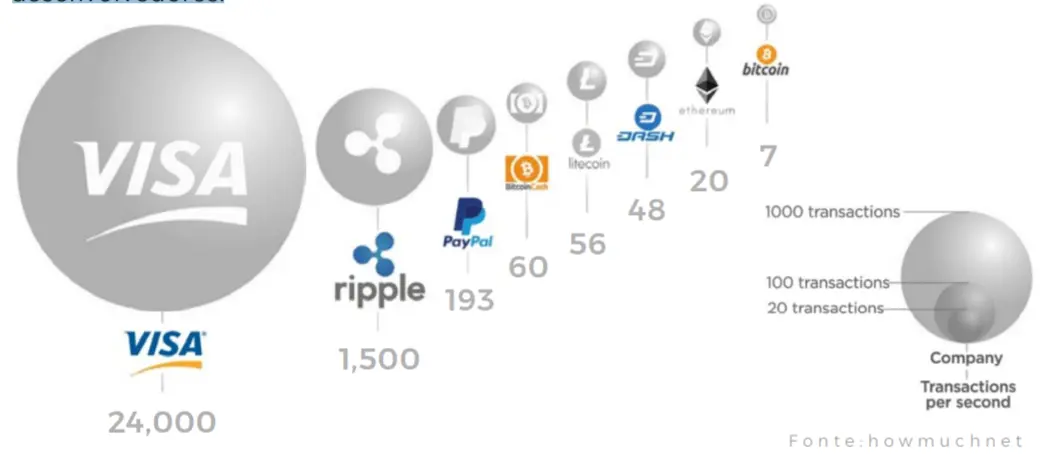
Now, comparing Ethereum's transaction speed with other payment networks, it is clear how much remains to be developed. Visa manages to reach 24,000 transactions per second and is in the lead in terms of transaction speed.
The main objective of ETH 2.0 is to increase network capacity, while maintaining a high degree of decentralization, and to reduce the extensive resource requirements of PoW mining. As it is a distributed network, this makes the improvement processes a bit more difficult, which developers have been thinking about for years.