
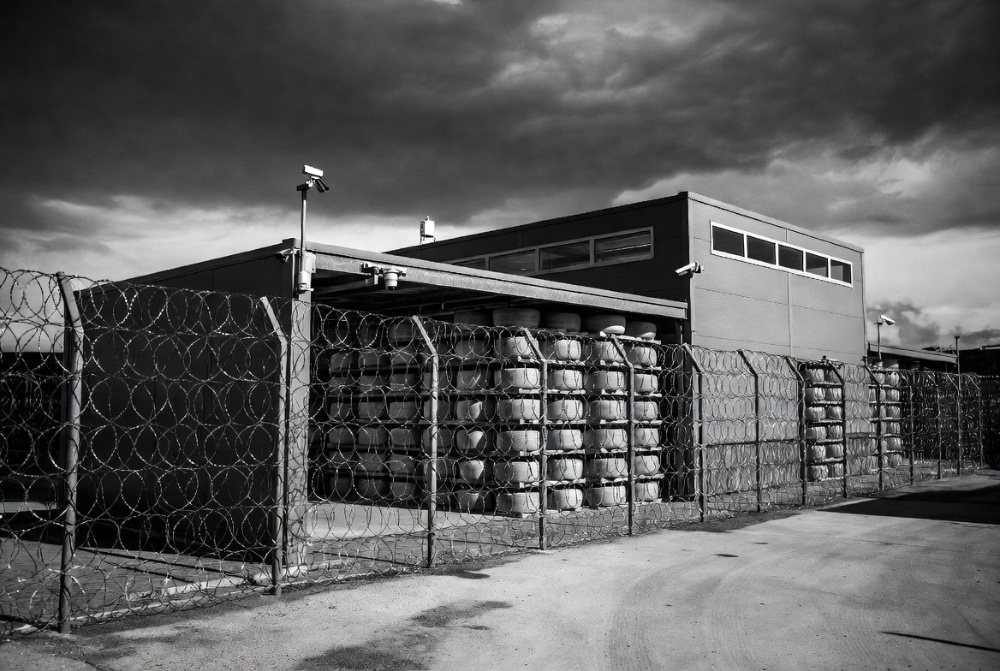
Behind a triple layer of barbed wire, inside rigorously climate-controlled halls packed with cameras and motion sensors in northern Italy, lies a fortune valued at over €325 million-nearly 1.5 billion PLN. Yet, inside this heavily guarded vault, you won't find gold bars, crates of cash, stocks, or bonds. Instead, in near-sacred silence, massive wheels of cheese weighing nearly 40 kilograms mature in perfectly aligned towers.
This is neither a folkloric curiosity nor a tourist open-air museum. It is a fully modern, commercial bank subject to the direct supervision of the European Central Bank (ECB). For over a century, this unique financing model was considered a synonym for absolute security-a system that had never lost a single euro. However, in 2026, driven by global tariff wars, a surging black market, and a technological revolution, the "cheese vault" is facing its most dramatic test in history.
The Financial Trap of the "King of Cheeses"
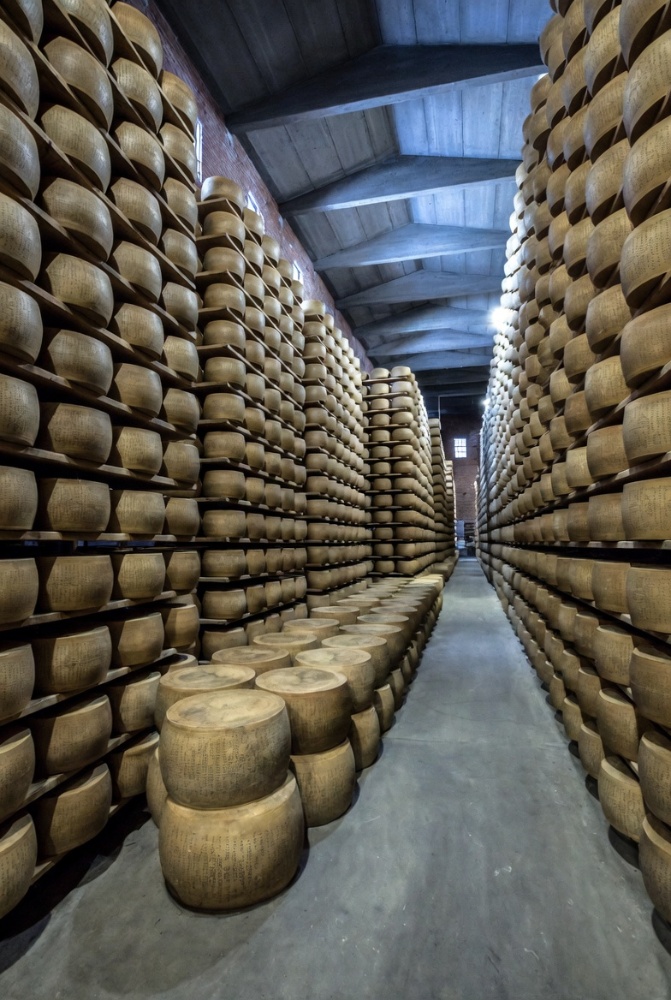
At the heart of this operation is Credito Emiliano (known as Credem), headquartered in the Emilia-Romagna region, just 30 kilometers from Parma. Deeply rooted in local tradition since 1910, the bank has operated an official agricultural loan program since 1953. While the mechanism might sound like a joke at first glance, it is actually driven by cold, calculated business mathematics.
To understand why farmers need a bank in their cheese dairy, one must look at strict European Union laws protecting the Parmigiano Reggiano (DOP) brand. Authentic Parmesan can only be produced in five specific provinces of northern Italy, using just three ingredients: milk, salt, and rennet. The catch, however, is time: the cheese must age for a minimum of 12 months, while the most premium varieties mature on shelves for two, three, or even four years. This process cannot be artificially accelerated.
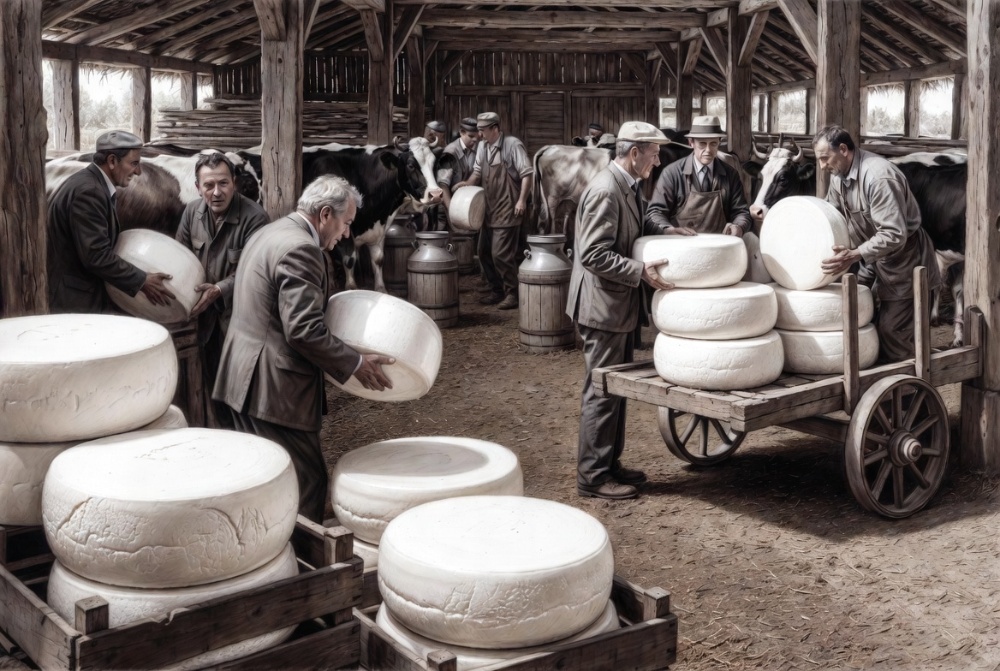
For small and medium-sized producers, this creates a massive liquidity trap (the locking up of working capital). Cows produce milk every day, meaning farmers must pay suppliers, feed, energy, and wages on a monthly basis. Yet, they won't see actual revenue from selling a finished, matured wheel for several years. Traditional financial institutions look at this organic mass sitting in a cellar with extreme skepticism-after all, there is always the risk of splitting, rotting, or molding. Credem, however, saw this risk as its ultimate market advantage.
Vault Logistics: How the Anticipo Merci Mechanism Works
The bank steps in when the cheese is still young, white, and soft. A specialized bank unit and a dedicated subsidiary (Magazzini Generali delle Tagliate) evaluate the potential of a specific batch and advance cash to the producer-up to 80% of the estimated future market value of the inventory.
In return, the bank applies a floating pledge (pegno rotativo) and moves the goods into its own specialized warehouses for the entire duration of the loan. Handing over the logistics of the aging process strips the small farmer of their highest operational cost.
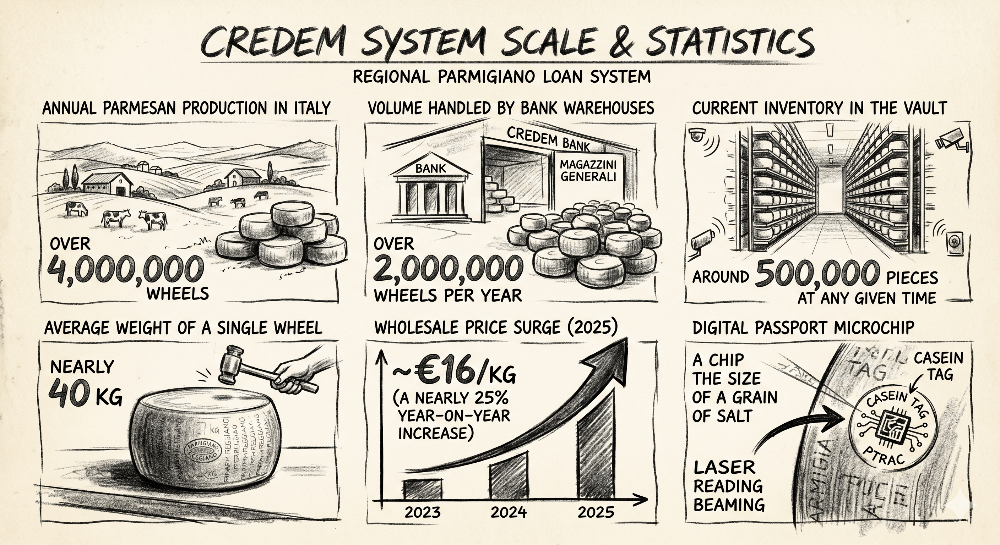
From an investment perspective, cheese inside Credem's vault behaves inversely to traditional fixed assets. A car depreciates the moment it leaves the dealership, and real estate requires costly maintenance. Meanwhile, Parmesan, sitting quietly in the dark, slowly loses water, condenses its structure, gains depth of flavor, and... naturally appreciates in value. As highlighted in economic analyses by Harvard Business School, this asset has successfully beaten inflation for years.
If a client defaults, the bank does not wait months for court rulings or debt collection. It simply lists the matured, optimally preserved product on the wholesale market, recovering its capital with a premium.
The Sound Test and the Iron Seal
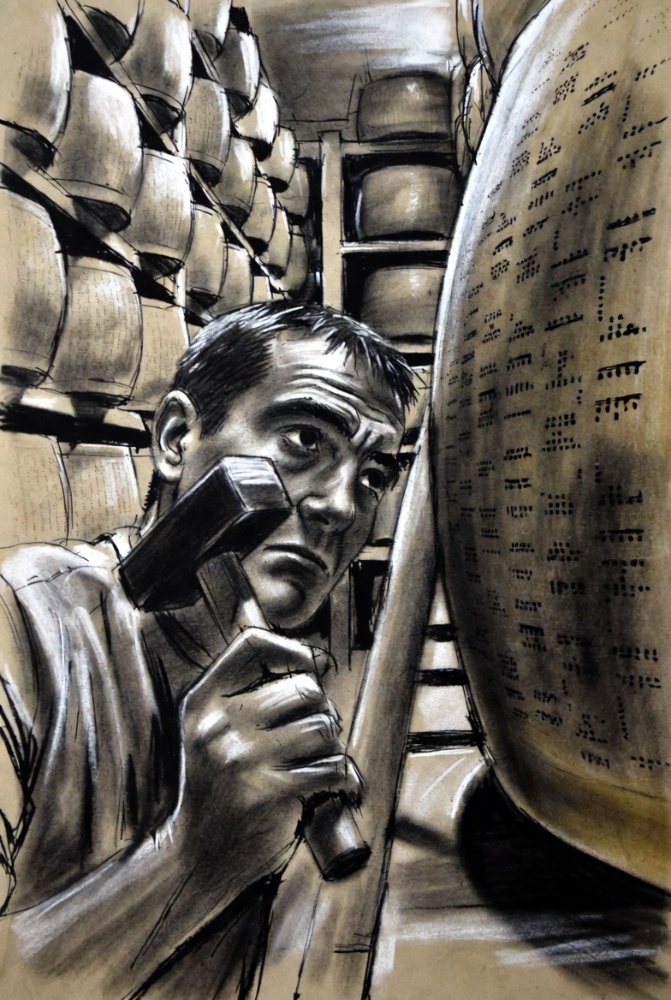
Before a young cheese can officially become a legitimate financial security, it must pass a rigorous exam after one year of aging. A certified inspector from the Parmigiano Reggiano Consortium, equipped with a martelletto (a traditional small hammer), enters the warehouse.
The inspector methodically taps every single centimeter of the wheel, listening to the resonance:
· A clear, high, and uniform sound proves a dense, healthy internal structure.
· A dull thud or a hollow echo flawlessly betrays internal cracks or gas bubbles created by unwanted bacterial strains.
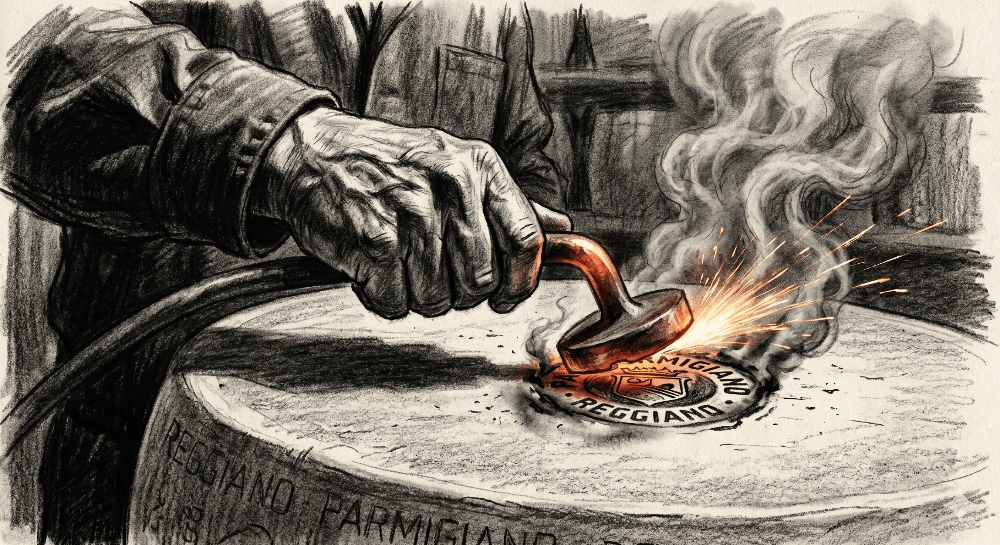
A single minor acoustic flaw is enough to permanently strip the wheel of its official logo, downgrading it to a cheaper culinary product. Only flawless wheels pass the test-the iconic brand is burned into them with a hot iron, sealing their value as a hard financial collateral.
Year 2026: Tariff Wars Shake the Foundations of the Model
Why, then, did this century-old, flawless financial system begin to shake in 2026? The answer lies in globalization and a sudden shift in demand. For generations, Italian producers relied heavily on a highly stable domestic market. However, by late 2025, an unprecedented shift occurred-over 50% of all Parmigiano Reggiano sales were driven by exports.
The United States became the largest and most lucrative foreign market. Yet, in late 2025, Washington decided to impose a 25% punitive tariff on the import of Italian aged cheeses. The impact was instant: American distributors halted orders, waiting out trade negotiations.
The problem is that the production line of a living organism like a dairy farm cannot be turned off with a switch. Cows must be milked, and cheeses destined for the market two years from now are being produced today. Inventory is piling up in warehouses, racking up fixed costs, while domestic demand in Italy slumped by nearly 10% due to local consumers tightening their belts. Parmesan began to behave like a classic luxury good-acting as one of the first casualties of a global economic slowdown.
Crime and the Russian Black Market: The Great Cheese Heist
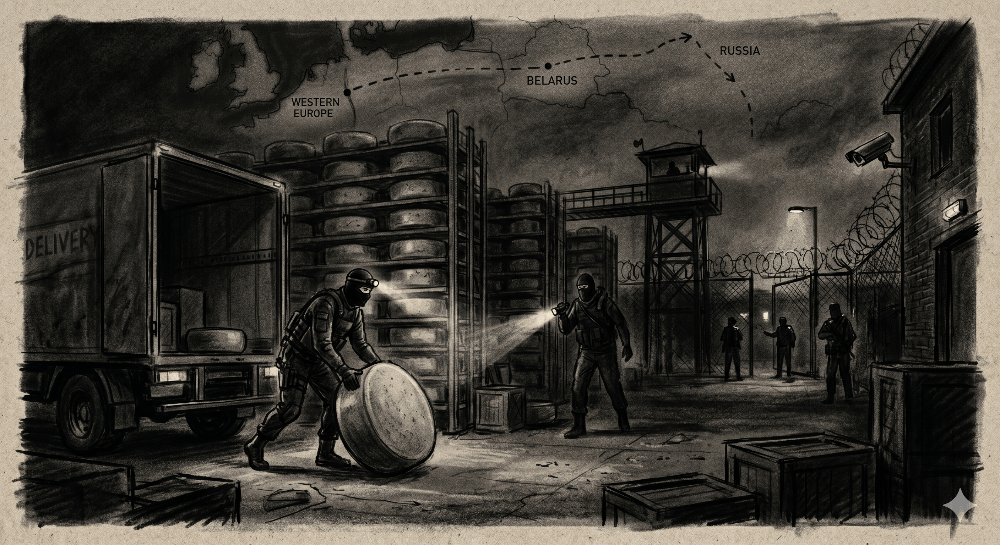
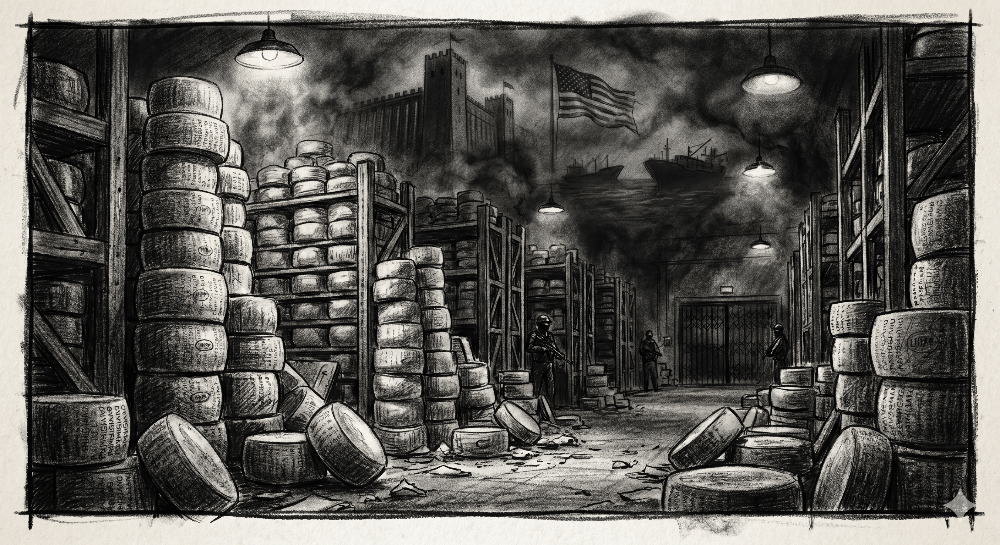
High unit value and a lack of easy tracking mean that bank warehouses must resemble military bases. A single premium wheel can be worth over a thousand euros. For organized crime, it is the perfect substitute for cash: the product has no serial numbers, it is easy to liquidate on the open market, and police dogs at borders are not trained to sniff out dairy.
The British market discovered just how sophisticated these thefts can be in October 2024 during the so-called "Great Cheese Robbery", when over 20 tons of premium cheddar (nearly 950 wheels) worth £300,000 vanished from London warehouses. The criminals flawlessly forged identity documents, posing as wholesale buyers for a major French supermarket chain.
According to analyses by the Institute for Global Food Security, stolen premium cheese from Western Europe primarily ends up in markets facing trade restrictions-including Russia and the Middle East-via third-party countries (Belarus and former Soviet republics). The roots of this underground trade trace back to 2014, when Moscow introduced countersanctions and an embargo on European food. From that moment on, Western cheeses became highly rationed goods coveted by local elites. The scale of the issue is highlighted by statistics from the international institute BSI, which reported a nearly 80% year-on-year surge in cargo thefts within global food supply chains.
High-Tech Enters the Game: Blockchain and Casein Microchips
To effectively fend off threats from counterfeiters and transit pirates, the industry has had to turn to Silicon Valley tech. The battle is currently being fought on two fronts:
1. Asset Tokenization (Blockchain)
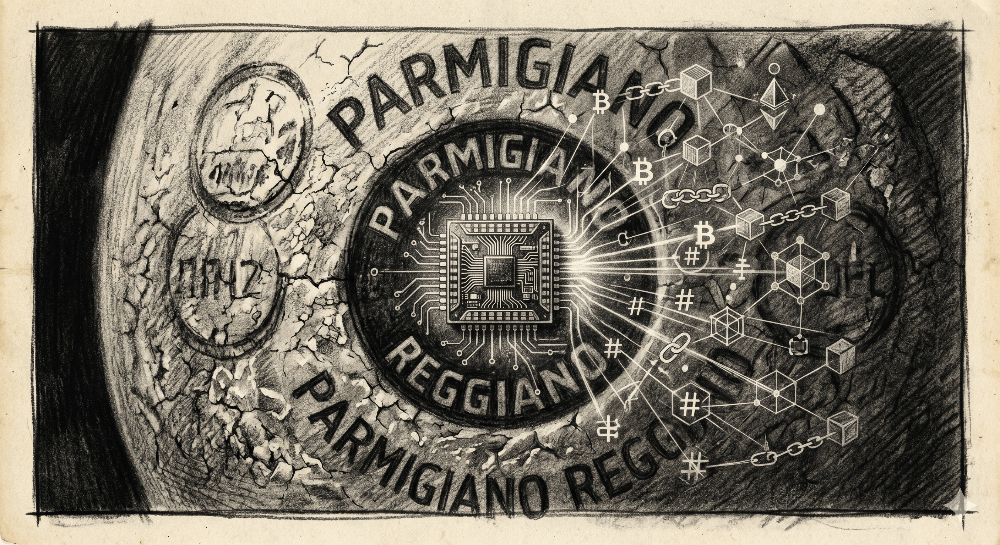
In 2026, Credem deployed a pioneering financial system built on blockchain architecture. This solution allows a line of credit to be issued against cheese that... is still physically located in a certified barn or a farmer's local cooperative, rather than the bank's vault. A digital, immutable entry in a distributed ledger offers 100% certainty that a specific batch of goods exists, meets quality standards, and has not been double-pledged at another institution. This technology allowed the bank to rapidly double its financing capacity for the agricultural sector.
2. A Digital Passport the Size of a Grain of Salt
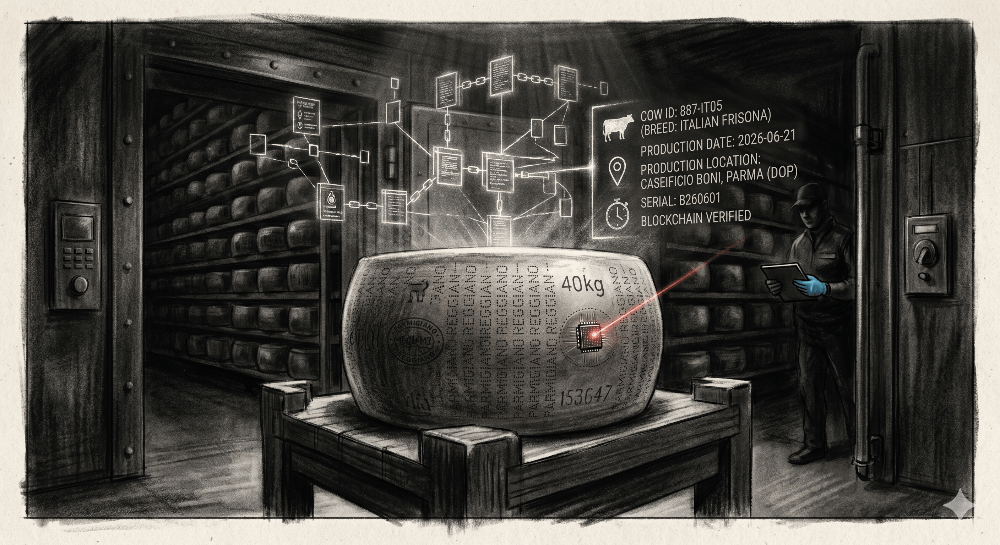
Counterfeit Parmesan generates global losses estimated at nearly €2 billion annually. Traditional ink-stamping methods are no longer enough, which is why the Consortium teamed up with pTrac, a tech firm based in Chicago. The fruit of this partnership is a microchip the size of a grain of table salt, permanently embedded into the edible casein label placed on the hard rind of the wheel.
The silicon tag is resistant to intense mechanical brushing, years of moisture, and the extreme temperatures of the storage halls. It is read using a precise laser beam. Each chip generates a unique code linked to the blockchain database, creating a digital twin of the product. The system tracks the full logistical journey of the Parmesan-from the ID number of a specific cow and the milking date all the way to the supermarket shelf. This strips criminals of their ultimate advantage: total anonymity.
A Macroeconomics Lesson for Investors
The cheese saga of Emilia-Romagna is, in reality, a universal lesson in risk management and financial engineering. It demonstrates that in a world of globalized markets, the concepts of a "safe haven" and a "perfect asset" are undergoing rapid redefinition.
Credito Emiliano’s business model relied on a brilliant premise: holding physical collateral that appreciates in value purely through the passage of time. Yet, even the most crisis-resistant product, tended to by robots in a sterile vault, becomes vulnerable when political decisions and tariffs are introduced thousands of miles away.
For the modern investor, the key takeaway is clear: the value of any asset collateral is ultimately worth exactly as much as the liquid, politically barrier-free demand on the end market.






