
Louie was at my door the next morning. Robin was in his small, red Toyota waiting and we all squeezed in the front seat to the S.F. airport. I didn’t have a passport. They did. But you could leave the country without one, seamlessly and without a hitch, the pretty, ticket checker smiling and wishing you ‘bon voyage’. You just might not get back in again but they didn’t tell you that.
I remember the whole journey in vivid detail but I did bring a very slender, twenty page, notepad with me to record the trip. On the first four days of it I make notes of some vivid impressions. And on the morning of the fifth day I fill five pages with the strangest dream I’d ever had, even to this day, forty five years later. That day we reached the beach of ‘Salina Cruz’ and the real drama began, at such a whirlwind pace that all my records stop for the rest of the trip. I spared no time for writing anything down. But my mind was exhilarated to a higher level of excitement and awareness and I recall the many details of those two weeks as if it happened yesterday.
For some odd reason I wrote the first four days of this journal in French, calling it “Voyage en Mexique”. So the entries are, perforce, brief and simple. Yet there are some lovely details. We arrived in Mexico city and at the airport rented a medium-sized, four door car. When we went to exchange our American money we found, to our pleasant surprise, that the peso was so devalued we could eat and sleep in the best places for almost nothing. Dinner at a five star restaurant was twenty dollars, a room in the highest class hotel suite might be thirty. And I’d overdone it to begin with, taking a thousand dollars in cash besides a larger amount of hidden money.
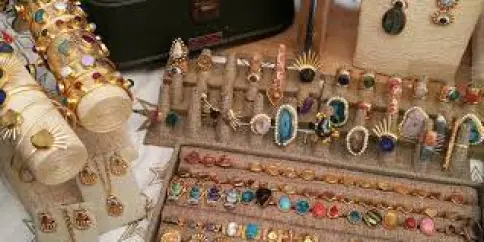
After seeing the ruins of Mexico city we drove down the mountains on our second day to ‘Cocoyoc’, an ancient palace with hot springs, now a resort with the pools right inside the hotel where we stayed. So we feasted and bathed. The next day we arrived in ‘Taxco’, an old silver mine town, now a huge bazaar, with long streets of artisans at stands displaying their jewelry skills in bracelets, necklaces, earrings and rings, opals and emeralds and topaz all set in silver and all so cheap and fine looking, I bought a dozen pieces, intending to give them to Lindsey and Dale when I got back. I gave most of them to Sanita before I returned, already half in love. So much for intentions. That evening we reached Acapulco.
The beaches being very fine on the Pacific coast, we began to take hours off every day to go swimming. We had no agenda. After a night in a high-rise in Acapulco we spent the next morning on the beach, sunbathing alongside many other tourists. I have a few photographs of Robin and Louie at the time because when I met Sanita a few days later, she had a camera and loved to take pictures. Robin was about five feet tall, Louie about six foot two, both skinny, though Louie was muscular and strong. They both looked great in bathing suits. I was a little pale for that but put mine on and sunbathed and swam along with them.
On this day, on a crowded beach, a fisherman came up to us with his fresh catch. He had a little Hibachi grill, lit it up and began cooking the three fish right in front of us. He spoke no English but communicated with gestures if we’d like to partake. He had paper plates and plastic forks and soon the three of us were enjoying a delicious breakfast. But halfway through the meal he mentions in perfect English the exorbitant price he wants from us, eighty U.S. dollars.
All three of us express our outrage at such a ridiculous price and he pretends not to understand, just insisting on the money. Luckily, at the same time, another Mexican approaches me wishing to sell a hand-carved, beautiful chess set he’d made out of some light wood. He was ready to sell it for twenty dollars and looking at the craftsmanship of the pieces I knew it must have taken him a week of effort. I told him, as he spoke broken English to me that I’d gladly buy his chess set if he could talk this other maniac Mexican from ripping us off over a two dollar meal. This sets him off and they go at it like pit-bulls in Spanish. After ten minutes of an unintelligible, loud tirade the matter was settled, twenty dollars for the breakfast and another for the chess set. Both Mexicans walked away happy. We went off not satisfied, distrusting and cursing all the natives as money-hungry potential cheats, and as tourists never to return.
Down the coast to Escondido the next night and Puerto Anhel the next. We were now beyond the southernmost point where any tourists were directed, even Germans, who filled the motels of Escondido all winter. At Puerto Anhel we found there was no motel, only a single restaurant. We ate there, tipped very well and we’re told to visit a small house next to a beautiful cove beach. They had tents they rented and sleeping bags, at two dollars apiece, a great bounty for them. We went to the door and handed over four dollars.
But the greatest delight to us was that the parents, knowing no English, sent out their two daughters, aged six and ten, to do all the set-up, running out of the house to a shed where the tents were stored, showing us, dragging us by the hand excitedly where they would set up the tents, helping us do it and then guiding us to the two other businesses in town, a small store and a palapa bar, as if these were the jewels of the world, all in their cute, broken, excited English. Their beaming smiles were the jewels of the world.
We had a few beers at the palapa, probably the only customers there for days, and walked to our tents for a sound sleep. In the morning, just after dawn, these two young girls were standing outside our tents, smiling broadly and promising to show us a place for breakfast, the best, the only, breakfast in town. They also ran back to collect their parent’s tents and sleeping bags. That was their job. They rolled up the sleeping bags and then folded down the tents. Robin and Louie went for a quick swim, as if it were a shower. Louie tipped them first.
I was so enamored with their sweet simplicity and broad smiles that I gave them each a five dollar bill, kneeling down to be face to face. I told them to keep it for themselves and not their parents in my poor French, hoping it somehow matched their Spanish: ‘Ceci est pour vous, jouir’. I doubt they understood and I don’t know what they did with those bills but such pure loveliness is priceless and unforgettable, a miracle to see upon this jaded planet. If it weren’t for my meeting Sanita two days later, that instant would have been the ‘Polaroid’ moment of my entire trip.
I know that the task of raising a girl or a boy is filled with hardships, too many to count, but that one beaming smile redeems it all. You don’t need a photograph, it’s imprinted on your brain, forever. You die with that image as the final one you want to see, with your last gasp of air, and it completes you.
I wrote this in my notebook in broken French, yet the best my heart and mind could command:
Et la petite fille de six ans peut-être qui nous a rencontré en arrivant ici, tout ridant, une très vif ‘Lalagen’, nous envitons a la modeste restaurant, (trois ou quatre tables presque toujours vides) et près de sa mère pour le diner à notre ‘chambre’ ( I didn’t know the French word for ‘tent’) la soirée, revenant aujourd’hui avec le matin, charmante, et sa sœur de dix ans plus modeste et silencieuse, mais ‘quasi ridens’, soi pour l’argent parcequil’s sont pauvres, soit par la nature et une richesses dans l’ame. Certainement ils sont fortunés dans cet monde.
Here’s a translation: And the little girl, maybe six years old, who ran up to us as we arrived, all smiles, (a very alive ‘Lalagen’, (a girl in a poem by Horace, always smiling and talkative) invites us to the humble restaurant (of three or four tables, almost always empty), and standing beside her mother while we ate, coming back today with the dawn, charming, and her sister of ten years, more modest and silent, but half-smiling, either for the money because they are so poor, or maybe for a purity and richness of soul. Certainly they are very fortunate beings in this place.
I couldn’t half convey the deep emotions these lines tried to express. There are no words in any language equal to the description of a child’s pure joy of life. It makes me think there are emotions in our lives which are wordless, and feelings, especially in childhood, impossible to describe. Neil Young wrote a song about it:
'I am a child, I last awhile, you can’t conceive of the pleasure of my smile.'
The next day my journal continues on in English: “Came to a town, Salina Cruz of eight or ten commercial blocks but further south than any tourists come and no near beaches…” More strange impressions on small town Mexican life. I was walking about with Louie and Robin, checking out the place in the afternoon. “At eve, I bought a Spanish, paperback translation of ‘Dumas fils’ ‘Dame au Camelias’ in a little book stand selling mostly magazines, pulp romances and pornography. So I sort of rescued this classic from bad company. But how did it end up here? This was such an anomaly it troubled my thoughts for some time, like a superstition, or a foreboding.”






