
He sat there doting on this project a long time. He was all alone, in the middle of nowhere and he knew it. He began reminiscing on a night some twenty-five years past when he was a young man at the university. It was another night of riots and the first on which they dared transgress the boundaries of his university.
The world was in terrible disorder at that time. It was the second long year of the epidemic. There was economic collapse, widespread famine and crisis in the government of every nation. But it wasn't just politicians who were losing face and losing their heads, it was nearly all the experts and professionals still alive. Companies could not maintain their work forces or the vital flow of goods. Inflation skyrocketed while markets crashed. Medical experts were at a loss to explain or alleviate the epidemic that had sprung out of a virus they had been unable to defeat in the two decades it had been around.
But this disease, unlike the lingering one, had a knack of killing its victims within a few months, covering one's body with large, black sores and dispatching it with recurrent fevers of ever-increasing intensity. It had spread around the world in a week and infected over half the world's population in its first wave. The old and the young disappeared, and the survivors were left to wear themselves away, tending to the crazed and the invalids, until their own constitutions broke down enough to give access to it.
Presaging this disaster by a few years was a miscalculation on the part of the world's genetic scientists working to alleviate the blight that affected most plant life after the decay of the ozone layer. A white paste, a "Sunscreen 2000," had been developed to protect humans. But plants needed genetic alteration. A more robust and efficient chlorophyll was developed, called glaucophyll, and introduced to a host of crops against the sun's increased radiation. The introducing agent proved so effective that it quickly worked like a plague in turning all plant life across the face of the globe from green to a sort of waxy white.
This was no great tragedy. The plants still had all their life supporting qualities. Things seemed to be going well for about a year. But then the new glaucophyll was found to be not completely effective in surviving the ever increasing ultraviolet radiation. So the skies were seeded with a permanent high cloud cover and the great white houses were built, high-tech food factories encased in glass, a double indemnity, which worked smoothly until the plague came along and made it all futile.
It was in these troubled times that the first anti-technology riots took place. There had already been food riots in many cities when supply systems failed. Hospitals too had been raided and destroyed when rumors of withheld medicines and vaccines took wing. Rabid mobs haunted the streets looking anywhere and everywhere to unleash their pent-up rage. And so many things that could have been spared fell a victim to the anger, in this quickly disintegrating society.
Jonathan had been but a year at his first post, assistant professor of history on the beautiful campus of Berkeley when the violence erupted. It wasn't the students this time. Their numbers had been sadly thinned by the plague and the grim necessities of their families. It was like a campus in wartime, nearly deserted and eerily quiet. But the professors still able carried out their daily routines and their voices still rang through the echoing lecture halls.
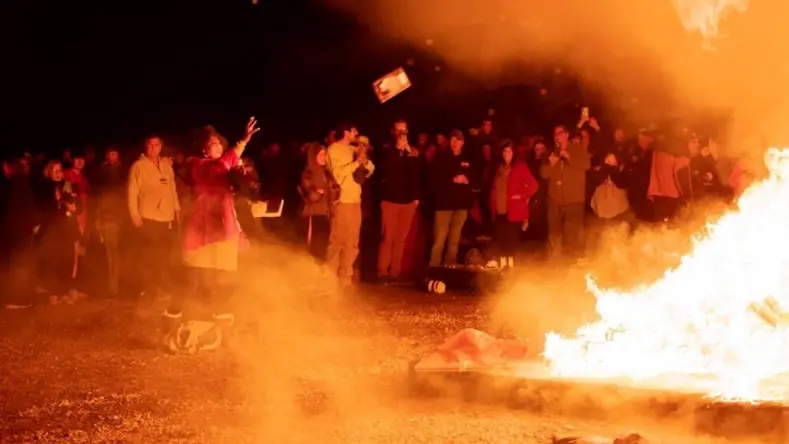
An unusually cold weather front had settled over most of the country all that week, which may have predisposed people to bonfires. The transportation network that supplied fuel among other things was breaking down. Power was intermittent. But the television tubes glowed bright that evening all across the nation as a popular rabble-rouser and would-be prophet ignited the angers and fears of millions with one unlucky suggestion. After ranting as usual upon the failure of the scientific and educational communities to serve the people in their hour of need, he idly reflected that if we burned the books of these technocrats, we would not only be warmer tonight, but would render the world a safer and saner place for the morrow.
This whimper immediately grew into a hurricane of violence. Jonathan was sitting, unfortunately, in the main library that night. A student of his came over and informed him that hundreds of fires could be seen dotting the bay from the fourth floor of the building. So he closed his book and went up the stairs, curious to see this strange phenomenon. Indeed, a hundred fires were burning in the streets of Oakland. Another observer informed him that it was books they were burning, books of every description, in some sort of public demonstration. Uneasy premonitions led him back to his small office in Dwinelle Hall, not with any distinct purpose in mind, except to sit in the darkness and ponder the gravity of the unfolding events.
On his way down the narrow hall he met a colleague of his, a kindly, old, emeritus professor whose office was next to his own. They discussed this sad, new development for a few minutes then parted and entered their respective dens. He remembered for some reason they shook hands upon parting. An hour or so later he was startled out of a gloomy revery by the approach of a mob. To his dismay he saw from his window flames lighting the sky in the direction of the main library. When he put on his coat and opened the door the first wave of angry citizens were rushing towards him, breaking the glass of the office doors along the way. Those who followed burst into each room and proceeded to disgorge its contents out the nearest window, making numerous heaps on the ground below, circling the building with books and broken furniture.
Others were busy outside trying to ignite these piles. Everything happened too fast for Jonathan to react. He was caught in the first surge of bodies and rolled along the hall away from his office. This spared him from witnessing the pillage of his own small library. But it put him in full view of an even worse spectacle. He was pinned right across from the doorway to his neighbor's office. The door had been kicked open and ten or more people were already inside stripping the shelves and feeding the bonfire one story below. Even over the shouts of the mob he could hear its crackling roar and over their heads he could see his friend standing on his desk and clasping in his arms some precious manuscript. The brutes were reaching up and trying to steal it from him. When he raised it over their heads they tackled his legs. He fell into their midst and out of Jonathan's view. But a moment later Jonathan heard one loud ruffian cry out: "Well, since he loved his books so much he had to go with them." The rest of that night was a blur of knocks and shoves and shouting. But he somehow made it home to collapse on his bed.
He sat there doting on this project a long time. He was all alone, in the middle of nowhere and he knew it. He began reminiscing on a night some twenty-five years past when he was a young man at the university. It was another night of riots and the first on which they dared transgress the boundaries of his university.
The world was in terrible disorder at that time. It was the second long year of the epidemic. There was economic collapse, widespread famine and crisis in the government of every nation. But it wasn't just politicians who were losing face and losing their heads, it was nearly all the experts and professionals still alive. Companies could not maintain their work forces or the vital flow of goods. Inflation skyrocketed while markets crashed. Medical experts were at a loss to explain or alleviate the epidemic that had sprung out of a virus they had been unable to defeat in the two decades it had been around.
But this disease, unlike the lingering one, had a knack of killing its victims within a few months, covering one's body with large, black sores and dispatching it with recurrent fevers of ever-increasing intensity. It had spread around the world in a week and infected over half the world's population in its first wave. The old and the young disappeared, and the survivors were left to wear themselves away, tending to the crazed and the invalids, until their own constitutions broke down enough to give access to it.
Presaging this disaster by a few years was a miscalculation on the part of the world's genetic scientists working to alleviate the blight that affected most plant life after the decay of the ozone layer. A white paste, a "Sunscreen 2000," had been developed to protect humans. But plants needed genetic alteration. A more robust and efficient chlorophyll was developed, called glaucophyll, and introduced to a host of crops against the sun's increased radiation. The introducing agent proved so effective that it quickly worked like a plague in turning all plant life across the face of the globe from green to a sort of waxy white.
This was no great tragedy. The plants still had all their life supporting qualities. Things seemed to be going well for about a year. But then the new glaucophyll was found to be not completely effective in surviving the ever increasing ultraviolet radiation. So the skies were seeded with a permanent high cloud cover and the great white houses were built, high-tech food factories encased in glass, a double indemnity, which worked smoothly until the plague came along and made it all futile.
It was in these troubled times that the first anti-technology riots took place. There had already been food riots in many cities when supply systems failed. Hospitals too had been raided and destroyed when rumors of withheld medicines and vaccines took wing. Rabid mobs haunted the streets looking anywhere and everywhere to unleash their pent-up rage. And so many things that could have been spared fell a victim to the anger, in this quickly disintegrating society.
Jonathan had been but a year at his first post, assistant professor of history on the beautiful campus of Berkeley when the violence erupted. It wasn't the students this time. Their numbers had been sadly thinned by the plague and the grim necessities of their families. It was like a campus in wartime, nearly deserted and eerily quiet. But the professors still able carried out their daily routines and their voices still rang through the echoing lecture halls.
An unusually cold weather front had settled over most of the country all that week, which may have predisposed people to bonfires. The transportation network that supplied fuel among other things was breaking down. Power was intermittent. But the television tubes glowed bright that evening all across the nation as a popular rabble-rouser and would-be prophet ignited the angers and fears of millions with one unlucky suggestion. After ranting as usual upon the failure of the scientific and educational communities to serve the people in their hour of need, he idly reflected that if we burned the books of these technocrats, we would not only be warmer tonight, but would render the world a safer and saner place for the morrow.
This whimper immediately grew into a hurricane of violence. Jonathan was sitting, unfortunately, in the main library that night. A student of his came over and informed him that hundreds of fires could be seen dotting the bay from the fourth floor of the building. So he closed his book and went up the stairs, curious to see this strange phenomenon. Indeed, a hundred fires were burning in the streets of Oakland. Another observer informed him that it was books they were burning, books of every description, in some sort of public demonstration. Uneasy premonitions led him back to his small office in Dwinelle Hall, not with any distinct purpose in mind, except to sit in the darkness and ponder the gravity of the unfolding events.
On his way down the narrow hall he met a colleague of his, a kindly, old, emeritus professor whose office was next to his own. They discussed this sad, new development for a few minutes then parted and entered their respective dens. He remembered for some reason they shook hands upon parting. An hour or so later he was startled out of a gloomy revery by the approach of a mob. To his dismay he saw from his window flames lighting the sky in the direction of the main library. When he put on his coat and opened the door the first wave of angry citizens were rushing towards him, breaking the glass of the office doors along the way. Those who followed burst into each room and proceeded to disgorge its contents out the nearest window, making numerous heaps on the ground below, circling the building with books and broken furniture.
Others were busy outside trying to ignite these piles. Everything happened too fast for Jonathan to react. He was caught in the first surge of bodies and rolled along the hall away from his office. This spared him from witnessing the pillage of his own small library. But it put him in full view of an even worse spectacle. He was pinned right across from the doorway to his neighbor's office. The door had been kicked open and ten or more people were already inside stripping the shelves and feeding the bonfire one story below. Even over the shouts of the mob he could hear its crackling roar and over their heads he could see his friend standing on his desk and clasping in his arms some precious manuscript. The brutes were reaching up and trying to steal it from him. When he raised it over their heads they tackled his legs. He fell into their midst and out of Jonathan's view. But a moment later Jonathan heard one loud ruffian cry out: "Well, since he loved his books so much he had to go with them." The rest of that night was a blur of knocks and shoves and shouting. But he somehow made it home to collapse on his bed.






