
Previous Chapter ...
The Aftermath
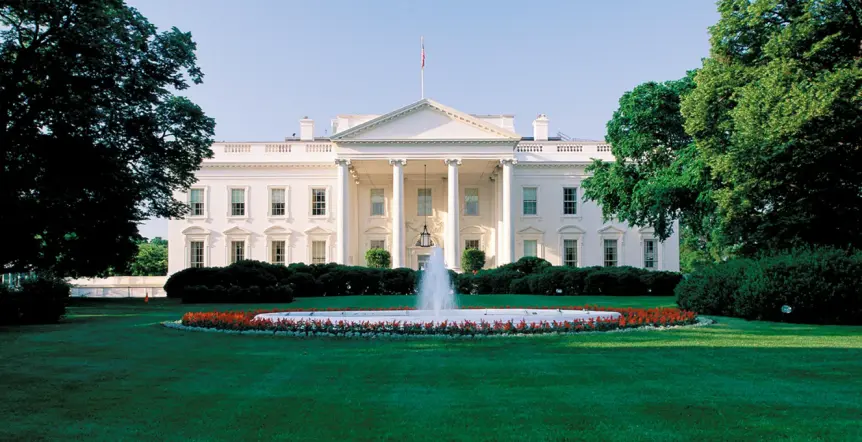
A mansion with a fountain
I thought it best to ride with Jack and Stalker and our entire gang, now numbering over five hundred, on the first expeditions into the interior. The same barriers that contained our pioneers before the revolutionary war still marked our own advances in the years after the Church fell. The Appalachians and Alleghenies formed a natural barrier. In the south and along the gulf a lack of population kept people from settling more than fifty miles inland, even though the territory seemed deserted and there were no attacks, no Indians as there were three hundred years earlier. And now we had empty interstates to glide along.
Those tales of having reconquered the continent, boasted to me by the General in his last days as president, in his delirium, were just that, fictions. Those new generals he picked wanted to please him and filled his ears with imaginary conquests, that he controlled the old forty-eight states, and the cases of liquor they delivered to him, claiming they were from Minnesota and Utah, were local finds. They rarely left the White House, and he never did.
Any such expeditions into the interior would be useless because we didn’t have the population to settle in the territories we cleared. We still clung to the coasts because that’s all we could fill
But I knew there would be danger, people ten years removed from civilization, leading a nomad life with plenty of guns, in large groups or small. The few stragglers who made it to our cultivated lands told us so. They said that the further inland you went, the more the danger, and large cities were to be avoided at all costs. Those who survived out there all these years did so by their brutality. Without electricity or fuel their survival depended upon roving the land and plundering what was left. There were no farms, but plenty of crops growing wild, and the land was full of game. During the winter months these nomads migrated south. In hard times they resorted to cannibalism.
This explained why Canada was so easy to retake and establish our highway to the West Coast. When the looting of towns and cities ran out, people migrated south. There was nothing further north. We already controlled the area between Albany and Buffalo, which became our starting point, and our first objective was the Ohio valley.
It was late summer. Our plan was simple. We would send out scouts in groups of ten along all the smaller roads to explore an area and report back any sign of human activity to our main camp. From there we’d send out a much larger group to round up or shoot anyone we found. By mid-afternoon we’d be moving our camp forward, often twenty miles, to some defensible place, a small town usually, for the night. The army was always a day behind us, one thousand strong with armored vehicles and tanks and transports to carry all those who gave themselves up back east.
With this back-up our men felt safe. If we encountered any large mass of people we could always retreat, much faster than anyone could possibly pursue. And the Army was under our command, our servants in a way, supplying us with food and ammo, transporting our wounded to safety.
There weren’t many, yet we did encounter some sniper fire in the towns or the woods, hunters I suppose, just as ready to bag a biker as a deer. What our men enjoyed most was the looting. As we swamped some rural county, they became expert at exploring every house and possible hideaway for goods, and many nights our camp abounded in cigarettes and booze, a bonfire, drinking and tall tales. We had the leisure to explore an area once it was cleared. I suppose the roving nomad bands were always in haste and looking over their shoulder or just plain scared to do any foraging except by night, when they’d miss many things. They were on the run, but we weren’t.
So every basement, every floorboard or wall was torn apart. When we found human remains in the hills, we often found stashes nearby, cooking utensils, sometimes books, personal pictures or jewelry, the sad remnants of a group trying desperately to survive in a wasteland and one by one dying off.
Such finds depressed me, as I saw grim histories written in these remains. But my companions laughed as they filled their pockets with golden trinkets or some grandfather watch, still ticking when wound. The towns provided even richer gains. We avoided the large cities. Those were our orders. The full brunt of our land forces would handle those in another year, once the Russian integration was complete. For now, general Wilde kept his men posted and ready from New York to Montreal, while Johnson had moved his four thousand troops to guard everything south of there. We had a small force of a thousand men scattered in posts along the gulf to Houston and another on the West Coast. I knew all this because they appraised me and Sheila of everything in private meetings, the state of the union, valuing our non-military insights.
By late November our sweep had covered western Pennsylvania, parts of West Virginia and most of the state of Virginia, rounding back to Washington, where our bikers were disbanded for the winter, to regroup the following Spring for a deeper expedition. The whole operation went smoothly and seemed the best way to slowly retake the whole continent. We lost some thirty riders and a dozen soldiers but recovered a large swath of territory. Our bikers felt like heroes because they kept their loot and were free to come and go. The army soldiers had two-year tours of duty and went wherever they were told, stationed for the winter. ‘Grunts’ my men called them.
The two generals thanked Jack and Stalker for their services and hoped that they’d reach the Mississippi the following year. In that same final meeting for the year, they said they had something else in mind for me, even though I protested and told them I was gaining an invaluable insight into the state of our country and material for my planned history, and I enjoyed the adventure and camping out with my friends. But they were the generals in charge.
“We’re gonna miss you” Jack said as they left. I suppose that’s the highest compliment one could get from a man like Jack. I nodded to him in acknowledgement.
They shut the door to the small office and sat me down.
“Everything’s going according to plan, our rosiest expectations, and much of it was your planning and insight. We never would have thought of such an agreement with the Russians as you did. We probably would have duked it out to the end, in military mode, with a great loss of life.
“But we’ve both been listening to your advice since the days General Kurtz, five years ago. You pushed his career to the top, and ours. I remember that day in Durham, after the banquet, when you said you only wanted your little plot of land. We made a mistake that day, letting you go. And now that plot is gone.
“You were instrumental in regrouping us three years later, saving the nation from chaos. The Russians would have succeeded their conquest if it wasn’t for you. We don’t want to make the same mistake again when all seems well again. We’ve found you a mansion. It has a fountain in front of it and it’s been unoccupied for years. It’s called the White House and it’s yours.
“We, the country, need you there. Don’t write a history, make it. We’ve heard many of your enlightened ideas where this nation should go. Take it there. No prisons, amnesties, finding the right place and task for every type where they can contribute to the whole. You're brilliant at these wild ideas and they work.
“But what led us most to this proposition is that you would never ask for this job. You’re humble and we don’t see power going to your head and changing you for the worse. Take it as we transition to a civil government, a real one this time, no general in charge. That’s the one thing we can’t do and you’re the only man we trust who can do it.
“Believe it or not, we’ve all been taking orders from you, even Kurtz, from the moment we met you. Just live in this house for us. You can delegate all the authority you want. We’ll offer the best of our staff, which we’ll gladly hand over. We don’t want you to plague yourself with a thousand matters, just oversee the big ones, play golf like Eisenhower did. Some of our past presidents spent an hour a day in the oval office, and more days than not on vacation. I’m sure with your smarts you can do the same. You seem to have the roadmap for America all laid out. We’ll give you every help and support we can and with Sheila at your side, you’re sure to lead us well.”
As he finished this carefully prepared speech, I was staring at the ceiling, in silence. They respectfully gave me a few minutes to reply to such a momentous choice. Unbeknownst to them, I wasn’t thinking at all about the job, or what it might entail, though I listened carefully. I was contemplating the size of the building and how it could easily accommodate not only Sheila and our child, but the whole troop of us, Miranda and her love, Jim, Jane, Sophie, Tom and Myra and their children, even Jeff when he returned someday. Then I thought of Naomi and her old suite in one of the wings.
That might be a problem though, with Sheila. Then again, the idea intrigued me, and I was sure I could negotiate that arrangement with her. It wouldn’t be sexual. I’d reached the stage where that didn’t matter, any more than fame or power. I’d had it all and found it shallow. I pictured her as an elegantly attired hostess to our guests, foreign dignitaries, a job Sheila would find uncomfortable but which she fit to a tee. Then I tried to imagine what the library would look like, and the hours I might spend in it with Miranda and Anya, or John visiting from Montreal.
I also saw that Sheila would immerse herself into the job of running the nation, as she did in all her projects, and the bigger they were the more she poured into them every ounce of her energy. She would be the real president. I’d be in my slippers and kimono again, feet up in the oval office at the so-called ‘Resolute desk’, book in hand, spilling the crumbs of saltine crackers on the fine mahogany.
I broke out of this revery, and not wanting to test their patience any longer, quickly replied: “I accept.”
I’m sure they imagined I had been turning over deep matters of state, the labyrinthine complexities of restoring a government, with every mistake affecting so many lives, then the uncertainties of the future. But they both immediately stood up and with military formality shook my hand and expressed their deepest satisfaction with my decision, saying an announcement would be broadcast to the nation within the hour.
I asked if they had a plane on hand, as I’d need to consult with Sheila in Montreal as soon as possible. Then I asked them how soon they wanted me to move in and assume office. They said right away, as it would take months to organize advisors and secretaries. They mentioned some of the household staff was still in place, two cooks and a bevy of servants maintaining the premises, which had been in mothballs for years now, along with a few White House guards.
Wilde said it would be a good start to the next year, a Christmas present for all, to have me announce we were up and running.
“You know better than anyone how to make an inspiring speech. You’ve done it so many times. Fill the nation with hope and coming prosperity. Remember who you are, the man whose predictions come true.”
Chapter One ...






