
Ben, ukrainianjewishencounter.org
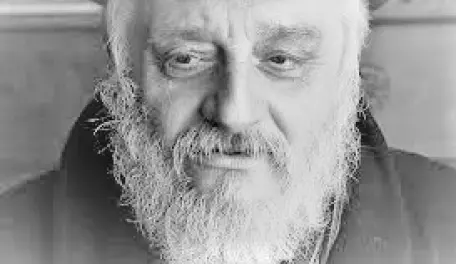
I came around just in time to find myself being dragged into a doorway by two men and then propped up on a bench against a wall. Then a woman came and began wiping my forehead and my bloodied hand with a cold sponge. I recollected myself and begged them not to call anybody, saying I would get in trouble if they did. My head stopped spinning and I saw directly in front of me an old man with long white hair and a full beard. He smiled an almost laughing grin and welcomed me back into this world.
I was in some dim cubicle, probably the one behind the doorway where I’d fallen. There was a table a few feet in front of me and another wall with cupboards behind that. A younger man was standing behind the older man and the woman with her washbasin and sponge. It hurt my neck to turn in that direction, so I could only see her from the corner of my eye.
The old man stepped away and came back with a cup of water. "Take a drink and rest a while," he said. "You've had a hard fall."
My head was throbbing and panic gripped me. I had no idea who these people were. I desperately tried to rally some presence of mind.
"Thank you," I spoke up. "You are very kind. But please don't summon any officers here until I’m recovered a bit. It would go hard for me. You see, this isn’t the first time I’ve had a mishap." I pointed to the bloodstain on my shoulder.
"Are you from here?" the old man asked.
"No, I'm from the south, far away, with messages."
"Then perhaps we should call someone to help you deliver them," the old man continued.
"No," I said, "Please don't. I’ll do it myself. My bicycle..." The bicycle had been pulled inside the front door and the door, luckily, was closed. The young man went over and looked at it, guessing my concern, picking it up and spinning the wheels. The front one was scraping against the forks.
"It's dented and bent a little," he said softly, "but I think we can fix it."
I breathed easier but still had one pressing concern. "Were there others in the street who saw me fall?" I asked.
"No," said the old man. "We were just about to leave for the evening service. My daughter-in-law here was at the door when you fell at her feet, knocking your head against our doorstep. We brought you in right away."
"Thank heavens," I mumbled.
"You’re welcome to rest here awhile," he continued. "I’ll stay with you while my children attend the service."
With a nod he sent them off. The woman wiped my brow once more, set the basin beside me and took her husband's hand. When they opened the door I could see people filling the street. I felt a shudder, but then the thought occurred to me that this would be a good time to escape, when everyone was at the temple square. "If I can just gather my wits and ask the old man a few questions before leaving..."
"You are very kind to me," I said, as the door closed. "My name is Jonathan."
The moment I uttered this I realized I’d made a huge mistake. I knew it from the look he gave me. I had forgotten that personal names were not only abolished, but illegal to use in the cities. Our more natural habits in the woods made me forget this. There was an uncomfortable moment of silence as he gazed at me.
I was desperately trying to think up some excuse when he said, much to my astonishment: "My name is Ben."
I realized that all pretense was vain with this man who freely offered me what I let slip to him. I told him, in a halting voice, that I wasn’t what I seemed. I came from far away and had little time. He was curious to know where I came from and I told him, guardedly, "the mountains."
I went on to tell that I’d been away from the cities for three years and needed to know what his fellow citizens were doing on the far side of the bay to the north.
"Why nothing much at all," he answered. "They’re clearing some land that’s long been an eyesore to our good priests in the temple, who look across the water and see that region every day. Their eyes are very delicate, you know."
"But what about the road there," I asked, "where does it go?" "Only a mile," he replied. "There were some glasshouses we brought over from that side a few years ago. It was built for that reason, to transport them on wagons."
"Then there's nothing further north?"
"Nothing I've ever heard of," he said. "No cities, if that's what you mean."
I felt relieved for all my friends in the woods. But at the same time I realized the extreme rashness of this trip into the city. Hiram had probably already found out all these things and might even be nervously awaiting my return at our camp this minute.
I resolved to go at once while the streets were still empty, bloodied and faint as I was. But I had to ask one more question.
"Why did you tell me your name was Ben, old man?"
"Because you told me yours, young man, and I’ve not heard such a thing in six years."
He went on to say, quite frankly, that he didn’t agree with many of the new laws but had to keep his sentiments to himself; "to avoid persecution," he said, "a thing that has happened to most of my people."
"But now that I’m growing old," he continued, "I think more of joining them than staying here. I’m glad to have met you Jonathan, as I see you’re not a part of this order, and we can talk like human beings."
This pricked my curiosity. I asked him who his people were.
"Why the Jews," he replied rather loudly. "My son's name is Simon and his wife is Sarah. The only reason they've allowed us to live together or to live at all is because my knowledge is so valuable to them. I’m in charge of keeping the glasshouses in working order, despite all the bureaucratic white tape and the failing equipment and the lack of replacement parts, and incompetent staffs, I might add. But my friends, my close friends, many of them were persecuted and killed, for no better reason than for trying to preserve a few simple traditions."
"They’ve taken away our past," he went on, "but we still close the door and say our prayers in the old way. No one can take that from us. We shall say them silently when forbidden to say them aloud."
He went on with this interesting account a little longer, telling me that there were still some individual Jews in society, but those with any rank in government had to hide the fact. I responded to this honesty by remarking that I used to be an historian and was curious about these matters, and wondered why the acts of annulment and the oaths that we were all forced to take in the beginning hadn’t cleared his people as it had me, for a clean start under the new order.
"Oh, they promised this very thing," he said, a little angrily, "but we were still suspect and even watched and kept apart from one another as much as possible. And all of us who were honest enough to declare our religion have this symbol stamped upon our identity cards, (he came up close and showed me a strange mark on the card that hung around his neck) which gives us a second class fare everywhere we turn."
He sat down at the table and went on, telling me exactly what he did and why he’d been exempted, to some degree, from this prejudice, and allowed to live with his only remaining son and daughter-in-law. I couldn’t help saying that I wished we had such an expert in hydroponics in our own camp. Then he asked me what manner of camp it was and how we grew our food.
I began describing the current status of my tribe, careful not to reveal any clues as to its whereabouts. But I was startled in the middle of this narration by a quiet knock and the opening of the door. It was Simon and Sarah returning from the temple. There were others in the street so they closed the door quickly behind them. Their entrance made my head spin, realizing that I’d missed my chance to escape, completely forgetting about my danger in idle talk.
I sank back to the bench with both hands over my face. I felt nauseous and dizzy. I was probably incapable of riding away on the bike. Then old Ben spoke up in a reassuring voice: "Don't worry, you can spend the night here. No one will visit us. You need some rest. We'll have dinner together and talk some more. My son will repair your bicycle and after a good night's sleep you can set off in the morning, when the streets are empty again."
Such a generous offer put my fears to rest. I wondered why I hadn’t thought of that myself. I guessed that my faculties were still impaired. Then I thought how lucky I was to have met this family, probably the one-in-a-thousand that would have sheltered me. Ben was now at the far end of the room talking in low tones with his children, most likely explaining to them my situation.
He came back with them and his daughter-in-law again examined my head and wiped it with the sponge. There was a large, sore bump at the very top of it. Simon went to my bike and began to fix it. He had no tools to work with except two sticks, which looked like the broken-off legs of a chair. Everything about this house was Spartan and simple, unless one chose to call it "purified".
Ben and Sarah helped me over to the table. Ben poured me a cup of wine, something I hadn’t tasted in years. Sarah prepared a dinner of fish and vegetables in the far corner of the room, while Ben sat down with me and we talked on and on. I asked him questions about the city government, its organization, its laws, its long-term plans. He seemed very well informed, being a manager of sorts himself. I could hardly have picked a better fountain of information.
He told me that the present ‘goal of the year’ was ‘uniformity’. Delegations from the capitol in the East were visiting all the cities this fall, inspecting them and ranking them in their piety and obedience to the Church. Such a delegation was soon to arrive and that's why everything was in tip-top shape. Last year the catchword had been ‘whiteness’ and the city still dazzled in its wake.
The wide, white margin around the city was also the result of last year's ‘goal’. It was a symbol of the power and prosperity of this place, a field of dreams, a slow reconquest of the land, intended, no doubt, to link up some day with the equal efforts of other cities and cover the planet in one great, perfect purity.
Unlike the turbulent cities I’d known, where constant indoctrination and hard labor were the order of the day, if not the hour, a little bit of sanity, along with the stability, had crept into the planning of the church fathers. Now that obedience and order were achieved the energies of the state were directed towards two far nobler ends, sanitation and fitness. By well regulated diets and healthy intervals of labor and rest, they had greatly improved the health and happiness of their people.
I was glad to hear that the plague had been all but eradicated. The population, after years of decline, was on the rise again, and such was the public happiness at this turnaround that the arrival of a new-born baby was always announced and applauded at the public services.
After dinner I let my hosts ask the questions. I told them of our life in the woods, its hardships and rewards. Ben listened intently and even sighed a few times as I described our freedoms, our democratic government and voting system, and the right to discuss and dissent and speak as we pleased.
Simon tinkered with the bicycle all the while, listening to us as he straightened out the spokes. Then he and his wife went to bed in a back room. Ben kept me up late into the night, with many more questions about my tribe. He visibly relished our conversation, "such a rare thing in this society," as he put it, and plied me with more wine and then tea, sighing and wishing aloud that he were a member of my tribe.
I told him I’d gladly take him with me, his family too. But he deferred, saying he was too old and that his son and daughter-in-law might find such a life too harsh. What he really wished was the impossible; that he was twenty years younger and a part of our group. I quietly sympathized with the old man.
I thought our talk was over with that pause, but then he began telling me a few secrets of his own. Before the fall he’d been a scientist, helping to design some of the first glasshouses. But he was also a deeply religious Jew. When the violence broke out, he narrowly escaped slaughter, unlike most of his friends at their temple. He happened to be absent from it that evening, tending to his own sick child.
In the following weeks he did his best to conceal his religion, though he was rounded up and questioned. He was set free when the state determined his usefulness, and even given back his son, who now worked under him, after proving how necessary his services were in maintaining the food supply.
In the privacy of this home he’d set himself the task of reciting to his children every prayer, rite and passage of the religious lore that he could remember, over and over again so that they’d have it to pass down to their children. This is what he lived for and I congratulated him on having such a good reason for living.
We ended our talk near dawn, with a warm clasp of friendship and a handshake, like two brothers miraculously rejoined after the shipwreck of the whole world. He spread a blanket for me on the floor and retired for a few hours himself, as we both had a full day ahead of us.






