
I wrote a quick post about Urbit on Cent awhile ago and here's something that unexpectedly surprised me:
So, I've heard about Urbit here and there bits and pieces, but only just now realized that it had been conceived as far back as 2002 by none other than Curtis Yavin, who - as it turns out - is also the original founder of the Dark Enlightenment movement. Nick Land, as it turns out, mostly took to further elaborate and expand upon Yavin's ideas and theories. Imagine that.
For those not familiar, the Dark Enlightenment - also sometimes called the neo-reactionary movement - is this weird philosophy somewhat associated with also the accelerationists and people like Deleuze, but essentially being anti-democratic anti-egalitarian and somewhat proto-fascist in character, calling for (or expecting / prophesizing) a return to traditional and archaic modes of governance and organization like monarchies and what not. Anyway!
Yeah! Weird, huh?
And certainly provoking of further interest and curiosity. A refreshing change from the banal and mostly unimaginative and repetitive Bitcoin and crypto narratives and mantras that get continuously recycled in Twitter and on social media.
Urbit is, of course, another sui generis outlier in the space of peer-to-peer crypto-networks and protocol design (along with Holochain and IOTA, standing out as endeavors pursuing slightly different goals and using altogether different, non-blockchain-based architectures, designs and logic). And interestingly, it appears to have been conceived of way back in 2002 as already mentioned above. As an open source project Urbit is being developed by the Tlon Corporation, founded by Yarvin himself and the company has received seed funding from a number of investors since its establishing, notably from Peter Thiel who went on to invest $1.1 million in 2013.
So, what is it anyway?
Well, it appears to be a highly minimalist, carefully architected (from scratch), ultra-refined and lightweight 'overlay OS' and software stack intended to provide one with a simple, modular and cozy networked environment as a clean slate away from the cesspool of what the internet as we know it has become (fragmented, siloed, surveilled, parasitic, bloated, manipulated, centralized, etc.) Different instances of Urbit can communicate via an encrypted peer-to-peer protocol on top of UDP.
The stack itself includes a virtual machine (VM) consisting of a single function in 33 lines of code on top of which there's a purely functional programming language and a kernel written in it with a set of kernel modules serving the needs of personal computing (such as a filesystem, build system, sandbox, secret storage, web server, networking protocol, etc.) All packed in some ~50 thousand lines of code and running on anything with UNIX and an internet connection. The VM is called Nock and the entire system compiles down to Nock (which, as already mentioned, is just 33 lines of code, amazingly). Nock is somewhat similar in concept to WASM or the JVM as constituting a uniform machine code for every instance of Urbit.

The Urbit logo.
The state of one's Urbit OS is a pure function of its event history - it's auditable, repeatable and trustworthy, making writing of decentralized applications as simple as possible and since Nock is also itself a protocol for computing, any two nodes on the urbit peer-to-peer network (running an encrypted protocol on top of UDP) can easily share data, communicate and connect their software without any intermediary in between.The official site describes Urbit OS "like the 1968 Porsche 911 of operating systems: extremely simple, elegant, and built for the individual."
One has ownership over their Urbit ID and passkey and the Urbit ID registry is deployed live on the Ethereum chain (for the time being, most likely to change in the future with Urbit OS hosting that itself). The ID is used only to keep track of ownership of things and enforce rules of address distribution. Urbit is meant to work as something like a desktop OS for a networked world, a unified system where one can interact with, store, update and archive personal data, communicate and collaborate with others, etc. A vastly extensible multi-purpose network but without the surveillance, manipulation and control, doing away with the frankenstack of invasive and malignant services and apps.
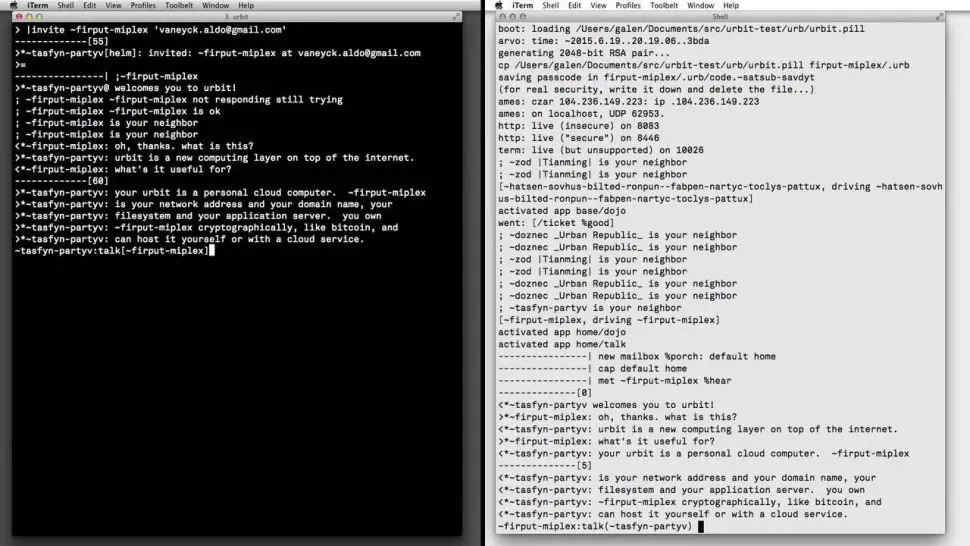
Logging in to one's urbit as a personal cloud computer instance.
In 2020 the OS 1 release of Urbit will take place, which is the first minimal but complete user experience for Urbit, bringing together the whole stack into a single interface. An ultra-simple, lightweight, calm, ad free and privacy respecting environment for building personal spaces and digital communities. Think the earlier days of the Internet in the 1990's, the days of IRC and USEnet and the like, only much simpler and refined. The roadmap explains what will take place further in OS 2 and 3.
Urbit basically builds for a digital space where one can have a sense of home, building for a future in which technology doesn't control us and is instead simpler, more reliable and less invasive, designed to foster and stimulate creativity instead.
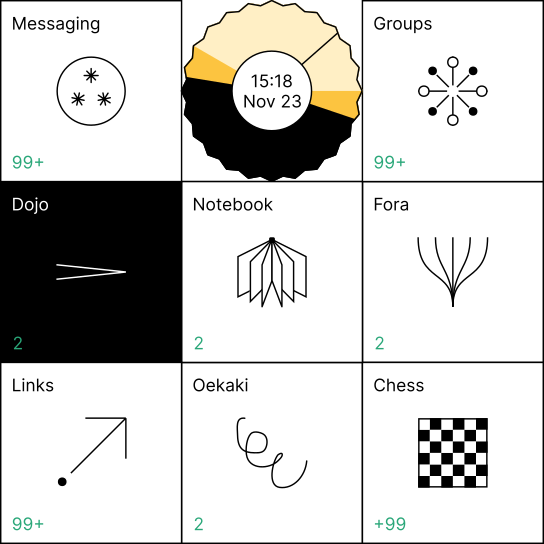
Urbit has two basic building blocks: groups and modules. A group consist of one or more people, a module is an app of sorts, a tool for getting something done, e.g. 'publish', 'chat', etc. that can be shared by a group. Any group can combine modules as well as build their own. A module is like a particular mode of communicating (a little bit like hApps in Holochain in that respect, with their validation rules and composability) and each group has a set of different ways of how they want to communicate or collaborate. Setting up a group and the modules it shares is straightforward and easy and building a new module is no more difficult than creating an iOS or Android app (given familiarity with the Urbit stack).
Now, one reason why Urbit may be more important than it may seem at first is the following.
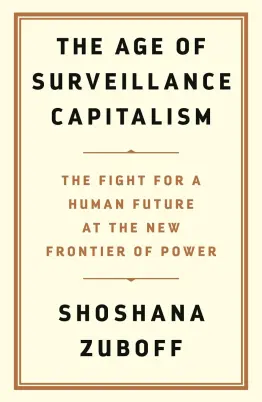
With us humans, it's a known fact that cultural evolution is what drives the direction of biological evolution. And technologies, as the prosthetic extensions of ourselves and our senses, play a crucial role in our cognitive and psychological conditioning. And so far, the effects and consequences of social media as operated by the likes of Facebook, Instagram (or Google in its managing and manipulation of how information flows and gets indexed and sorted), etc. have been a disaster. These technologies have been weaponized against ourselves behind their front-end user interface appearances, even going as far as using the information and data gathered to put together behavioral predictions which get sold off on markets trading in human futures (as Shoshana Zuboff writes about in disturbing depth and detail in "Surveillance Capitalism"). And that's barely even scratching the surface of what really goes on. It is well known also that many of those platforms are specifically optimized to have us hooked and addicted. And when I say that cultural evolution drives biological one, I forgot to mention that dramatic changes may actually be introduced within a single generation.
So, Urbit provides an alternative which is instead conductive to healthy patterns and habits, to more attentiveness and better focus in place of the ADD/ADHD, sovereign control over one's environment and space and insulation from the informational pollution and psychological warfare taking place. In that sense, Urbit can also be thought of as a kind of bunker or shelter in cyberspace.






