
Bitcoin tends to outsource functionality to other chains and tzBTC is similar to what WBTC (wrapped Bitcoin) does on the Ethereum chain — a representation of Bitcoin (or a certificate for ownership of Bitcoin) within the Ethereum ecosystem. tzBTC brings the liquidity of Bitcoin's battle-tested brand into the Tezos ecosystem, enabling BTC-backed use-cases on Tezos. Developers on Tezos can use tzBTC to enable novel financial applications on the Tezos blockchain.
tzBTC is implemented following the FA 1.2 asset standard on Tezos — a token contract similar to ERC-20 in Ethereum. That enables Tezos-based apps to make use of BTC with the full expressivity (expressive capacities) of Tezos smart contracts (OCaml-like functionality/functional programming, having the major advantage of allowing for formal methods and verifications of code correctness, something of crucial/critical importance when it comes to mission critical systems and immutable smart contracts that handle/secure large amounts of value).
The tzBTC system divides governance among a DAO-like group of Keyholders that are responsible for the secure custody of Bitcoin and the management (minting / burning) of the corresponding tzBTC based on a multi-signature setup. Gatekeepers interact directly with the users in ensuring compliance. The Bitcoin Association Switzerland acts as a third-party overseer and mediator of/between Keyholders, strengthening the integrity of the tzBTC system. More information about the Bitcoin Association Switzerland may be found on its official website. The Association agrees to use a standard contract for its role in the tzBTC ecosystem.
A distributed group of Keyholders secures custody of BTC with a multi-signature setup and oversees supply management by minting and burning the corresponding tzBTCs in circulation within the Tezos ecosystem. Keyholders and Gatekeepers typically use a standard contract.

Keyholders securing custody of BTC in the tzBTC system (whose multi-signature is required for conducting/executing/legitimizing operations).
A distributed group of Gatekeepers accept the BTC after conducting of KYC & AML checks (identity verification) and allocate the corresponding tzBTC in return. There is no limit to the number of Gatekeepers allowed and an application to become a Gatekeeper can be made to an existing Keyholder.

The current Gatekeepers one can get tzBTC from: Bitcoin Suisse, Bity, Sygnum, Taurus Group SA, Woorton Liquidity Provider.
Basically the whole thing is implemented following similar logic to WBTC (and other derivative assets, like tokenized gold DGX, or even Maker's Dai), though it unlocks different opportunities and possibilities (given Tezos' specifics) and involving different entities, companies and organizations in its arrangement.
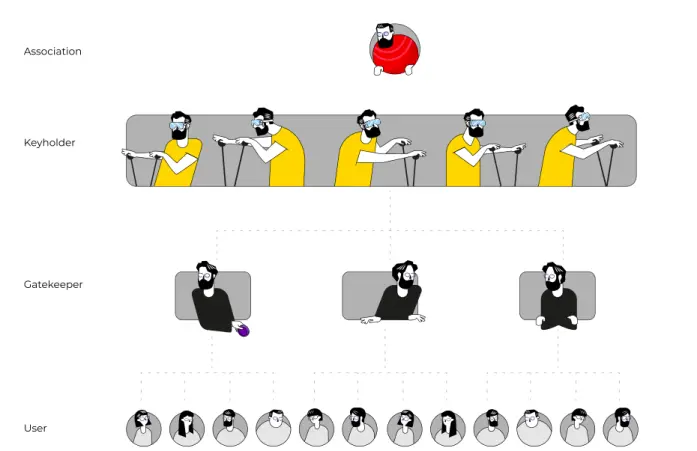
Visualization of the tzBTC governance structure. Source: tzBTC Brief Overview paper.
Three processes are involved in the tzBTC system: Initiating, Minting and Burning.
Initiating refers to the process whereby a user requests to procure an amount of tzBTC from a Gatekeeper. Following a successful identity verification (KYC) check performed by a Gatekeeper, he'll go on to accept a user’s payment (in BTC or something else) and issue tzBTCs to the designated address (after minting).
Minting refers to the process of generating new tzBTC which correspond to the BTC in custody. Minting cannot be performed by a single Keyholder (but requiring multiple Keyholder signatures to allow for the operation) and happens in response to demand from Gatekeepers. In addition to a regular minting process, a user may pay a higher fee to execute an ad hoc minting.
Burning refers to the process of redeeming back tzBTC for the BTC in custody. Only Gatekeepers may initiate burning of tzBTCs and by doing so, the amount in question is deducted from a Gatekeeper’s tzBTC balance and the corresponding BTC is returned to the user.
Minting increases the amount of tzBTC in circulation and burning decreases it.






