![Cut-up Method: Tzara, Burroughs and Approaching/Tapping Texts and Meaning Non-Linearly to Reveal Hidden and Non-Intended Meanings [Conceptual Heuristics and Tools]](https://www.publish0x.com/img/102518.webp?action=resize&ar=1&enc=webp&inv=0&ori=1&st=1&up=1&w=1140&signature=d9f647646921eb51d6fafd19bb5ebc34fd29e7f7f45f0e43ed8d8188e9b5f99a)
William S. Burroughs was a bit of a weirdo without a doubt.
Highly intelligent and very unusual, in pursuit of his own strange goals and searches.
He had this awesome talent of telling the truth through lies (coincidentally, this is what was Plato's horror).
“...the real truth is always implausible, did you know that ? To make the truth more plausible, it's absolutely necessary to mix a bit of falsehood with it.”
- Fyodor Dostoevsky, "Demons"
He was also a junkie, opiate dependent for most of his rather long life (died at nearly 90, I think). And he was really highly educated and quite erudite, so he'd sometimes come up with some weird or even outrageous theories and dress them up as scientific truth so convincingly that many would actually go for it. A favorite of mine is the apomorphine anecdote, where he claims it to be a one-shot cure for heroin dependence that re-calibrates your metabolism in such a way as if you had never had exposed yourself to the drug. Now, here's the thing: the only thing apomorphine does to you is trigger projectile vomit the second you pull out the needle and nothing else, at all. Which is really a rather sinister mockery, but still massively funny and somewhat brilliant on his part. What's important however is that the mechanism he did describe, how apomorphine supposedly works on the molecular and metabolic level (eventho it does not work like that itself per se), is what actually really does constitute the real cure for addiction/dependence (particularly opiate/opioid one) which only many years later was discovered to be the active component (alkaloid) of a plant called Iboga (which is itself as unusual, weird and unexplainable in so many ways as Burroughs himself had been), ibogaine.
Anyway, Burroughs didn't see writing as a kind of narrative to something, or record-keeping or documenting anything at all. To him, it was an experiment above all. And he did make extensive use of various techne (technologies) in approaching it (he has also sometimes said that to him writing had literally been a practice in exorcism, exorcism of what he called "the ugly spirit", a possession he talks about which is present everywhere in everyone to some degree or other at different times and circumstances, describing it as some kind of inert unconsciousness where some other force of intent clumsily guides our actions and which hides itself behind such things as for example the structure of language as such) and seeing where it all gets him. One thing he applied and experimented with extensively was the technique of so-called cut-up method, borrowed from the Dadaist movement in interwar Europe.

A Dadaist collage.
The below quote from Bergson, I think, actually captures the point of it, or what it aims to accomplish, as a method/technique of decoding language:
“Now the image has at least this advantage, that it keeps us in the concrete. No image can replace the intuition of duration, but many diverse images, borrowed from very different orders of things, may, by the convergence of their action, direct consciousness to the precise point where there is a certain intuition to be seized. By choosing images as dissimilar as possible, we shall prevent any one of them from usurping the place of the intuition it is intended to call up, since it would then be driven away at once by its rivals. By providing that, in spite of their differences of aspect, they all require from the mind the same kind of attention, and in some sort the same degree of tension, we shall gradually accustom consciousness to a particular and clearly defined disposition — that precisely which it must adopt in order to appear to itself as it really is, without any veil.”
- Henri Bergson, “Introduction to Metaphysics”
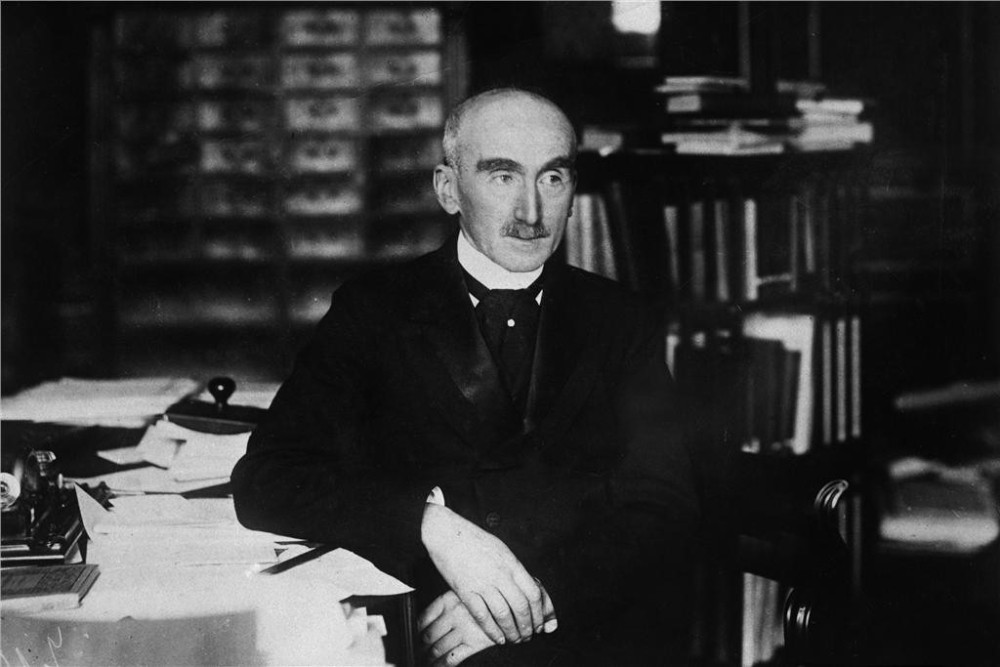
Henri Bergson, 20th century French philosopher and Nobel laureate with significant contributions in the fields of neuro-biology, known for his so-called method of intuition, as a different mode of sense-perceiving and knowing, as immediate lived experience of becoming the thing itself for itself in its totality, that is different in kind from the analytical reductionism of partial knowledge of the thing from its ourside and for ourselves.
And here is what Burroughs himself says about the technique:
“The scrapbooks and time travel are exercises to expand consciousness, to teach me to think in association blocks rather than words. I’ve recently spent a little time studying hieroglyph systems, both the Egyptian and the Mayan. A whole block of associations — boonf! — like that! Words — at least the way we use them—can stand in the way of what I call non-body experience. It’s time we thought about leaving the body behind.”
“Any narrative passage or any passage, say, of poetic images is subject to any number of variations, all of which may be interesting and valid in their own right. A page of Rimbaud cut-up and re-arranged will give you quite new images. Rimbaud images — real Rimbaud images — but new ones.”
“Of course, because cut-ups make explicit a psycho-sensory process that is going on all the time anyway. Somebody is reading a newspaper, and his eye follows the column in the proper Aristotelian manner, one idea and sentence at a time. But subliminally he is reading the columns on either side and is aware of the person sitting next to him. That’s a cut-up. I was sitting in a lunchroom in New York having my doughnuts and coffee. I was thinking that one does feel a little boxed in in New York, like living in a series of boxes. I looked out the window and there was a great big Yale truck. That’s cut-up — a juxtaposition of what’s happening outside and what you’re thinking of.”
- William S. Burroughs, “The Third Mind”
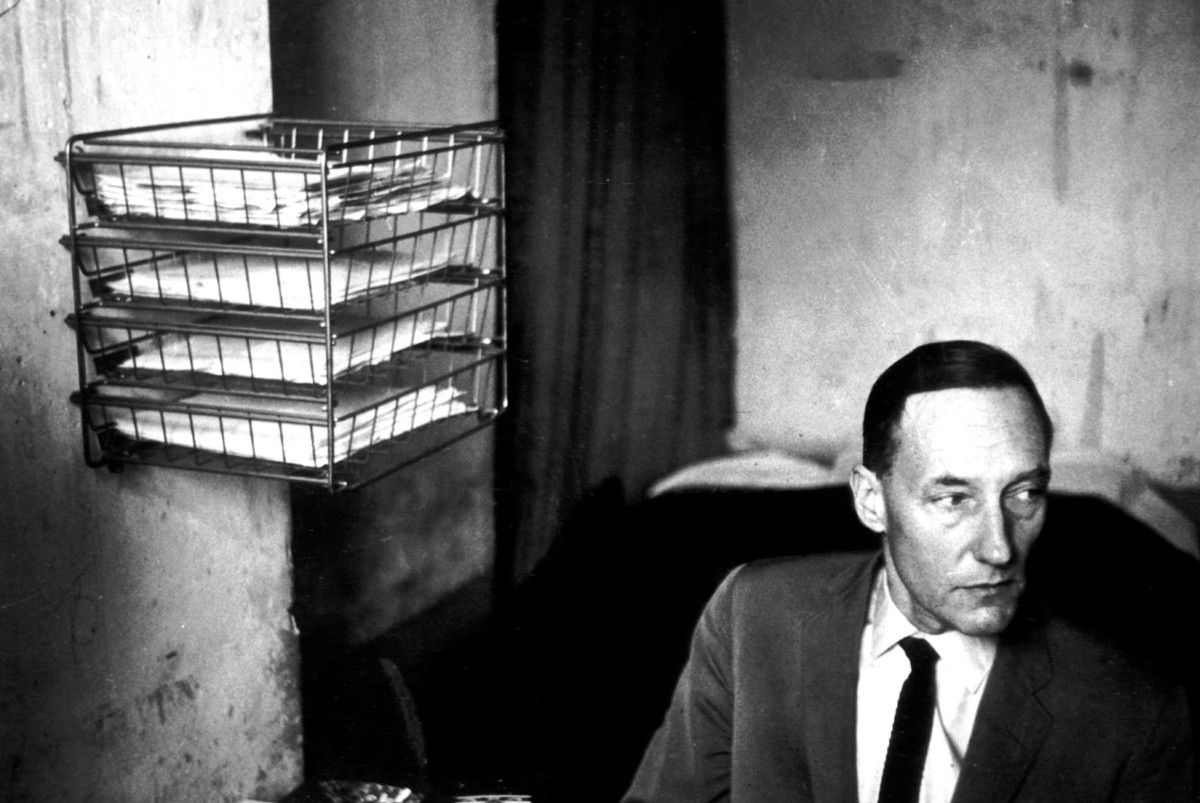
W.S. Burroughs himself.
To give an example (of what may have in all likelihood been Burroughs again just bullshitting while also making a point), he claimed that by regularly applying cut-ups to daily newspapers and re-arranging the pieces in all kinds of configurations of the random texts, he had actually predicted a plane crash which had supposedly taken place. And he used the same technique in the writing of many of his books, including the infamous "Naked Lunch". Elsewhere he says how the Chinese script, as packing actual meaning in its ideograms and how it combines them in all kinds of possible arrangements, already as such also constitute cut-up.