![[Anime] Akame ga Kill: Dying is literally part of the process.](https://www.publish0x.com/img/1196684.webp?action=resize&ar=1&enc=webp&inv=0&ori=1&st=1&up=1&w=1140&signature=9950d85ce4439bd2c9dd39b1f0a2504e403ee239061929d3e8c0defbf86a1317)
I'll warn you right away: this anime is one of those that traumatizes its fans, or at least something similar, so be prepared. If you haven't seen it yet, watch it and encounter a story that deviates a bit from the routine of happy endings.
Released in 2014 (with 24 episodes), Akame ga Kill! seemed to present a very simple premise at the beginning, but quickly showed that it wasn't quite that. We follow "Tatsumi," a young man who leaves his village in search of money in the capital, imagining that everything will be beautiful and full of incredible adventures, but ends up discovering that the place is dominated by corruption, violence, and abuse of power. Along the way, he meets an organization called "Night Raid," a group of assassins fighting against the Empire using special weapons called Teigu. This forms the basis of the work, which mixes action, fantasy, drama, and a good dose (a really good dose) of violence, creating an atmosphere where each mission could truly be the last.
In Akame ga Kill!, the insane way the characters are treated is surreal. You start by getting to know them in a way that seems to follow a traditional structure, with each one having their own personality, skills, and backstory. But the work doesn't take long to deconstruct this, and the madness begins when you least expect it.
Losses are constant, and at various points, you realize that there's no sense that a certain character is safe simply because they are important to the story's development. This gives the battles enormous weight, because victory almost never comes easily or without sacrifice. For me, this is one of the anime's main strengths; this subversion of expectations is something that stunned me when I watched it.

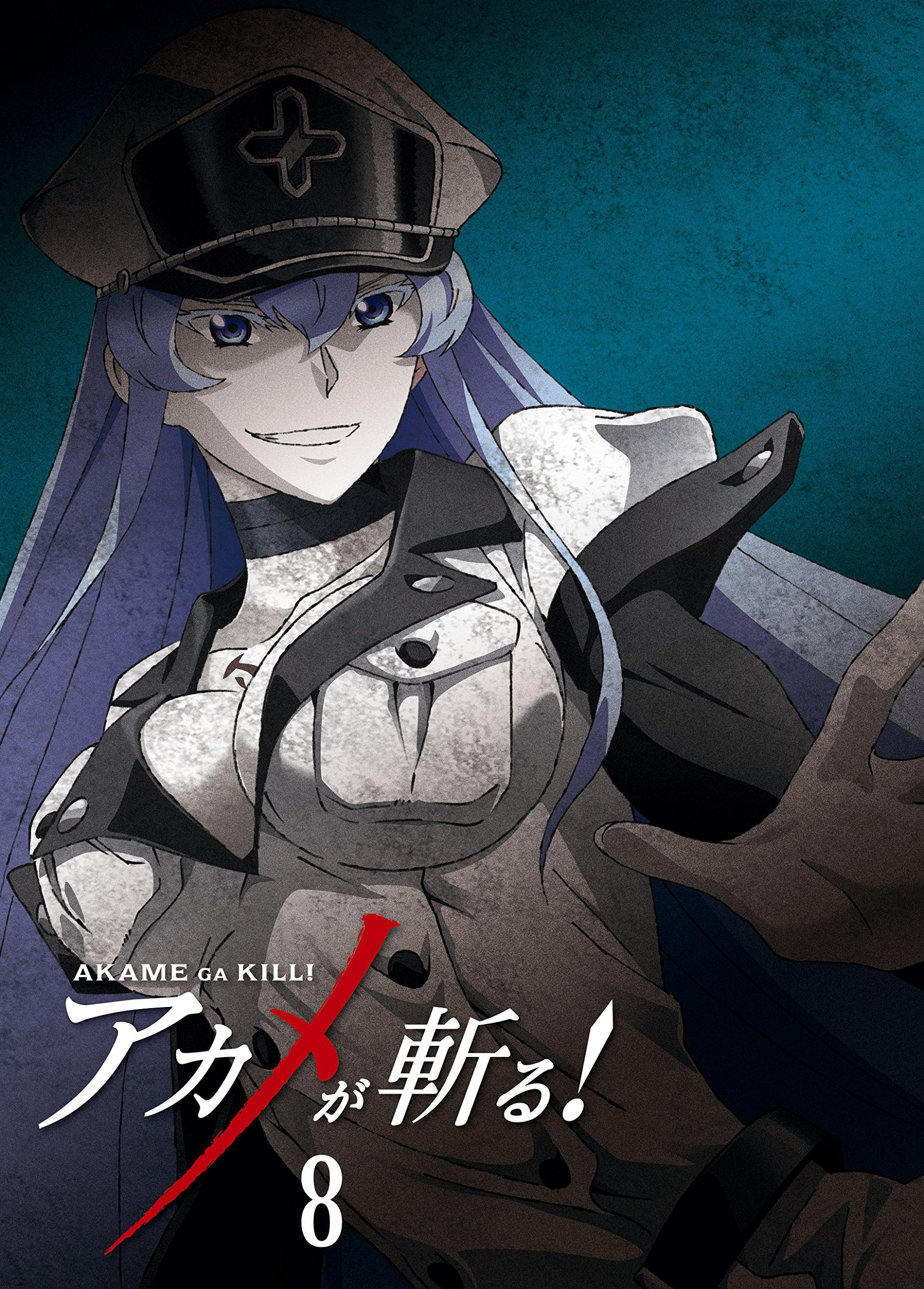
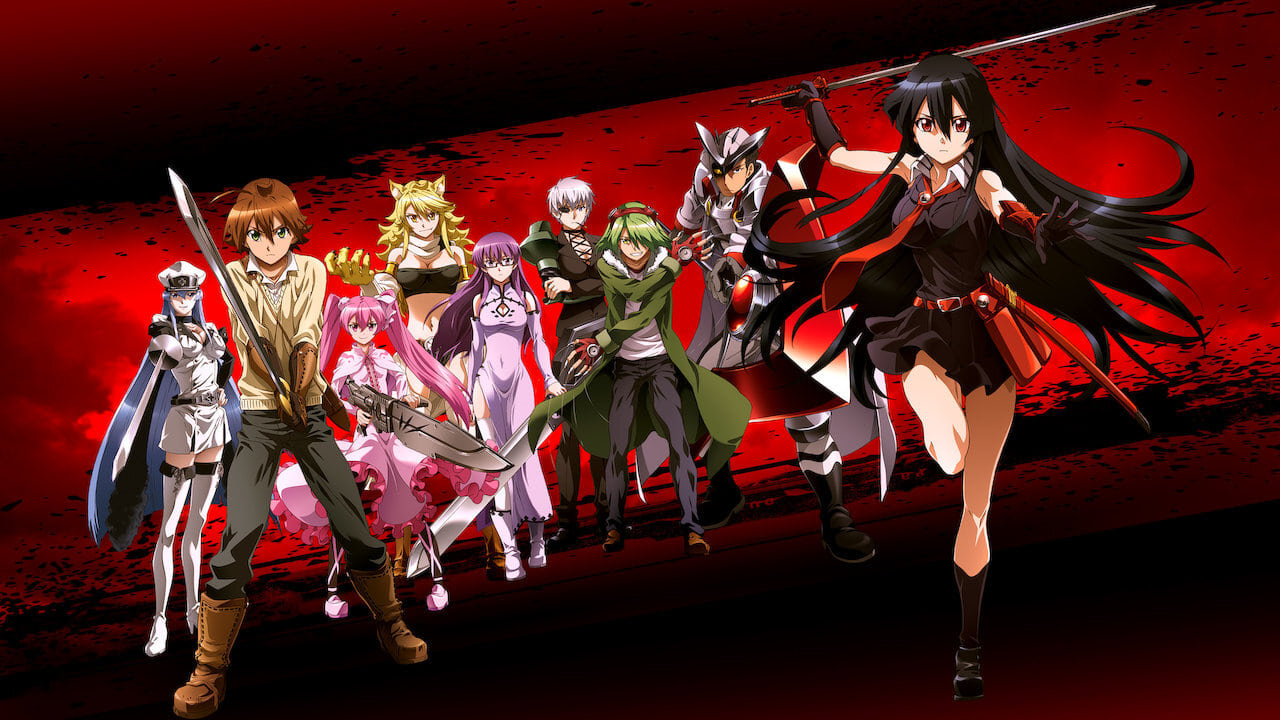
The character design is also sensational: Akame, Tatsumi, Mine, Leone, Sheele, Lubbock, and the other members of Night Raid have completely different styles, and it's easy to develop a preference and fondness for some of them. You've probably already seen a video of Esdeath on some social network, and obviously, she deserves recognition for being an extremely memorable antagonist within that universe.
Furthermore, the anime heavily explores the idea that there is no such thing as a truly clean war, because both the Empire and the revolutionaries (Night Raid) commit atrocities, and these choices make the narrative heavier and less predictable.
An interesting fact for those who only watched the anime: it and the manga don't tell exactly the same story until the very end. The manga, written by Takahiro and illustrated by Tetsuya Tashiro, began in March 2010 and ended in December 2016; meanwhile, the anime began airing in 2014 and, as the adaptation caught up with the available material, the anime's ending followed its own path, with distinct events and character fates different from the manga. This is actually quite amusing, because many people finish the anime believing that this is the only ending of the work, but it turns out that it isn't, because the manga had a different storyline.

One negative point about the anime is that, at a certain point, it starts to accelerate the unfolding of the story too much, especially near the end. Because of this, some characters who could have received better development end up dying so quickly that there is little time to absorb the impact of their deaths. The difference from the manga reinforces this feeling of haste, because the adaptation had to deal with the events and build its own conclusion. This doesn't make the experience bad, but it leaves the impression that Akame ga Kill! could have developed even further what it started so well.
This problem is just a detail compared to the grandeur of the work, and I would certainly recommend the anime to those who like a darker tone and don't mind seeing the characters die. It might frustrate those expecting a perfectly correct development or a conventional ending, but it's precisely this unpredictability that made the work memorable for so many people.
Akame ga Kill! is the kind of anime that you finish and keep thinking about the deaths, the characters' choices, and how that story could have gone in other directions. The feeling that no one is completely safe is something that makes you remember the anime and be sure that it's different from others.