
Much has been said in recent years about non-verbal language, which on average constitutes about 60% of overall communication, although in some cases it can be 100% one way or the other. On one hand if you were to ask a child if they would like an ice cream verbalisation is completely unnecessary, just a vigorous nod of the head. On the other hand, and in particular concerning conversations where there is no shared native language phone conversations become that much more difficult. Much of the non-verbal communication centres around our use of body language and the purpose of this article is to touch on the eight main aspects we utilise. Four of them are direct and four of them more abstract, but they all fit into the loose definition of body language is simply something you do with your body.
Eye Contact, is essential to good communication. It shows above everything else that you are listening and paying attention. Have you ever talked to somebody who is looking elsewhere. They seem at the very least distracted and at the very worst dismissive. Eyes also reveal, often through micro-expression, how somebody feels about something
Likewise, Facial Expression, also helps express engagement or interest in the discussion. However, it only provides a broader landscape in the grand scope of body language. If you want to see if somebody is really smiling look at their eyes and not their mouth.
Gestures form an important role in communication. Broadly defined by the movement of hands / arms and head these are key indicators of how a person is conveying their message and also how it is being received. Strong gestures can make something more emphatic and clear, micro-gestures can reveal how a person feels beyond what they are expressing more openly.
Posture; how we sit or how we stand says a lot about our attitude. Are we being respectful or insolent? What do we really think? Are we open? However, we have to be careful to read the whole posture. Folded arms might simply mean I am cold, if the rest of the posture is open. Read the whole posture not just an element of it. Likewise, posture can be too open, seemingly inappropriate at times.
Stroking is the usage of body language and especially tactile gestures to demonstrate the relationship and at times power dynamic between individuals. Just like a pet dog will greet you enthusiastically when you come home, let you pat its head or even roll onto its back and expose its belly such body language communicates relationship. In the dog’s case it is looking for reassurance, reconnecting with its pack leader and showing subservience. Obviously nuances of human behaviour are far more complicated. Something as simple as a handshake can be considered an easy illustration. The body language expert Pete Collett cites two very clear examples of handshakes, but interestingly he focuses on not the right hand but the left hand. In his first example he explores what happened when David Cameron met Barrack Obama and as they shook hands Obama’s hand came down in a vertical motion and patted Cameron’s shoulder in a gesture that could be interpreted as “Nice to see you David. I am the boss.” It almost seemed that in his second example, that Collett went out of his way to use a similar encounter again featuring David Cameron. In this case Cameron met Boris Johnson who at the time as London Mayor had helped deliver the highly success full Olympics of 2012. Give Cameron’s policy of austerity and many other things his ruling Conservative Party were deeply unpopular and Johnson was seen as the only bright light in the whole party (how times have changed). Johnson was seen as both an asset and a threat to Cameron at the time. They met in the London Eye and Cameron shook hands and brought his left hand over. Only, unlike Obama, it turned more into an upper shoulder squeeze which communicated “Hi Boris. Please Remember I am the boss.” A much weaker gesture than that he’d experienced with Obama. All the time we encounter others and stroke them in our day to day lives. Each stroke builds, affirms and reaffirms relationships and it is why much was said about how Trump met Putin in Alaska and especially when contrasted with the relative cold shoulder Putin last experienced when meeting western leaders.
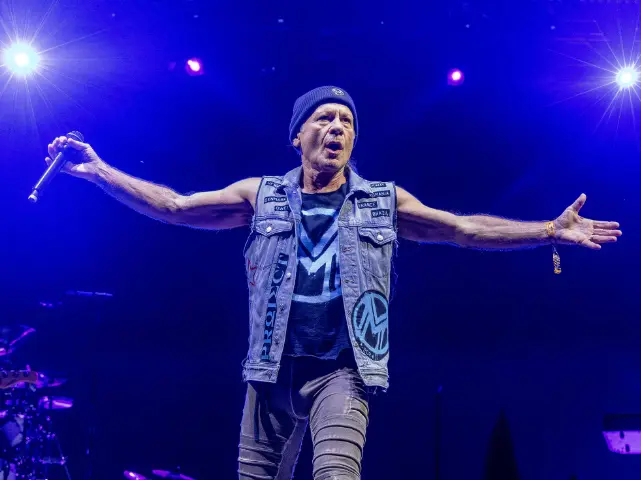
Movement. The smaller the group the less you have to move. It is obvious that a one to one session will require minimal movement, maybe sitting at a table, when compared to a larger group for example a conference when a measure of movement is required to engage the whole audience. As Bruce Dickinson, the Iron Maiden vocalist, once said “The larger the crowd the more exaggerated your movements / gesture have to be.
Mirroring is simply demonstrating reflective body language, when somebody nods, do the same or use a similar gesture. Do not do it simultaneously as this is mimicking and comes across badly and also do it as naturally as possible. Experts suggest a five to twenty second delay.
Respecting Personal Space is essential because at the very least an intrusion will trigger a flight or fight response and if a person is on the defensive or looking for an escape route, they are no longer listening and engaging. We must remember and respect, with few exceptions, that it is the individual or who is in charge of their own personal space. Respect space, use tables and other furniture to minimise any potential perception of threat when necessary and especially in male to female dynamics.
This is taken from some broader training material, I provide as part of my Soft Skills: Communication module.
As always stay safe and well my friends.






