
If there is one factor that has been integral to the vast economic growth and innovation we have seen over the last century, it is the globalisation. Globalisation has enabled countries to leverage their comparative advantages to expand their expertise and products to the rest of the world’s economies.
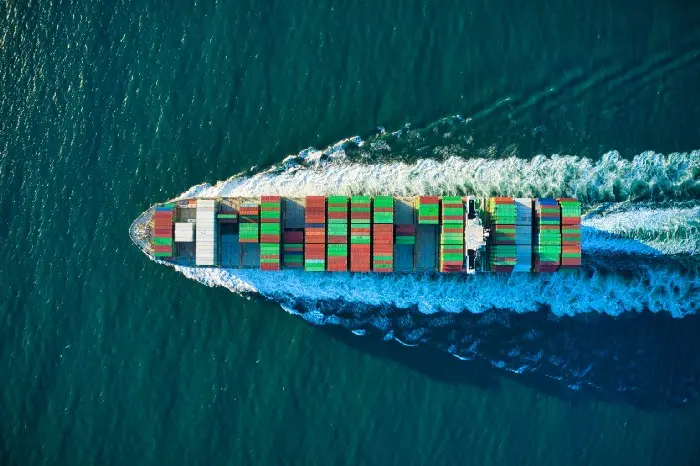
Globalisation is often taken for granted as most of us do not see how many countries contributed to a particular product through research, human capital and raw materials. A great example of this is the iPhone which is enabled by the resources from at least 43 countries which get even more complicated when the materials are broken down further.
Throughout history, countries that have grown exponentially at any point in time almost always had significant advancements in trade and globalisation. Globalisation enables access to new cultures, lower unit costs for products, access to new markets and human capital which increases the overall standards of living across the world. Therefore, companies have continually tried to make supply chains efficient to lower their cost of production and improve their profits.
Problems solved
As products get more accessible, quality of products gets compromised at different points in the supply chain without the awareness of the end-user. Despite having large amounts of data, both suppliers and consumer lack quality data
This is the problem VeChain is aiming to solve.
Transparent information flow through the supply chain is one of its core goals. This will benefit businesses by reducing the costs associated with verification, documentation and other trust-related costs.
Use cases
- Automotive industry
Transparent tracking of vehicle maintenance records, insurance, replacement parts, breakdowns and accident history.
- Food safety
According to a study by coin telegraph, food safety is a billion-dollar problem that is currently unaddressed. Unsafe foods result in over 200 diseases and 420,000 annual deaths globally. Unregulated ingredients to cut costs, mislabelling of food, counterfeit products and chemicals during the various stages of the supply chain contribute to these daunting numbers.
Through enterprise platforms, VeChain allows companies to track their goods from start to finish through their blockchain. At each stage of the supply chain, data can be scanned and uploaded for the companies to analyse. As data recorded on the blockchain cannot be edited, the end-user can scan the products and learn more about the products they consume. This is enabled by VeChain’s Blockchain as a service (BaaS) platform called ‘ToolChain’.
- Digital carbon ecosystem
Ethical and sustainable production is a growing trend, especially among the younger generations. VeChain offers a platform to encourage both the consumers and enterprises to reduce carbon emissions. For example, purchasing low-carbon and ethically sourced products will earn credits which can later be redeemed from other goods and services in the ecosystem.
- Retail
Counterfeit product distribution is a billion-dollar problem that companies such as Nike, Adidas and Chanel continually face. VeChain offers a solution through its blockchain and smart tag(RFID/QR code) which enables the end consumer to verify products before purchasing. The benefits of ensuring the quality of goods flow through to other sectors such as insurance and financing.
- Electronic documents
As remote working is more widely adopted, e-signing and verification become an essential service. Document management solution aims to manage and eliminate counterfeiting of certificates, licenses and other important documentation.
Current partnerships include,
- LVMH: Givenchy bags equipped with VeChain chips to verify the authenticity
- Renault: Digital car maintenance book
- BYD auto: China’s largest EV maker. Carbon credits for eco-friendly BYD vehicles to spend on other products.
- Walmart China: To offer customers a new level of trust, Walmart has set a goal to have 50% packaged meat, 40% of vegetables tracked using VeChain system by the end of 2020
- H&M: Collect supply chain data and share with customers.
Economics of veChain
The VeChain economy consists of two coins. Having 2 coins allows the expansion of options for the users. Individuals that need to enter data can either buy VTHO directly or buy VET and allow it to generate VTHO regularly. Other users can buy VET and treat the generated VTHO as a source of additional income.
- VeChain Token(VET): Store of value and payment that can be bought in the open market
- Thor Power(VTHO): Essential to execute smart contracts and write data on the blockchain. Holding VET allows the generation of VTHO. The current VTHO generation rate is 0.0000432 VTHO per VET per day. 70% of the used VTHO is burnt and the remainder of 30% is paid to Authority Masternodes(AM) as an incentive. Since VET is required to generate VTHO, the value in VET is directly attributable to the amount of activity taken place in the blockchain. As more activity takes place, the demand for VET will rise.
Consensus
The most important factor in blockchain technology is the trust that it maintains without any central authority. This is managed by consensus algorithms. Modifying data from each note requires consensus.
Bitcoin uses Proof of Work(PoW) which is the most reliable but lacks scalability as well as limited performance as it relies on a distributed network of nodes to reach consensus. With the reduction of supply and increased miners, more energy is needed for PoW.
Etheruem uses Proof of stake(PoS) involves locking up a certain amount of cryptocurrency in a wallet to contribute to the blockchain. In other words, the more coins a person would have, the higher the probability of validating block transactions and receiving more transactions fees as rewards.
VeChain uses Proof of Authority(PoA) in which a number of actors within the ecosystem have the authority to validate transactions and decide if new blocks will be added to the system. Essentially, PoA is a modified PoS with the extra layer of authority master nodes as validators. PoA is more scalable, energy-efficient and allows higher transaction per second(TPS). Despite the centralised nature of VeChain, validators have an incentive to retain their positions by maintaining the trust and improving the system. Therefore, VeChain aims to achieve the right balance between centralisation and decentralisation.
Nodes
VeChain has a total maximum supply of 86.7Billion and a circulating supply of 64 Billion. 25% of the max supply is locked up to maintain the voting power of authority masternodes, economic and X nodes.
- Authority master node(AM): Only 101 Authority nodes available and is responsible for validating all blockchain transactions. A minimum of 25,000,000 VET required to apply as an AM which enables voting rights and higher VTHO production rate. However, an AM needs dedicated hardware for the validation.
- Economic Nodes: Needs a minimum of 1,000,000 VET to gain access. Economic nodes do not have the right to validate blockchain transactions but offer stability to the ecosystem.
- Economic X nodes: Provides additional rewards to dedicated Vechain Supporters. One such reward is access to VeChain’s ICO whitelist. Requirements range from 600,000 to 15,600,000 VET for different levels.
In industries that involve a complicated supply chain, more time is wasted on inspections, tracing documentation and analysing causes of problems rather than improving the final experience for the customer. With the inclusion of BaaS, companies can obtain sufficient data to continually improve their products. Furthermore, the root causes of problems can be identified accurately as there’s no room for doubt when the data at each stage in the supply chain is recorded. More resources can be spent on fixing the actual problem rather than finding the problem.
There is always a high demand for reliability and quality.
References
- VeChain (2020). Available at: https://www.vechain.com/
- Review : VeChain (2020). Available at: https://kwontik.com/review_vechain (Accessed: 26 September 2020).
- 9 Types of Consensus Mechanisms That You Didn’t Know About (2018). Available at: https://medium.com/the-daily-bit/9-types-of-consensus-mechanisms-that-you-didnt-know-about-49ec365179da
- A complete list of VeChain partnerships | VeChainInsider.com (2018). Available at: https://vechaininsider.com/partnerships/a-complete-list-of-vechain-partnerships/





