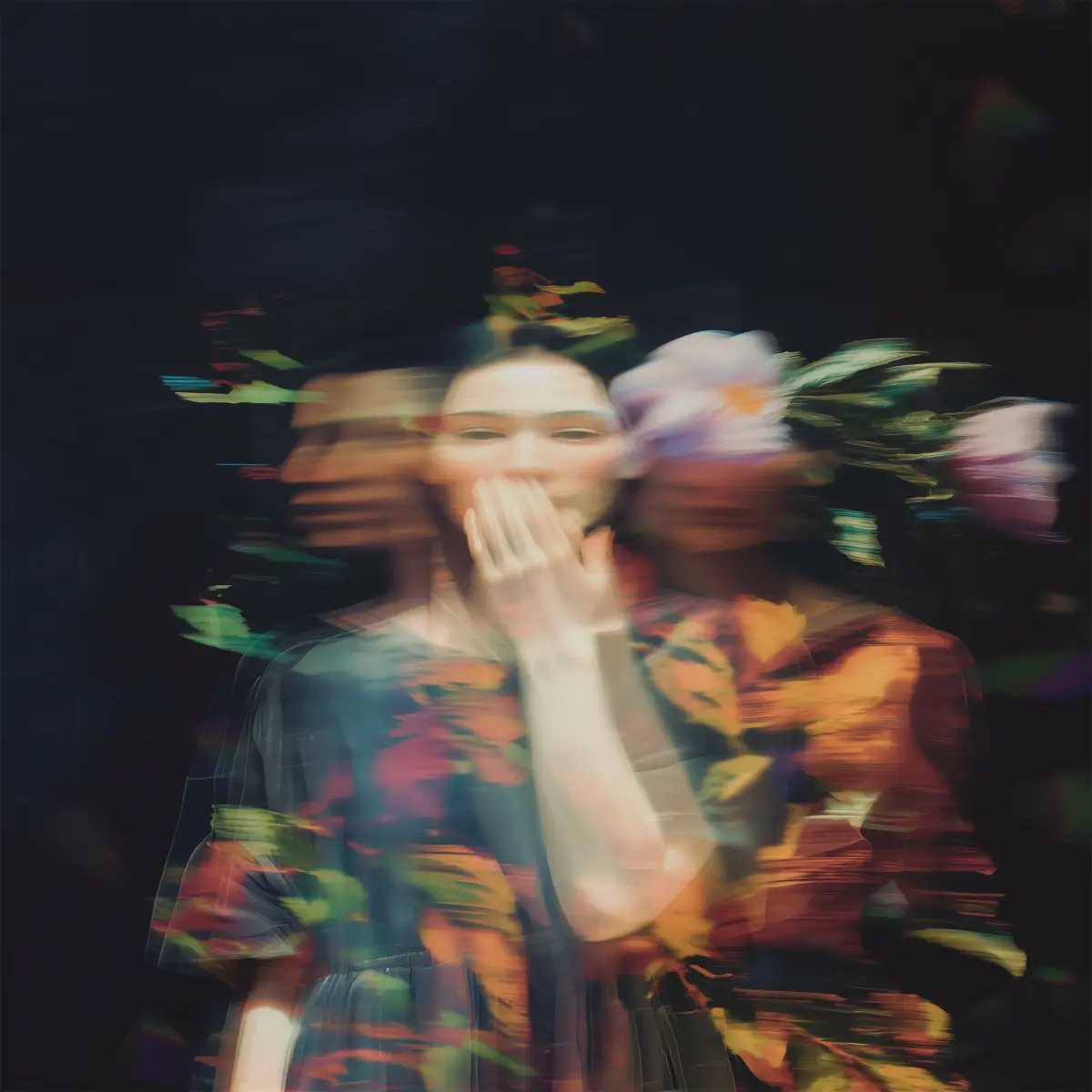
Maya had always been precise about everything—her morning coffee at exactly 7:15, her emails answered within the hour, her life planned in neat, predictable lines. But standing in her grandmother's garden that autumn afternoon, watching the last chrysanthemums blur in the wind, she discovered something that would change her forever.
The garden had been abandoned for three years, ever since Grandmother Amara had passed. Maya had finally come to clear it out, armed with lists and schedules, determined to transform the wild chaos into something manageable. But as she knelt among the overgrown roses, their petals dancing in the breeze, a strange sensation washed over her.
She reached for a particularly vibrant bloom, and as her fingers touched the soft petals, the world seemed to shift. Colors bled into one another like watercolors in rain. The strict boundaries between things—between the flowers and her hands, between past and present, between herself and the garden—began to dissolve.
In that blurred moment, she heard her grandmother's voice, not as memory but as presence: "Child, life isn't meant to be captured and held still. It's meant to flow through us like light through glass."
Maya had always photographed everything, desperate to preserve each moment in perfect clarity. Her phone held thousands of images—sharp, focused, but somehow lifeless. Now, as she moved through the garden, she let herself blur with it. She spun slowly, feeling the flowers brush against her skin, their colors painting abstract patterns in her peripheral vision.
As she moved, memories cascaded through her—not in orderly sequence but in a beautiful chaos. Her grandmother teaching her to plant seeds with patient hands. The summer they made rose water under the full moon. The afternoon Grandmother Amara had said, "The most beautiful moments are the ones we cannot hold."
Maya found an old camera in the garden shed, its lens clouded with age and dust. Instead of cleaning it, she raised it to her eye and began capturing the garden as it truly was—not frozen in time but alive with motion and change. Each photograph came out blurred, impressionistic, true.
Days turned into weeks as Maya returned to the garden, no longer to organize but to experience. She learned to see beauty not in the perfect bloom but in its gentle decay, not in stillness but in movement. The neighbors thought her eccentric, this young professional who now spent hours dancing slowly among dying flowers, laughing at nothing visible, speaking to the wind.
But Maya had discovered something profound in that motion-blurred space between clarity and chaos. She learned that some truths could only be glimpsed in peripheral vision, that some beauty existed only in transition, that some wisdom came not from holding tight but from letting go.
One evening, as the sun painted the garden in amber and shadow, Maya felt a shift in herself. The rigid structures she had built around her life began to soften. She quit her corporate job and opened a small studio where she taught others to see the world through motion and metaphor. She called it "The Blurred Garden," and people came from all over to learn the art of imperfect seeing.
Her photographs—those beautiful, blurred captures of flowers in motion—became her signature. Gallery visitors would stand before them, initially confused, then mesmerized as they recognized something essential in the abstract swirls of color and light: the truth that life itself is motion, that beauty lies not in possession but in passage.
Years later, when Maya's own granddaughter asked her why she never took "proper" pictures, Maya smiled and pulled the girl into the garden. She handed her the old camera and said, "Sometimes, my dear, the clearest vision comes when we allow ourselves to blur. Dance with the flowers. Let them teach you their secret—that everything beautiful is always in the process of becoming something else."
As they spun together in the garden, flowers and humans becoming one impressionistic painting, Maya understood at last what her grandmother had tried to show her: that the divine art of living wasn't about stopping time but about dancing with it, not about perfect clarity but about embracing the beautiful blur of being truly, vibrantly alive.
The garden bloomed and faded with the seasons, but its lesson remained eternal—that in the space between sharp focus and complete dissolution, in that tender blur where boundaries dissolve, we find the most profound truth of all: we are not separate from beauty; we are part of its endless, ever-changing dance.