
Publication in Russian on the Zen blog
https://dzen.ru/a/Zw46hQXKdRj0fYbm
Historically, Russia has a 90% chance of losing in military conflicts.
This paper examines Russia’s historical experience in geopolitical conflicts and provides statistics and probabilities that reflect its current ambitions in Ukraine. Based on over 170 years of military experience, the paper argues that Russia’s probability of success decreases as the conflict goes on, as seen in past defeats such as the Russo-Japanese War, World War I, and the Soviet War in Afghanistan. The paper also argues that World War II, often cited as Russia’s triumph, is an exception, which can be explained by the multinational contributions of over 120 cultures in the Soviet Union, including significant Ukrainian participation, and the substantial international support provided by the American Lend-Lease program. Analyzing these factors, it can be concluded that Russia’s current imperial ambitions, particularly in Ukraine, are likely to fail, given the historical patterns and complexities of contemporary geopolitical conflict.
I INVITE YOU TO THE TELEGRAM CHANNEL
UNCENSORED
https://t.me/shipshard
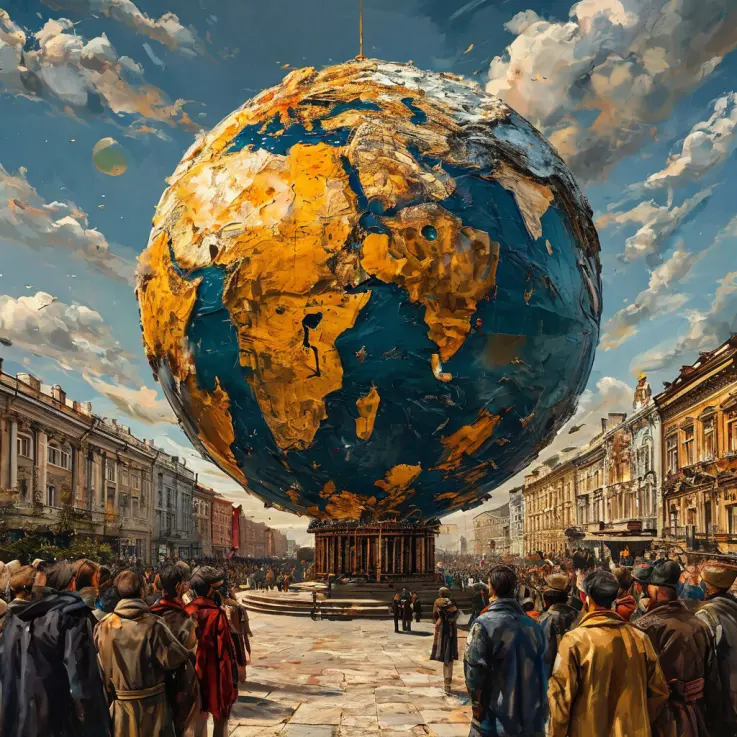
Let's talk about the probability of Russia's defeat in the current geopolitical conflict with Ukraine. If you position yourself as a scientist and a researcher, then every time you make a statement, you need to back it up. When you deal with geopolitical events over time, covering many points in a given topic, it is very difficult to predict, because there are so many exogenous variables, not to mention endogenous variables that we do not take into account, so if you want a statement to be supported by empirical evidence, you need to extend the historical chronology and zoom in on some historical moments, and then we can determine what is the probability that Russia will achieve some success or, more importantly, suffer some losses in this geopolitical conflict. But I am not completely objective. I was born and raised in Russia. I have relatives and friends in Russia. I have relatives and friends in Ukraine. I have been against the so-called Tsar of Russia for a long time. Starting from the sinking of the submarine "Kursk". I witnessed the destruction of the Constitution in Russia by the Guarantor of that Constitution. However, I have a pretty good idea of Russian culture and what's going on, and I would argue that Russia is going to lose this geopolitical conflict based on the length of this event, which is significant, and I'm not even including economic factors and other factors. We're going to go back and look at the statistics, we're going to go back 200 years, and look at Russia's gains and losses in geopolitical conflicts, and what the consequences of that are, and what the consequences are today. Let's start with the Crimean War of 1853-56. That was a significant loss for Russia, and you could say that Russia lost a fair bit of land because of that event. The war weakened the Russian Imperial Army, it emptied the treasury, and it undermined Russia's influence in Europe. It took decades for the empire to recover. Russia lost Alaska because of that event. A minor victory in the Russo-Turkish War of 1877. Defeat in the Russo-Japanese War. The Russian Civil War. And a decisive defeat in World War I. As a separate conflict, there was the conflict over the Russian Baltics and the Polish-Russian conflict. The Finnish-Russian War, a winter war in which the Finns used skis and fought in arctic weather against a larger aggressor, was essentially a loss for Russia. The Afghan War of 1979, which had an impact a decade later and served as one of the pretexts for the eventual fall of the Soviet Union. The First Chechen War of 1994 - a defeat. The Second Chechen War of 1999 - it was a victory, but rather something unclear and ambiguous. The Russo-Georgian War, where Georgia won. And if you analyze the percentage of victories and defeats of Russia in geopolitical conflicts, you will find something interesting, namely: 27% victories and 73% defeats, if you take into account the upcoming defeat against Ukraine, it will be 88%. So, the probability of Russia losing in military conflicts is 90%. These figures do not include World War II as a victory. I have crossed it out of the calculation of victories, because by the admission of the Soviet Union itself, more than 120 ethnic peoples and cultures took part in this large-scale conflict, including Ukraine, which accounted for more than 7 million casualties. If we talk about the achievements of the European Union now, this union includes Belgium, France, Germany, Italy, that is, the European Union is multinational, just as the Soviet Union was multinational in the past, it was not Russia, it was a commonwealth of countries on whose territories the conflict took place. There was also the Lend-Lease program, which gave, I think, 11,000 aircraft, over half a million trucks and much more to the Soviet Union, not to mention smaller events like D-Day and Operation Overlord, the Battle of the Bulge, the Battle of Monte Cassino in Italy, North Africa and all the other external pressures - it was not a victory for Russia, it was a victory for the USSR, the Ukraine and many others. So I don't count World War II as a Russian win in the statistics. But if you wanted to, it was an 18% win rate versus an 82% loss rate. If you include the various ambiguous conflicts where you're not sure whether Russia is winning or losing, you'll see that the win rate over 200 years of Russian history is 18%. You can put all of this in charts and graphs, but if you generalize and assume a 30% win rate and a 70% loss rate, that's a pretty low win rate. My second point is that the longer the conflict, the more likely it is, according to the Pearson correlation coefficient, which is a measure of confidence, that the longer the conflict goes on, the more likely it is that Russia will lose. Historically, Russia has won short conflicts, but it has always lost 100% of the time in long conflicts. Now if Russia loses in 2024-25, that would prove my claim that long term conflicts have a 100% loss rate and a loss to gain ratio that doesn't look good for Russia. No matter how you crunch the data, based on 200 years of evidence alone, I would argue that while the Soviet Union won WWII, which was multinational and supported by Lend Lease, that's very different from the Russians going into conflicts alone, where Russia mostly collapsed. And the longer the war lasts, the more likely it is that Russia will lose, approaching a 100% probability. My claim is based on historical data and evidence that the longer the event lasts, the closer Russia gets to a 100% loss rate. Which means Ukraine winning in 2025 or close to 100% in 2026. I knew a guy who loved to gamble and he was always taking risks and he was always bragging about how much money he was making and he had an expensive house and an expensive car and the IRS was after him and that's a fact and that's a true story and he was always taking risks but if you take risks you're going to get burned because risk is like flipping a coin and hoping it comes up heads 100 times in a row. That's the bet that Russia is making, it may not be that extreme but the historical evidence and the Pearson correlation coefficient regression over time suggest that Russia is going to lose. It's either going to collapse or it's going to have to give up land. I know from historical evidence and from cultural knowledge that Russia is going to stick to one line of thinking and try to expand unless Russia is stopped and decisively defeated in the current conflict. The probability that Russia will stop unless it is decisively defeated is 0%. Perhaps only then will a just world reign. And I would like morality and ethics in this world to be simple, like a binary system of ones and zeros, but it is not, the world is shades of gray. Therefore, each person needs to take the right side, trying to make the world better in the ways that are available to us, in this case there is a chance that this world will become brighter.
Author's video content.
In collaboration with CMCproduction & SmartREC video studios
https://www.youtube.com/c/ViolettaWennman
https://ok.ru/shipshard1
https://vk.com/shipshardvk
https://www.pinterest.ca/omegagirs/
https://dzen.ru/shipshard
https://t.me/shipshard
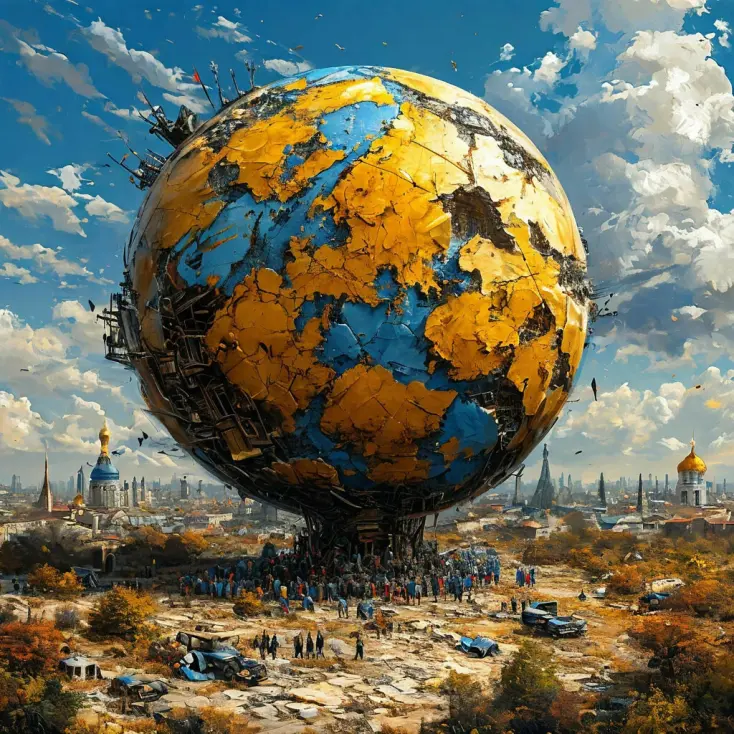
Finland won because it was a moral blow to the Union, and Russian ambitions stopped with Finland and never returned.
Many do not understand or take into account that the USSR was not Russia - only a part, because even Stalin was not Russian in a certain sense. Let's not confuse Russia and the Soviet Union. The USSR was much larger in size and population. They could afford the tactics of mincing meat, thanks to which, by the way, they conquered pieces of Finland. Modern Russia is small in numbers and statistics, except for its size. Russia has a large population, but not nearly enough to withstand NATO, but probably large enough to conquer Ukraine. The balance may change due to China's commitments, but they also depend on international trade, networks and connections. Russia may "win" depending on US policy and the reduction of NATO and EU aid. But the problem will be the consequences of the completely reckless policy that was imposed on the Russian people and their resources. In the past, conquests were paid for by using the conquered lands and population. However, the new places are completely deserted, and their inhabitants, some of whom were friendly to Russia, have disappeared. Also, as far as I can see, all Russians under 30 are into Western culture because it is the dominant culture of the modern era. Any substitute for it seems dystopian (ask Iran, China, North Korea).
I had a history teacher in school who gave us a year-long assignment to write a paper on the history of Russia since its founding. Not an easy task in the pre-Internet era, but fortunately in the era of large libraries! A fascinating project that taught me a lot about why Russia as a nation is paranoid - it has been constantly attacked from the outside, starting with the Tatars and Mongols, while Russians have been on the outer fringes of Western civilization, which they envied and despised in equal measure. This creates a constant internal tension that is often managed through external aggression rather than internal development, the bully syndrome. Russia should be the richest country in the world with all the natural resources, but in the end, Russians are wasted due to foreign aggression. On top of all this, don't forget the corruption that is eroding the budget. Geographically, Russia was almost landlocked. Now, the Baltic ports are under NATO control. On the Black Sea, the Russians are blockaded by Turkey. The ports of the Western Pacific are 8 time zones away from Moscow. Russia has always been in constant barbaric wars with its neighbors. This is truly sad, as a resource-rich country is riddled with corruption that sucks the life out of people for the benefit of a few.
Do those who use the word "Russia" even understand what that is? Is the Sakha Republic Russia? Are they even Russian? If not, then these resources are not Russian resources. If so, then why are people from there not treated as equals in Moscow or, I don't know, Voronezh? Is Bashkortostan or Chechnya Russia? I'm not even talking about countries like Belarus, Moldova, Georgia, Ukraine or the Baltics, to name a few. It seems that for many of those in or from Russia, this is simply laughable. Also, why are there almost no representatives of the other major "Russian" nationalities even in the current opposition, many of whom have their own "republics" within the so-called "federation" and dream of independence? These are just some of the questions that are quite interesting..
After five years of sanctions, half of the computing devices in Russia are running out of life (switches, elevator controls, cell phones, laptops, microwaves and anything with a microprocessor). This is assuming that all the technology that Russia has is brand new. This means that the situation for Russia is very bad. I have heard of problems in Moscow and St. Petersburg building elevators because they cannot buy the electronics. Just think about lathes, plasma cutters, and all the manufacturing equipment that uses Western electronics that the Russians cannot replicate because they do not have modern chip manufacturing, even if they knew all the specifications, it would be a terrible mess. Yes, Russia can and will order parts through third countries, but this route increases costs and will most likely not allow the same volumes to be achieved. In addition, new banking sanctions limit imports. Add to this that many companies install kill switches in their equipment - in fact, much of the equipment can be turned off by denying new licenses. The big software vendors do not sell to Russia, and software licenses are much harder to smuggle. And almost everything uses electronics these days. So all these systems break down, spare parts are much harder to get, the parts are more expensive, and you have to pay in something other than rubles. Personally, I would not want to be the person tasked with receiving these imports. I foresee death from overwork, not an open window to the future for Russia.
Russia has missed its window of success. How bad the future will look depends entirely on when Russia stops. Putin only knows how to double down, but he is completely incompetent as a decision maker. However, if you consider the nuclear threat, it changes the whole game. And this is not easy to ignore.
Along with all the statistics, you also have to consider the motivation of individual soldiers. Ukrainians are fighting for survival, protecting their homes and loved ones. The Russian soldier is fighting for a salary and has poor leadership. It takes a disproportionate number of soldiers and supplies to make up the difference. Although Russia has more soldiers and supplies, it is not enough to defeat Ukraine.
The definition of "He who dies with the most toys wins" historically refers to the flowering of humanity in response to the demands of the market. For example, the Mongol horseman, before becoming a horse archer, invented the stirrup for horseback riding. Napoleon, before becoming the "Little Corporal", was an army soldier with a special understanding of the need to understand the physics of aiming a smoothbore cannon. Today in Ukraine, teenage gamers are creating the future of drone technology, and the market is creating an economy of supply and demand by placing the Truth "In God We Trust" on its dedicated symbols of commerce. "He who dies with the most toys wins" is simply a voice from the grave shouting "trust in the "Invisible Hand of the Market". Ukraine will define democracy for the entire planet.

The Invisible Hand of the Economy
For Tea
Russia does not attack anyone?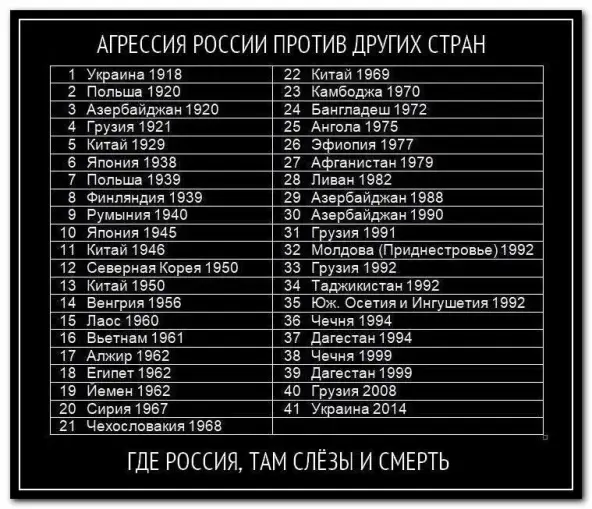
Publication in Russian on the Zen blog
https://dzen.ru/a/Zw46hQXKdRj0fYbm






