
Publication in Russian on the Zen blog
https://dzen.ru/a/Z4Thcj2CtBglVikS
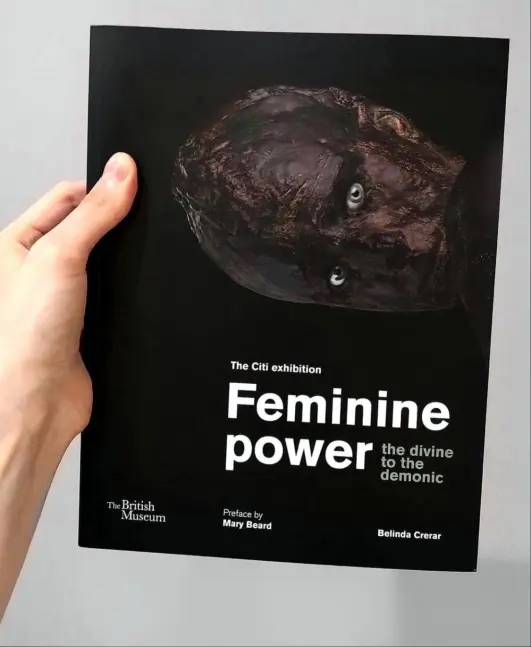
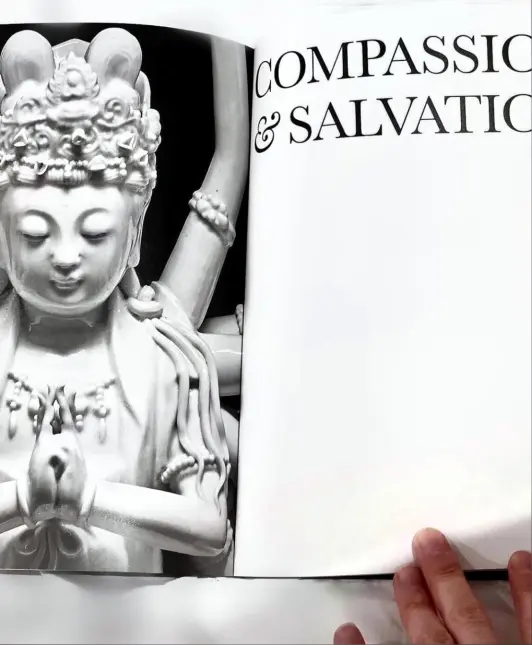
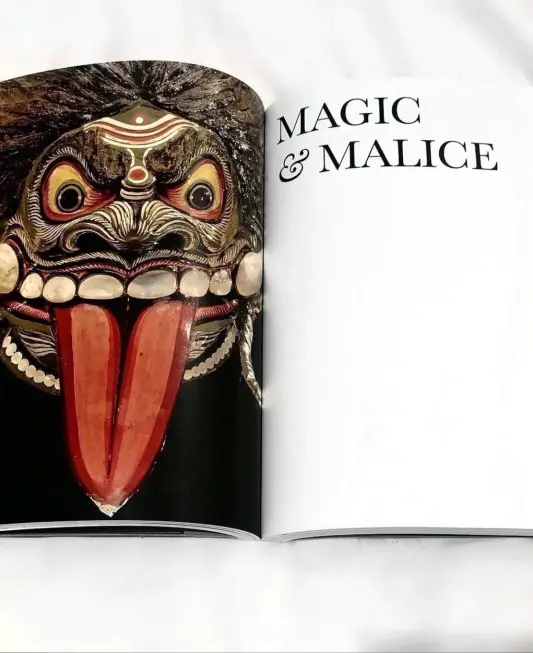
A book inspired by an exhibition at the British Museum.
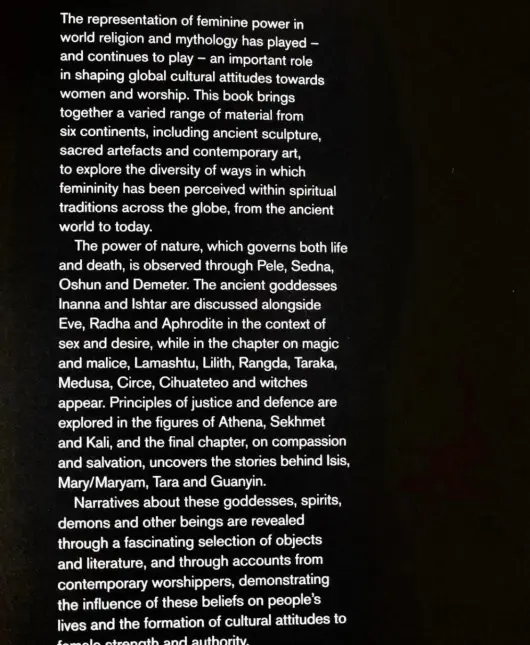
She brings together materials from six continents, including ancient sculpture, sacred artifacts, and modern art, and follows the variety of ways in which femininity has been perceived in spiritual traditions around the world, from the ancient world to the present day.
The representation of female power in world religion and mythology has played - and continues to play - an important role in shaping global cultural attitudes towards women.
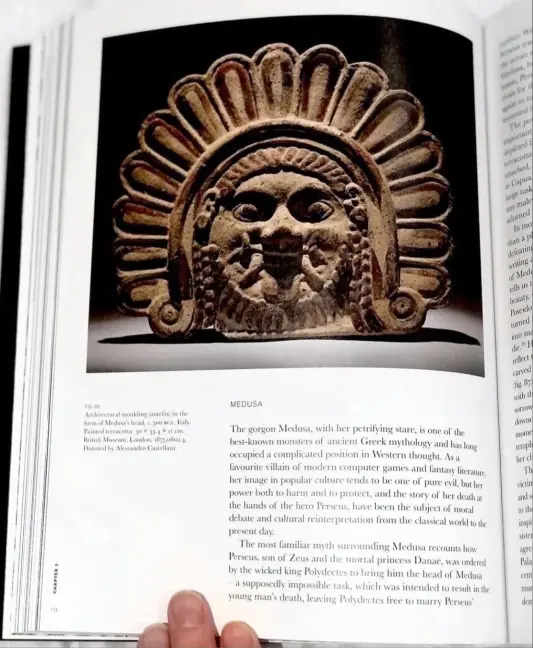
Divine women – in many guises – have been present in every world faith, from deep history to the present day, inspiring people and cultures around the world. As part of an intercultural and global approach, this book discusses Eve along with Inanna, Radha, and Aphrodite in the context of sex and desire, and in the chapter on evil, witches and Hecate are compared to other deities such as Lamashtu and Zihuateotl, as well as monstrous women such as Taraka, Medusa, Rangda, and Lilith. The ideas of justice and protection are explored in the images of Athena, Sekhmet and Kali, and the last chapter, dedicated to compassion and salvation, reveals the connections between Isis, Mary, Tara and Guanyin. The publication concludes with a discussion of contemporary art and modern interpretations of goddesses. Until the middle of the twentieth century, disciplines such as theology, archaeology, and history were largely dominated by male scholars, leading to an underrepresentation of the female experience and fewer studies of the female deity. Filled with fascinating insights into various cultures and beliefs, this timely book aims to restore that balance.
Literature, audio, podcasts about Feminism
"FIND GOD," and the search engine will probably produce a grid of gray-haired, bearded men bathed in golden light above fluffy clouds. In the view of Judeo-Christians, God is an old white man. But as Belinda Crerar, curator of the Women's Power exhibition at the British Museum, points out, some theologians consider God to be “asexual.” Not a man, not a woman: the physical incarnation of God, as described in the Bible, is a metaphor.
This tiny but powerful show-featuring more than 80 objects and paintings, but occupying only a small gallery in a 990,000-square-foot facility - takes visitors on a dizzying journey across six continents and 5,000 years of history, revealing how women have been represented and understood as powerful beings in various religions.. Western traditions tend to focus on femininity as something compassionate and obedient, “even passive,” Ms. Crerar explains; but in other cultures, femininity is associated with strength and vigor. The principle of shakti in Hinduism, for example, is "an active force that animates all things," she says.
Goddesses, like gods, can be figures of both anger and creation. Take Pele, a Hawaiian Shark from volcanoes, depicted in an exhibition wearing a gardenia crown on wood carvings by artist Tom Pico in 2001. Her temper was so fierce that she was known to manifest herself as lava, destroying-but also renewing-everything in her path. The ancient Romans revered Venus, the goddess of passion, for her ability to generate and resolve conflicts. This duality also existed in ancient Egypt. Pharaoh Amenhotep III built hundreds of statues in honor of Sekhmet, the lion-headed goddess of murder, who was also known as the "Mistress of Life."
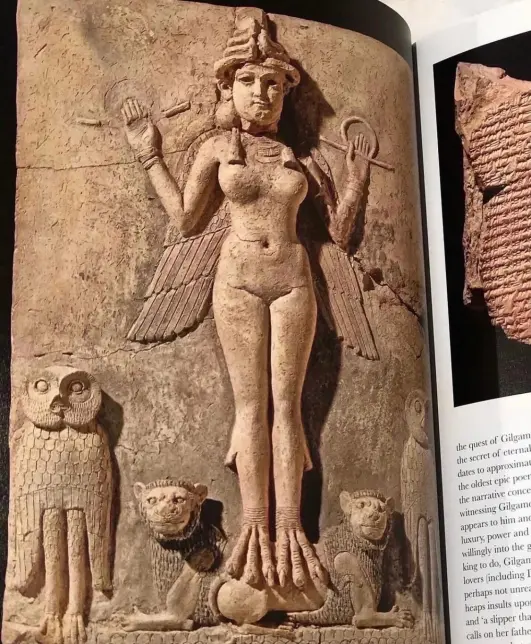
The exhibition highlights the spiritual connections between male and female figures. Athena was born from the head of her father, Zeus. The warrior goddess of ancient Mesopotamia, Inanna, had the ability to transform a man into a woman, and a woman into a man. A small statuette on display depicts the Hindu deities Lakshmi and Vishnu fused into one being: an expression of the inner unity and necessity of feminine and masculine forces in Hindu cosmology. "There is an idea that both are in harmony," says Ms. Crerar.
However, throughout history, the simple image of a woman endowed with power has been enough to drive mortal men crazy. In the fourth century BC, the sculptor Praxiteles created the first ever human-sized image of Aphrodite. It is believed that one young man sneaked into the temple where the statue was located, spent the whole night masturbating on the statue, and in the morning threw himself off a cliff. In 2008, when the Venus of Hohle Fels, a six-centimeter-tall 35,000-year-old statuette, was excavated in Germany, one archaeologist wrote that the large breasts and protruding genitals of the tiny object could, by 21st century standards, "be considered bordering on pornography." This newspaper called it "mud carved from a mammoth tusk," adding: "This, without giving too much importance to this issue, is obscene."
The exhibition is also dedicated to demons, witches and monsters, as women who go beyond the expectations of their society are often described as disgusting. Curled up high on the wall is a bronze sculpture cast from the body of a modern woman, depicting Lilith, described in some Hebrew texts as Adam's first wife. Artist Kiki Smith said that this figure "transcends gravity and the limitations of her body." For many years, Lilith was reviled for her disobedience to Adam (she refused to serve him and fled Eden to become Satan's consort), but nowadays some also consider her a symbol of female empowerment. Her name was given to a Texas anti-abortion charity that helps women who cannot afford the procedure, as well as Lilith Fair, a feminist music festival from the 1990s.
"This is an exhibition about perception," says Ms. Crerar. "There has never been a single way to express femininity." This exhibition is a fascinating and comprehensive display of the complexity of female power and the variety of ways it has been portrayed throughout history. Each goddess could easily become the plot of her own blockbuster.
Литература, аудио, подкасты про Феминизм
I've been thoroughly hooked on books and materials on evolutionary biology and psychology, ethology, and neurophysiology, and I don't know how to stop.
Dawkins, Sapolsky, Lorenz, Chopra, Harari, Pinker, Peterson... I listen to lectures by Dubynin (I went to his special course at the Moscow State University Faculty of Biology) and Drobyshevsky.
To be honest, I haven't read fiction for 5 years (but I don't feel like it either), only popular science: biology, genetics, neurology, all kinds of naturalistic topics…
All this intellectual vinaigrette in my head is also accompanied by reading historical blogs about comparing the crisis of the Roman Republic and the transition to empire and the United States now, the Civil War in the States, as well as books about feminism.
Something like that…
Ekaterina Sveshnikova, England, London, Oxford University
https://vk.com/english.rose1
Author's video content.
In collaboration with CMCproduction & SmartREC video studios
https://www.youtube.com/c/ViolettaWennman
https://ok.ru/shipshard1
https://vk.com/shipshardvk
https://www.pinterest.ca/omegagirs/
https://dzen.ru/shipshard
https://t.me/shipshard
I INVITE YOU TO THE TELEGRAM CHANNEL
UNCENSORED
https://t.me/shipshard
Literature, audio, podcasts about Feminism
Литература, аудио, подкасты про Феминизм
Publication in Russian on the Zen blog
https://dzen.ru/a/Z4Thcj2CtBglVikS






