Publication in Russian on the Zen blog
https://dzen.ru/a/af3pUyB-pn09SbYL
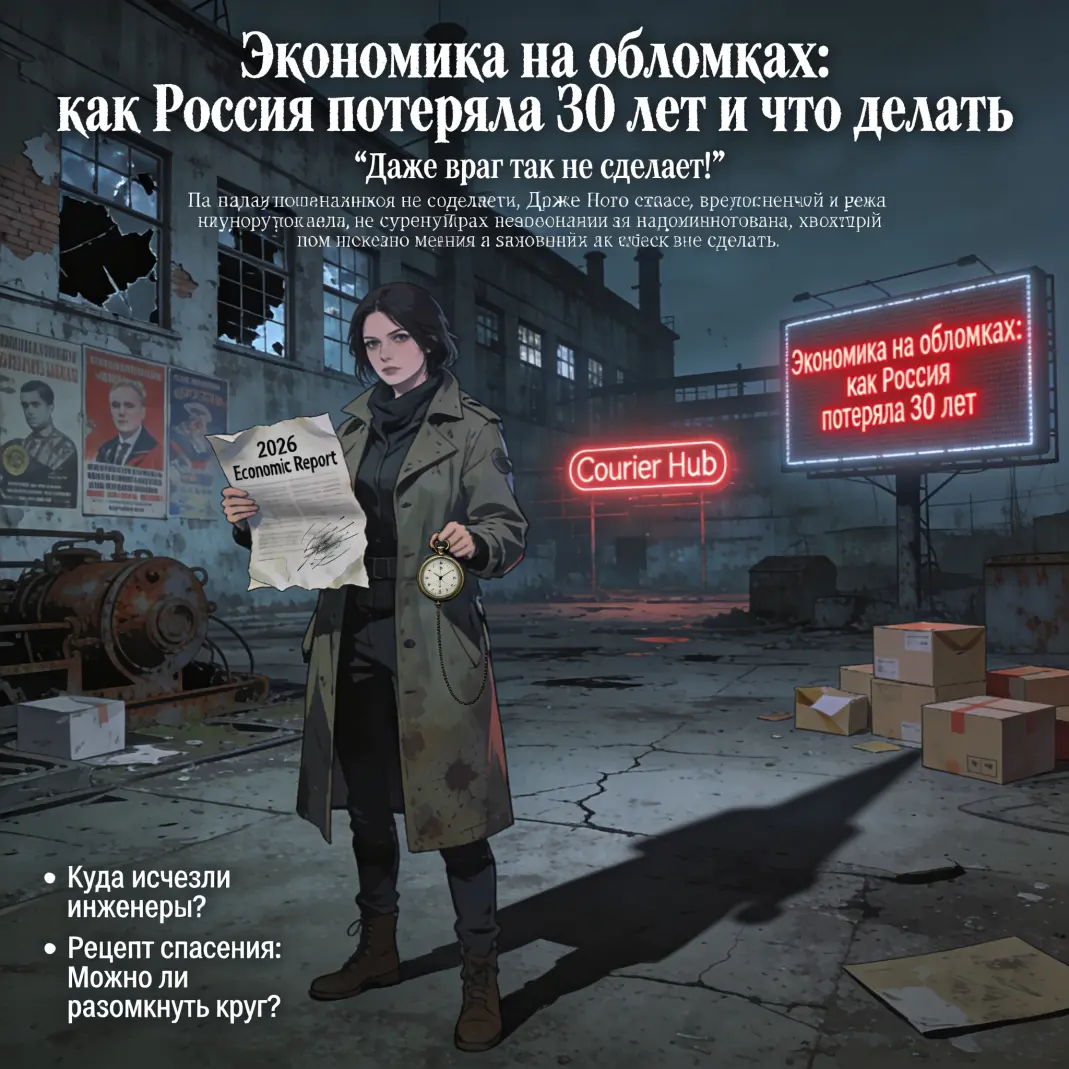
Moscow, April 2026. The text is based on reports by RAS academician Robert Nigmatulin, economists Abel Aganbegyan and Andrey Klepach, as well as open data from Rosstat, the Bank of Russia and industry analytics. Coincidences with real people and events are not an accident. This is a diagnosis.
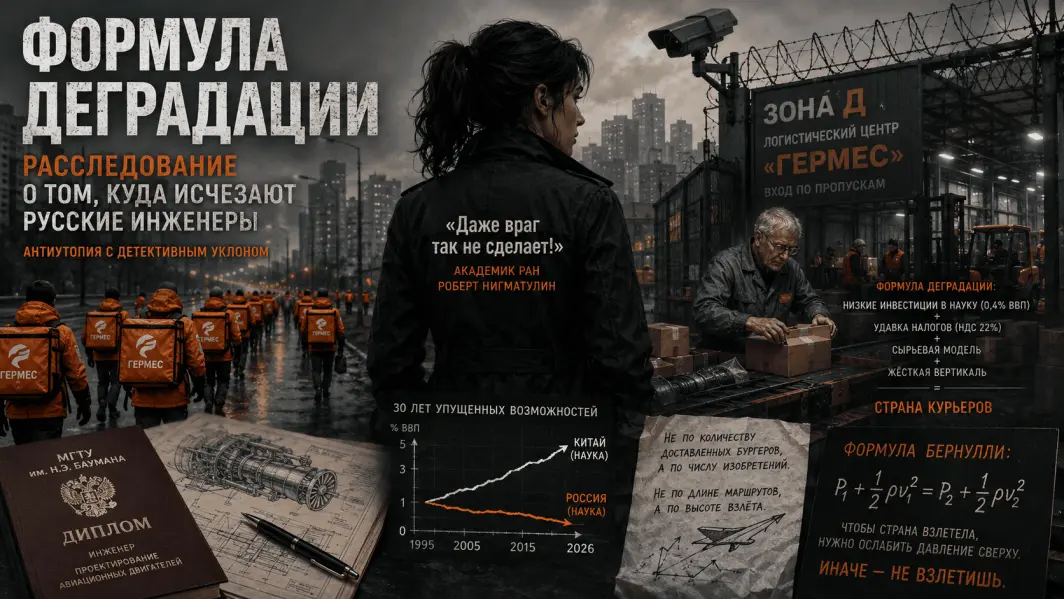
A detective-themed dystopia:
"The Bernoulli formula. A country that has forgotten how to fly."
The preface. A non-return route.
The "lost decades" cannot be returned. But you can start counting the years differently. Not by the number of burgers delivered, but by the number of inventions. Not by the length of the routes, but by the height of the takeoff.
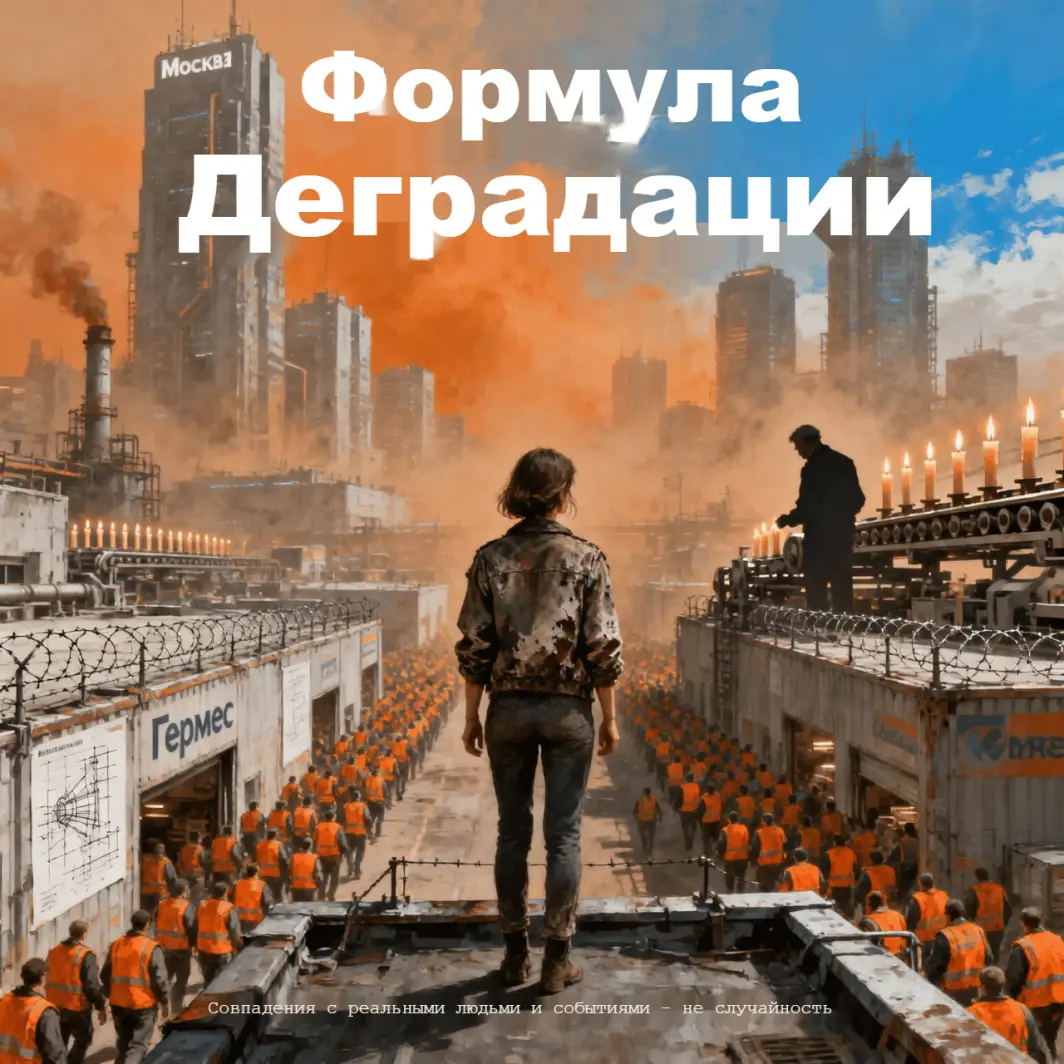
I. The city is in orange.
Moscow smelled like cardboard.
Not with gasoline, not with lime blossom, not even with bleach from the subway, but with cardboard. Corrugated, wet, soaked in the sweat of thousands of palms. This smell has become ingrained in the city, like nicotine in the wallpaper of a communal apartment: firmly, forever, until the next demolition.
Marina Rykova stood at the window of her twenty-meter-high "studio" on the twenty-third floor of the Novye Vatutinki-14 human building and looked down at the ant track of orange jackets flowing along the sidewalk to the sorting center. Six in the morning. The shift started at seven, but the queue for scanning QR passes stretched for forty minutes - and people left in advance, obediently, silently, like water finding its channel.
Orange has become the color of the era. Not red, not tricolor, but orange, the color of courier vests, the color of thermal boxes, the color of the sunset over the industrial zone where turbines were once made for Energomash, and now diapers were packaged for the Hermes marketplace.
Marina was thirty-seven. The diploma of Bauman Moscow State Technical University — red, graduated in 2015, specialty "aircraft engine design" — was in a folder labeled "Documents", between the divorce certificate and the receipt for communal services. Three things that exhaustively describe her biography: she could build engines, she couldn't keep her family together, and she was barely paying her rent.
However, Baumanka's diploma in 2031 meant about as much as the diploma "Winner of the Socialist Competition" in 1992, a touching artifact of a dead civilization.
Marina now worked for the Bureau of Urban Investigations, a private four—person office that took on what the police had dismissed. Missing people, mostly. Not children — they were still looking for children with cameras and drones. And the adults. Those who disappeared quietly, without blood, without a note, simply stopped answering calls, going on a route, scanning a pass. The system wrote them off as "inactive users," relatives as those who had left, and neighbors as "you never know."
The city has learned not to notice the missing. It was convenient.
II. The client.
The call came at 6:47 a.m. Marina had not finished her instant coffee, which was sold at Hermes for four hundred and eighty rubles per can and was called Premium Arabica, although it was, of course, chicory flavored.
"The Bureau of Investigation?" — The voice is feminine, age-related, with that special intellectual hoarseness that gives away a person who is used to speaking from the pulpit, and not into the phone.
"I'm listening."
"I need to find a husband." His name is Oleg Evgenievich Ladynin. Professor, Doctor of Technical Sciences. He hasn't been in touch for eleven days.
Marina put down her cup.
"The police?"
— The police said that he "probably changed his place of residence as part of the exercise of the right to mobility." A literal quote.
Marina chuckled. She had heard that phrase dozens of times. "The right to mobility" is a bureaucratic euphemism, elegant as a tombstone inscription in Latin. It meant a simple thing: the person had left the surveillance zone, but there were no resources to search. Or desires.
"Come on,— Marina said. — I'll send you the address.
The woman's name was Nina Arkadyevna. She was sixty-four. She arrived by subway—two transfers, one twenty—in an ironed coat that was fashionable fifteen years ago and looked almost defiant.: Who's ironing the coat now?
She put a photograph on the table. A man with a big face, gray hair, glasses. Intelligent, tired eyes — the eyes of a man who is used to understanding more than he would like.
— Oleg has worked all his life at CIAM, the Central Institute of Aviation Engine Engineering. Thirty-two years old. He designed combustion chambers for PD-14 engines. Do you know what it is?
Marina knew. PD-14 is a new generation aircraft engine, the hope of the Russian aviation industry. Once. An entire chapter was devoted to him in Baumanka's textbook. It's a beautiful chapter, with formulas, with drawings, with the belief that a country capable of making such an engine is capable of anything.
"I know,— Marina said. After a pause, she added, "They've been closed, haven't they?"
Nina Arkadyevna nodded.
— The program was "optimized" in 2027. Oleg taught for two more years. Then the department was combined with three others. Then it was reduced. He received a pension of thirty—one thousand.
Thirty-one thousand. Marina figured it out quickly: that's six burger deliveries a day. The professor, the doctor of Sciences, the man who designed the heart of the plane, cost six burgers.
"The last time he called was on the twelfth,— Nina Arkadyevna continued. — He said he was going to a meeting. That it's important. That "it seems that someone is finally ready to listen." Since then, there has been silence.
— What kind of meeting?
— I don't know. But a week before that, he spoke at a conference at the Academy of Sciences. There was a scandal.
Nina Arkadyevna took out her tablet, an old one with a cracked screen, and turned on the recording.
Marina saw the hall, half empty, with the official comfort of Soviet conference rooms that had not changed since the seventies: wooden panels, carafes of water, a microphone on a flexible leg. Ladynin stood behind the podium and spoke evenly, but with a quiet fury that was scarier than a scream.:
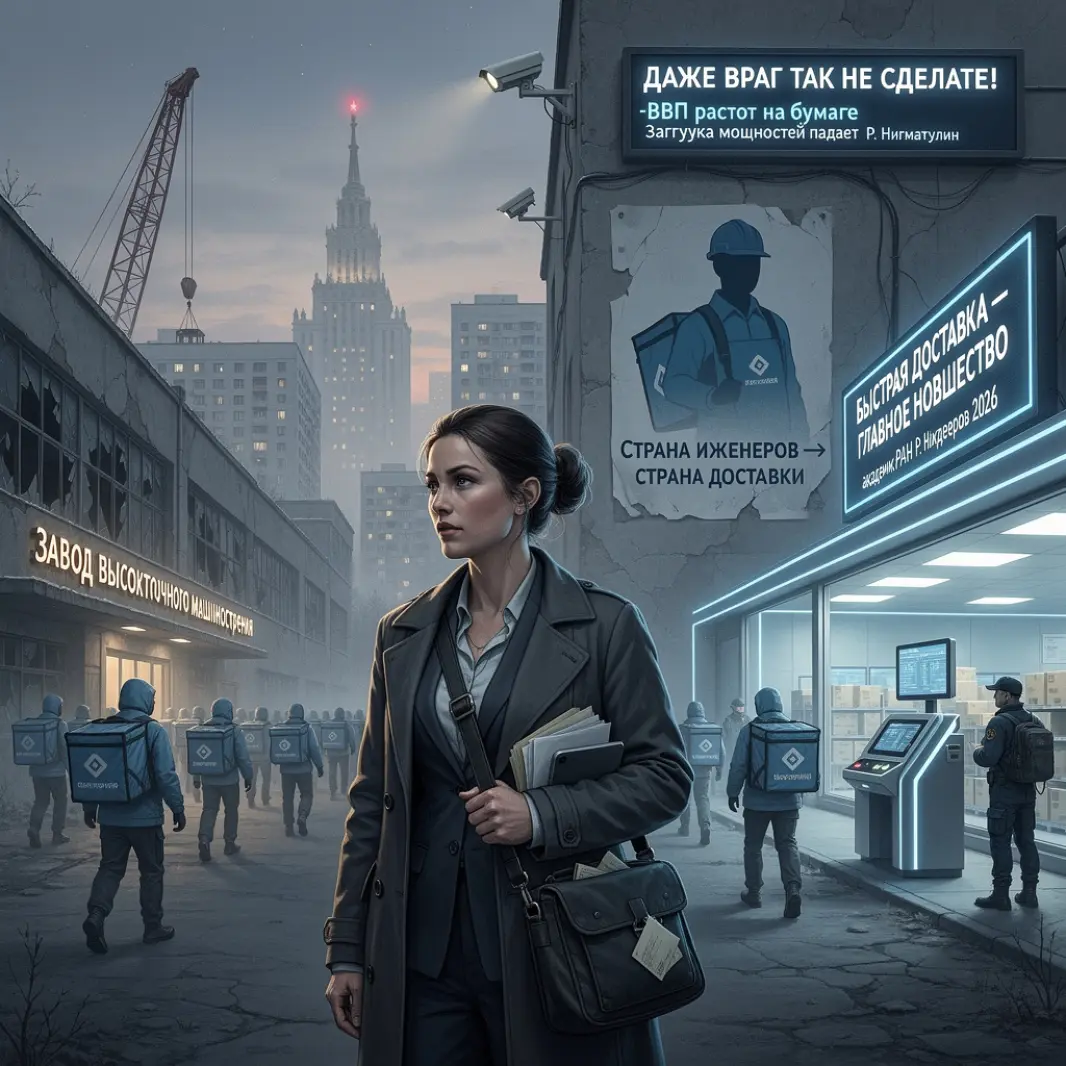
"We spend zero point four percent of GDP on civil science. Zero-four. China spends four and a half. They were a "doll factory" — they became leaders in quantum computing. What about us? We were the country of Korolev and Kurchatov. We have become a country of couriers. Even an enemy wouldn't do that. The enemy is bombing factories. We closed our own. Voluntarily. With reporting and printing."
The recording stopped.
"After that," Nina Arkadyevna said, "he got a call from... She hesitated, "from the same structure. They asked to "refrain from destructive assessments in the public space." He said he would say what he thought was right. That's what he always said.
Marina looked at the photo. The person who asked the questions. The system doesn't like questions. The courier doesn't ask any questions — he's busy with the route. The engineer sets the task. The professor is even more so.
"I'll handle it,— Marina said.
III. The archaeology of the present.
Investigation is always archaeology. But you're not digging into the ground, but into data, into calls, into cameras, into silence.
The first layer is the phone. Ladynin's last geolocation was recorded on the 12th, at 14:32, near the Kaluga Outpost. Then the signal disappeared. The phone is either turned off, destroyed, or placed in a shielded space. Marina knew all three options, and none of them boded well.
The second layer is the cameras. Moscow in 2031 was studded with cameras like a pincushion: on every pole, canopy, turnstile. The facial recognition system was working fine, at least for those they wanted to recognize. Marina submitted the request through an acquaintance in the Information Technology Department, a former classmate who also graduated from Bauman and also did not build engines, but maintained surveillance servers.
The reply came four hours later. Concise: "The data on the object is archived. Access is limited. Category B-7".
Category B-7. Marina felt a chill go through her ribs. B-7 meant that information about Ladynin's movements was not just unavailable, it was purposefully withdrawn. They don't do that to missing tramps or drunks. This is what they do to people whose disappearance is not an accident, but a decision.
The third layer is colleagues. Marina called six former CIAM employees. The two didn't answer. One of them hung up after hearing Ladynin's last name. Another one, an elderly aerodynamicist named Chkheidze, agreed to meet, but only in person, without phones, in the park.
They met in the Neskuchny Garden, the only place in the center where the trees still drowned out the city's hum. Chkheidze came in a worn jacket, carrying a cane, with the face of a man who had long since stopped being surprised, but had not yet forgotten how to be afraid.
—Oleg is a fool," he said by way of greeting. "A noble, talented fool. He thought that if he told the truth out loud, something would change. It's as if the system is a student who only needs to explain the task.
"What did he say?"
— The same as Academician Nigmatulin. The same numbers, the same charts. That the share of salaries in GDP is a disgrace. That the tax system is stifling small businesses. That twenty—two percent VAT is a stranglehold. That the thresholds of the "simplified" are lowered so that no one grows up. That we are consciously, systematically, documentarily destroying a complex economy and replacing it... the service. Delivery. Security guards. That this is not a crisis is a choice. It is easier for a vertical to manage a country of couriers than a society of engineers.
He paused, twirled his cane.
— But Oleg went further than Nigmatulin. He mentioned specific names. Specific amounts. Specific decisions made by specific people in 2024-2027. Who exactly closed the PD-14 program. Who transferred the CIAM budget to Oboronservice-Logistics. Who signed the "optimization" order.
"And?"
Chkheidze looked at her over the top of his glasses.
"And then he disappeared." Are you surprised?
IV. Zone "D".
Marina found the next clue by accident, as it always happens in investigations: you look for logic, but you find a typo.
Looking through Ladynin's bank card statement (Nina Arkadyevna gave access), she discovered a strange transaction the day before her disappearance: payment for a train ride to Seltso station, Kaluga Region. Forty rubles. Why would a professor of aircraft engines go to the Village?
Marina went by herself.
The village turned out to be what was expected: a concrete platform, a Food 24/7 stall with a grate on the window, a washed-out primer extending into the field. But beyond the field, beyond the copse, beyond the concrete fence with barbed wire, there was something that was not on the maps.
The complex. It's new, functional, and featureless—three sandwich panel enclosures painted in the same inevitable orange. There is a sign on the gate.: "Hermes Logistics Center". Zone D. Entrance by pass".
Marina has seen dozens of such centers. They stood around every major city like mushrooms after the rain — giant warehouses where thousands of people sorted, packed, shipped. New factories of the new economy. Only instead of turbines, there are boxes with phone cases.
But something was wrong in Zone D. First of all, the fence is too high for the warehouse. Secondly, there are too many cameras, they are not directed outward, but inward. Thirdly— there are people. Marina watched from the woods for half an hour. People were coming in, but not coming out. Not because the shift was long, but because the gates only opened inwards.
She called Nina Arkadyevna.
— Has Oleg ever mentioned the D-Zone?
Pause. It's a long one.
- yes. Once. He said... The voice trembled. — He said, "They have created a place where they send extra people. Not a prison. Worse. They turn scientists into movers and call it "retraining."
V. Inside.
Getting into Zone D turned out to be easier than Marina thought. It was enough to go to the Hermes website and fill out the "Become a partner" form. No job interview, no background check. Name, age, and clothing size are for the uniform. The system didn't ask you what you could do. The system didn't care.
Two days later, Marina stood in front of the gates of Zone D in an orange vest, with the badge "Rykova M. A., sorting operator, level 1".
It smelled of plastic and sweat. A conveyor belt stretched across the entire building, an endless gut crawling with boxes: large, small, and medium. People were standing along the ribbon and sorting. Silently. Methodically. Like vending machines, but cheaper.
Marina took a closer look at the faces. And I recognized the type. She didn't need to read personal files—she recognized these people by their eyes, by their posture, by the way they held their hands. They were not handymen, migrants, or part-time students. They were specialists. Engineers. Scientists. Teachers. People who used to give lectures, stood at the coulters, counted the voltages in the turbine blades - and now they were counting the boxes.
A man in his fifties, thin, with the intelligent hands of a pianist or a surgeon, was standing at the conveyor. Marina stood next to him.
"The first day?" "What is it?" he asked, without looking up.
- yes.
— You'll get used to it. Everyone gets used to it. He paused. — Two years ago, I was the head of the Department of Theoretical Mechanics at Bauman University.
Marina shuddered. Baumanka. Her Bowman.
—And now?"
He picked up a box labeled "Case for iPhone 17, pink, 1 pc." and put it on another ribbon.
— And now the sorting operator, level three. The salary is more than at the department. Twice. He looked at her for the first time. "That's the horror of it. It's not that we're being forced. It's about what's beneficial to us. The system doesn't break — it buys. For thirty pieces of silver in the form of a salary card.
"I'm looking for a man,— Marina said softly. — Professor Ladynin. Oleg Evgenievich.
The man paled. He turned away. And after a pause that seemed to last several minutes, he whispered:
— Building three. Second floor. But you won't want to see him.
VI. The Professor.
She found him in a room called the "Professional Adaptation Room." Official name, official walls, official fluorescent light — that dead, bluish light in which any face looks like a death mask.
Oleg Evgenievich Ladynin was sitting at a table packing handmade candles into craft boxes. His fingers—the same fingers that drew the combustion chambers of aircraft engines—carefully wrapped each candle in tissue paper, tied it with string, and put in a card with the inscription "Thank you for your order!"
He looked up. Did you find out? No. He couldn't recognize her—they'd never met. But something in her gaze seemed to be different from the usual conveyor automatism, because he frowned slightly.
"Are you new?"
— Nina Arkadyevna sent me.
His face changed. Not immediately, but slowly, as the sky changes before a thunderstorm: first a light shadow, then a darkening, then a silent lightning in the eyes.
—Nina,— he said. "Is she alive?" Is she healthy?
— She's healthy. He's worried. Eleven days without a call.
"I'm not allowed to call." He said it calmly, like the weather forecast says. — The phone was taken away at the "registration". They said it was for "digital hygiene." When I complete the full course of adaptation, I will be returned. The course lasts," he grinned, —indefinitely.
"This.".. A prison?
- no. At least in prison there is a sentence, an article, a term. There is nothing here. No coercion, technically. I signed the contract. Voluntarily. They explained to me that my previous qualifications "did not meet the current needs of the labor market" and that I was being offered a "retraining program with guaranteed employment." You can opt out. But then — the deprivation of a pension for "evading participation in an employment program." Thirty-one thousand. For Nina, these are medicines.
He paused. He took another candle. Wrapped it up. Bandaged it up. I put the card in.
— Do you know what the scariest thing is? — he said, without looking at Marina. "I'm getting used to it. After a week, the hands memorized the movements. After two minutes, the head stopped resisting. The brain is economical. If he is not given tasks, he disables unnecessary contours. I don't remember the Navier–Stokes formula anymore. I tried yesterday, but I didn't remember. Three decades in aerodynamics — and the void. It's like amputation, but without pain. Even without the phantom one.
Marina stood there, and there was something hard and angular in her throat, like a swallowed part.
"I'll get you out,— she said.
Ladynin raised his head. There was something in his eyes-not hope, no. Something older and more bitter.
"Why?" "What is it?" he asked softly. "Where to?" He gestured around the room. — At least it's warm here. At least they feed me. And what's there? A pension of thirty-one thousand and a country that no longer needs me?
He put the box on the tape.
"I'm sixty—three years old. I designed the combustion chambers that were supposed to take the first fully Russian aircraft into the sky. I put everything into it — health, family, life. And then they told me: "The program has been optimized. Your competence is excessive." Redundant! He clenched his fist. — How can the ability to build engines be redundant? In which universe is this superfluous?
He unclenched his fist. My fingers were shaking.
"In that universe," Marina replied, "where delivering a burger is more important than flying." But that doesn't mean that the universe can't be switched.
VII. Exit.
She took him out at night. Not through the gate, but through the service exit at the dumpsters, which was not locked because no one expected an escape. Why run away from a place where you came "voluntarily"?
They were walking through a November field, black, frozen, and crunchy underfoot. The moon hung low and full, illuminating the way to the station like a spotlight over the runway. Marina thought it was symbolic: a runway where no one else takes off.
—Nigmatulin was right,— Ladynin said as he walked, wrapping himself in the jacket Marina had brought for him. "Even an enemy wouldn't do that." The enemy is bombing, but we are. With my own hands. With a smile and a performance indicator.
— Can you repeat everything you said at the conference?
— I can do it. If there's someone to listen to.
— It will be.
The train arrived at 5:14 a.m., the first one, empty, with cloudy windows and that special smell of the early train: dermatin, cold, melancholy. They boarded the last carriage.
—Marina,— Ladynin said, as the dark woods began to float outside the window, "aren't you an engineer too?"
"I was."
— Why did they leave?
She paused. Another logistics center flashed by the window — orange, glowing like an abscess on the body of the earth.
— Because the factory has closed. And then the other one closed. And then I realized that looking for missing engineers is also engineering. Only the object is different. Not an engine— but a man.
He nodded.
— Do you know the difference between an engine and a country?
"About what?"
— The engine, if improperly assembled, fails immediately. The country is slowly degrading. It's so slow that you get used to it. Every day is a little worse than yesterday, but the difference is noticeable. Like an altimeter needle creeping down. You're flying, you feel like you're flying, but the ground is getting closer. And when you finally notice, it's too late to gain altitude.
The train was rumbling. It was getting light gray outside, reluctantly, as if the day itself did not want to begin.
VIII. The epilogue. Formula.
Marina drove Ladynin to his wife. Nina Arkadyevna opened the door and froze — she did not rush to meet him, did not cry, just stood and stared, as if she was afraid that he would dissolve if she blinked.
—Alive," she said at last.
—Alive," he replied. "For now."
Marina went out, leaving them. The stairwell smelled of cabbage soup and cats, eternal companions of Moscow entrances that had survived all regimes and reforms.
She went downstairs and went outside. Seven in the morning. The orange river was flowing along the sidewalks again—couriers, pickers, drivers, operators. Former engineers, former teachers, former scientists. An army of "exes" who did not die, but simply became different. More convenient.
Marina took out her phone. Chkheidze wrote: "I found it. Alive. I need help putting together a conference. An open one. So that not only the audience can hear, but also the street."
The answer came a minute later: "It's dangerous."
She grinned and wrote: "And what is safe? Sort candles for the rest of your life?"
Then she hid her phone and walked along the sidewalk — against the current of the orange river. The couriers flowed around her like water around a stone. They were in a hurry. They had a route. Hers, too. Only her route did not lead to the door of a client with a warm package.
Her route led to the question that Professor Ladynin had asked the empty hall, and now she was asking the city.:
How many more engines won't we build while the best hands in the country are busy with the boxes?
The city did not respond. The city was busy delivering.
But Marina knew one thing from aerodynamics, which, unlike Ladynin, she had not yet forgotten: it takes more than just strength to take off. Lifting power is needed for takeoff. And it occurs only when the pressure from above is lower than the pressure from below.
When you're under pressure from above, you can't take off. This is not a metaphor. This is physics.
So the answer is simple: for the country to take off, it is necessary to ease the pressure from above.
Bernoulli's formula cannot be deceived — neither by decree, nor by order, nor by optimization.
Marina turned up her collar and walked on — against the current.
2026. All the characters are fictional. All coincidences with reality are not.
The Dark Art of Dystopia by Violetta Wennman
PARSING, SYMBOLS, MEANINGS.
WE ANALYZE, COMPARE, AND UNDERSTAND.
Welcome to a world where the future is already written.
I write and shoot. Join me
Author's video content
https://www.youtube.com/c/ViolettaWennman
Political trash
https://www.youtube.com/@Ship-Shard
I invite you to the telegram channel
https://t.me/shipshard
Highly Social on Zen
https://dzen.ru/shipshard
For goodies
https://dzen.ru/shipshard?donate=true
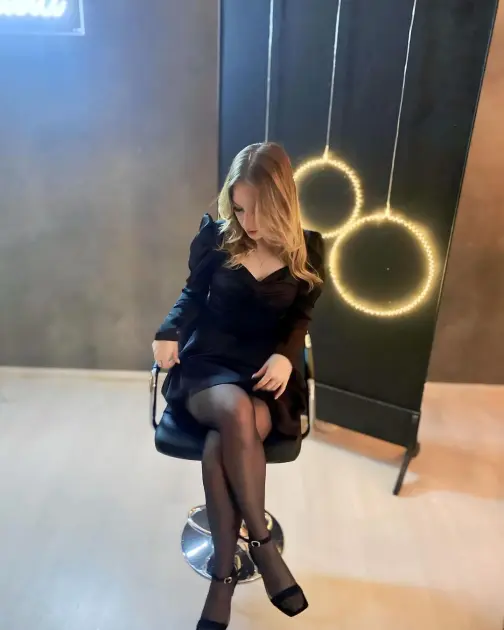
My hobbies are history, philosophy, psychology, music, economics, politics, and sociology. I write about this and much more. Professional model. She has performed at international music festivals (vocals, dancing, imitation of vocalists). I am studying at the Academy of Arts - the film and art industry, I am a producer and the owner of a video studio.
I am glad to see all of you in my blogs.
You won't lose me here. https://t.me/shipshard