
"What type of noise then?"
Well in this post I'll talk about the wonders of Perlin noise. Perlin noise is a type of noise that is created using the Perlin noise algorithm. The Perlin noise algorithm was created by Ken Perlin when he was working on the movie Tron at Walt Disney in 1982. Ken perlin was unsatisfied with the fake looks of computer generated graphics back then. So he made made the Perlin noise algorithm.
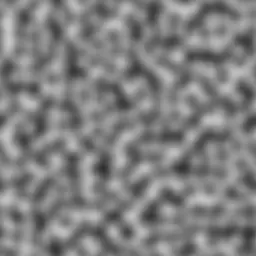
Example output.
An example of how Perlin noise could be used.
Let's say someone wants to create a rust material but not by hand. Perlin noise is perfect for this. I'll be using Blender's material nodes for this example.
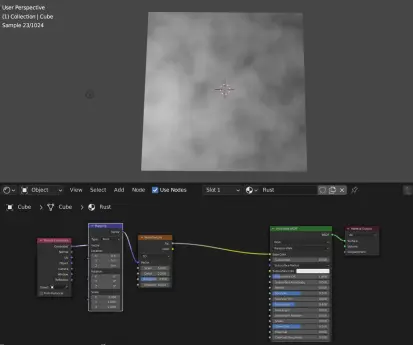
Firs they would need a base texture for metal. So we take a Perlin noise texture:
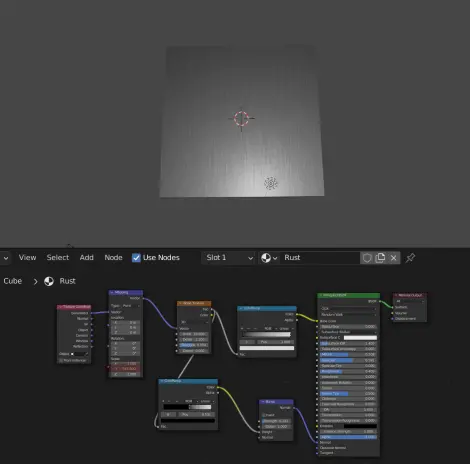
Then we turn it into brushed metal by using the mapping node to squash the texture. Among some other things to improve realism:
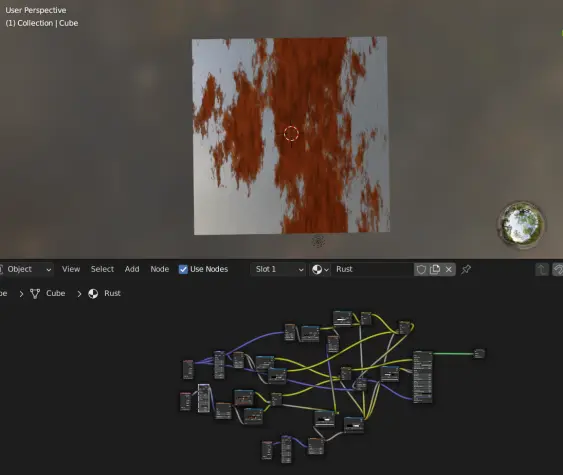
After that it's time for the rust. I got a bit carried away but it's all still noise and using noise as masks for more noise:
Another example would be generating mountains and terrain. Stacking different layers of noise to make a more detailed height map.
The world generation in Minecraft makes heavy use of Perlin noise for example. There is one flaw to Perlin noise however. when moving up in dimensions we start to notice artifacts that don't look very good. To fix this Ken Perlin created simplex noise in 2001. Which he sadly patented( that patent is about to expire though). The opensource community has made an alternative though called Open simplex which is free to use! Both of these improvements work well when sampling in any amount of dimensions.
In conclusion.
Used in many places Perlin noise and it's newer alternatives are an important tool in the field of procedural generation. But there are types of noise which we will talk about in coming blog posts.






