
The next major event that expanded the power of government and Money Changers was the Spanish American War in 1898. During this time extending your wealth and legacy wasn’t exclusive to Morgan, Vanderbilt, Carnegie, or any of the other Money Changers we discuss, or even private corporations. The federal government of the United States had similar intentions of growing its power and politicians’ wealth to micromanage the lower and middle classes
Two years prior to the start of the Spanish-American War, the Panic of 1893 was officially over and the recession was beginning its recovery with the widespread discussion being the presidential election. The election was between William Jennings Bryan, who was the Democrat nominee for the presidential race three times; and Republican President William McKinley, whose campaign trail was being heavily funded by J.P Morgan’s companies and the rest of Wall Street. After a series of newspaper propaganda campaigns from both sides of the political spectrum, and taking into consideration that women or minorities weren’t allowed to vote at this time, William McKinley won from Wall Street funding and the illusion of rural cooperation in the future. Two years after McKinley was elected president, the United States found itself in the middle of the Spanish American War. The cause? A false flag perpetuated by Yellow Journalism, resulting in the death of thousands of people, and American colonialism strangling a series of desperate island-states that simply sought sovereignty.
The backdrop for this story involves Spain ruling over Cuba, other Caribbean Islands, and the Cuban's fight for compromise, harmony, and most important liberty. Spain had ruled over Cuba for a number of years during their imperialistic reign and the natives were exhausted from the mistreatment they faced carried out by their rulers across the Atlantic Ocean, similar to the struggles the United States faced just over one hundred years prior during its revolutionary battles. Put simply, the United States had no good reason to be involved in this war. The disagreements were among two nations that we weren’t involved with except for trade, aka profits. However, the event that sparked the entry of the United States into armed conflict with Spain was the sinking of the U.S.S Maine, which resulted in the death of over 250 seamen.
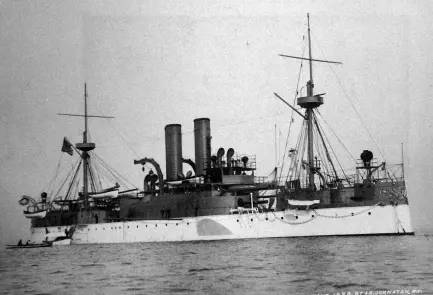
(By National Museum of the U.S. Navy - Lot-3370-7, Public Domain, https://commons.wikimedia.org/w/index.php?curid=70765409)
The sinking of the submarine was questioned then and still now as to how it sank and took the lives of so many. However, after an investigation by a team led by Admiral Hyman George Rickover, they determined that it was an internal explosion that caused the event and sinking. As opposed to the contrary belief that was being pushed and propagated in the newspapers in 1898 which was that Spain had shot a torpedo at the U.S.S Maine and took the lives of Americans, which would call for an aggressive and speedy response from the American government and military.
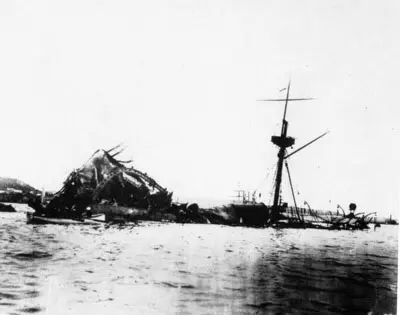
(The sunken USS Maine in Havana harbor)
This news swayed the public opinion into believing that we had an ethical cause for getting involved in killing over an island that was controlled by a country in Europe. In addition, the press exaggerated events about death camps, torture, and other cruel activity that was transpiring in Cuba by the Spaniards to influence American’s perception of the truth on the ground, and without the technological rails and spread the truth, the people had nothing to rely on except for the word of media organizations that were owned and operated by the wealthiest elite in the country, and soon to be the world.
The war was short-lived and only lasted 16 weeks. Although, that short time frame doesn’t reflect the large impact it had on the world and lives across the globe. Throughout the war, battles were being fought in Cuba and the Philippines, but the lives of people across Asia, Europe, the Caribbean, Latin America, and the United States were all modified and influenced in some shape or form in the aftermath of the warfare. Some of those people died fighting in battles and will no longer be able to see their families enjoy eating out or sleeping in, or just the fresh taste of water ever again.
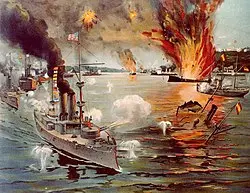
(The Battle of Manila Bay)
Lives that were lost because of the American elite’s greedy and acquisitive ineptitude empowering influential institutions to practice yellow journalism, spreading falsehoods, and reporting inaccuracies which then caused media sources to push this idea through their various channels to the American public until it resonated in citizens communities that actions should be taken to counter these awful events, that originated from Money Changers, and were being used to influence the public opinion. It was the perfect plan, and the wealthiest people in the country were executing it flawlessly.
After the Spanish-American war ended, negotiations began between Spain and the United States which ultimately led to the Treaty of Paris. Which officially brought hostilities to an end between the two empires. The details within the treaty laid out that the United States would gain control of the Philippine Islands, Guam, Puerto Rico, and Cuba. Cuba wasn’t necessarily thrilled that after fighting for its own freedom from Spain that it was now going to be ruled by the United States and eventually declared its own independence in 1902. However, the United States didn’t let Cuba go for free. The U.S Government imposed many restrictions on Cuba and also took control over Guantanamo Bay, where they set up a Military Base. Guantanamo Bay is a strip of land water in the South Eastern part of Cuba. As you might imagine, there has been a host of controversy around the United States still technically owning a piece of land in Cuba, even throughout the entire communist party, the Cuban Missile Crisis, and torture that occurred in Guantanamo after 9/11.
(Map of Cuba with the location of Guantánamo Bay indicated)
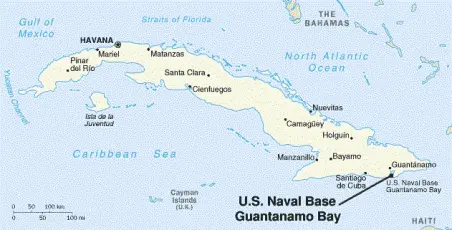
We will talk about Guantanamo Bay in more detail in a later chapter, but what you should know about it, for now, is that the United States essentially stole a piece of land from Cuba to build a military base funded with our tax dollars.
By the time the Spanish-American War had ended in 1898, inside the United States there was a changing political atmosphere, evolving technology and populations were growing rapidly. With the control over a barrage of islands throughout Asia and Central America, the United States elite saw this as the perfect time to enter a stage of American Imperialism where we would portray ourselves as defenders of democracy and use that curtain to become the most dominant empire that the world has ever seen.
But first, Republican President McKinley needed to win his reelection campaign using the funding of wall street and the most pressing question at that time was who his vice president was going to be. His former Vice President, Garret Hobart had become sick with heart issues in 1898 and it became apparent he wasn’t going to make it through another four years in the crucial role. Hobart died in late 1899.
The Republican Convention in 1900 was a strongly contested and major debate about who to choose as McKinley’s vice president, however, after some time it became clear that the candidate with the widest range of support was a decorated war veteran from the Spanish-American war, who had won an election to become Governor of New York shortly after returning. With a strict and stringent reform agenda that would empower his legacy, Theodore Roosevelt would go on to be named Vice president of the United States and solidify his name into history books for generations to come. After McKinley named Roosevelt vice president and went on the campaign trail together, they gathered a wide range of support from both sides of the political spectrum that allowed the republican party and McKinley to easily be reelected in 1900.
Shortly after McKinley had won his election, he started having speeches across the country explaining his cabinets plans for the next four years of his presidency, but in 1901 misfortune struck when he was shot twice in the stomach in an assassination attempt that would ultimately kill him in the hospital soon after.
Theodore Roosevelt heard the news, hurried to the White House from a hunting trip, and was sworn into the Presidential office of the United States of America. A new political era had begun.
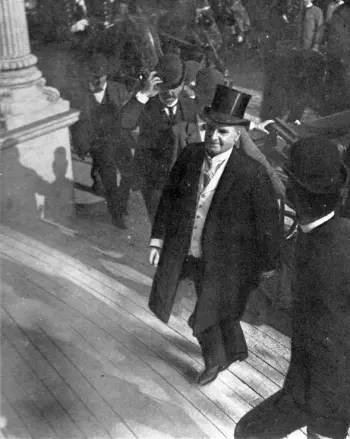
(McKinley entered the Temple of Music on September 6, 1901, shortly before the shots were fired)
Theodore Roosevelt had fallen into the presidency under unfortunate circumstances, but his agenda and role throughout his tenure as president involved drastic and significant reforms that would change the precedent of the federal government's power.
In his free time, Roosevelt was a naturalist that enjoyed hunting and being in nature. Professionally he was more aggressive. He grew up in New York seeing the corruption and greed of Wall Street that was plaguing the United States economy throughout the 19th century and decided to become involved in politics in order to create positive change. Roosevelt began his career in politics one year after graduating from Harvard in 1880. After getting elected to the New York State Assembly, Teddy instantly became involved in politics by rooting out the creed and corruption in New York. He was popular on both sides of the political spectrum because of his cheery speeches and ability to write meaningful, bipartisan legislation. However, in the upcoming years, he had to face opponents that were unmatched, untested, and fearless in their strategy to acquire for themselves, the wealthiest, greediest, and most powerful people in the country.
After Morgan and the Rothschild family had successfully financed the entire United States and saved them from bankruptcy during the Panic of 1893, The Money Changers had his eyes set on a few more prizes. For Morgan, his team began negotiations with the leader of Carnegie’s steel, Andrew Carnegie, and his president, Charles Schwab. With Carnegie and Schwab working together they were able to monopolize a majority of the U.S Steel industry in a short period of time. Morgan’s plans were to corner the industry even more by combining Carnegie’s steel company with a variety of suppliers, producers, miners, and manufacturing companies throughout the United States. His mission was eventually accomplished when he completed the deal with Andrew Carnegie and gave him 480,000,000$ for his steel company. The result? U.S Steel is a company that would go on to control around 65% of the steel production within the United States and become the first business in the world to have a valuation of over 1,000,000,000$.
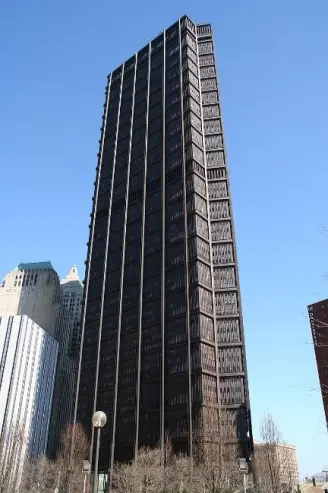
(The U.S. Steel Tower in downtown Pittsburgh)
However, Pierpont’s railroad business was undergoing a slow recovery and heavy scrutiny from regulators, and wasn’t happy with the progress. Nonetheless, Morgan convinced the government that his cause was just and important and was allowed to work out a deal with a New York financier that allowed him to buy out even more railroads, creating the Northern Securities Company, and continue to monopolize the industry. However, this company would not last very long under the watch of President Theodore Roosevelt because of his urge to target the largest monopolies in the country, as he believed they were a large part of the reoccurring economic depressions and bank runs that were taking place throughout the 19th century. Without deliberating with the Senate, House of Representatives, or his presidential cabinet, Teddy Roosevelt declared that one of JP Morgan’s companies, Northern Securities, was going to be investigated for regulations that were broken under Anti-Trust laws that were specifically enacted to prevent monopolies from forming that rooted out competition. The case was heard by the supreme court and after a series of appeals, when the ultimate decision was made, the company was forced to split and they all went their separate ways.
Roosevelt was ultimately successful in breaking up the companies; not only because the companies would no longer operate under a single name, or because it created and reinforced new legislation, but because the decision by the supreme court set a new precedent for the federal government’s capability to control the private sector of the economy and the for the office of the presidents to have strategies that allow them to go around congress. Theodore Roosevelt throughout his presidency routinely failed to get permission from his congress and cabinet before taking important actions, which furthered the precedents for the federal government to have to expand power in the future that intentionally or unintentionally harm the lower and middle
classes.
On the other side of the coin, Morgan ultimately didn’t lose any money on the decision, and his railroad company actually grew after the divergence because of the large amount of time he had to organize the finances, staff, supply chain, and technology of the company.
Roosevelt would go on to break up multiple trusts, root out corrupt politicians in the government and stop fraudulent cronies that had substantial influence throughout the world. Therefore, Roosevelt gained many political enemies throughout the process. T. R did do some good by breaking up monopolies and bringing to light exploitation and dishonesty throughout the public and private industries. However, he didn’t foresee that his actions would expand the power of the federal government that would then be handed to other greedy and influential cronies whose main concern wasn’t the people of the country that elected them, but rather to expand their wealth, control and ideology.
One trust Roosevelt had no intentions of investigating, however, was the ‘Bankers Trust’. A Corporation of corporations that had immense power and was ruled by the wealthiest elite. We will discuss this next section.
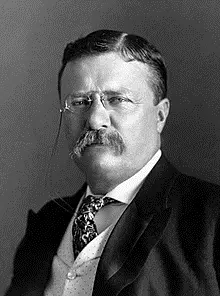
(Portrait by Pach Bros., c. 1904)






