
During the cave age, life was stuck in hunting and gathering. When there is the involvement of any activities there arises a challenge in management, efficiency, and effectiveness. This is how the role of economics comes into play. Thus, economics is understood as making decisions in the presence or scarcity of resources.
Economics comes from Greek, "oikos" means household, and "nomos" means customs and law. Therefore, the etymological meaning of economics is the law for household management. For the first time, the word economics is used in the late 18th century by Adam Smith in the book," an inquiry into nature and causes of the wealth of nations" 1776.
The subject that we have been using as Economics has made its long journey along with the history of mankind. During the gatherer and hunting era, nothing much information was recorded. But after the agricultural system was introduced into life, there started a phase of accumulation. This, accumulated from different areas need to be exchanged with other goods as per the needs, which was developed as the Barter system which was initiated in Mesopotamia and Egypt around 6000 BCE. After 3000 years of the introduction of the barter system, there was the development of a monetary system where metals were used as money in the form of coins.
At this phase, the people used a system of notation system where transactions were recorded on clay tablets and a piece of cloth. Besides transactions, people used it to keep records of mathematical expressions, interest systems, compound interest, accumulations, and property transfers.
The code of Hammurabi (1810-1750 BCE): the earliest work of economic synthesis specifies norms for economic activity and provides a framework detailed framework for commerce, including business ethics for merchants and tradespeople.
Reality is shaped by the thoughts of the people of that time as well as the prevailing assumptions that have been accepted at that moment. How the economic system was developed in the past depends upon the thinking of the great thinkers. Some of the ancient great thinkers are as follows:
Guan Zhong (725-645 BC):
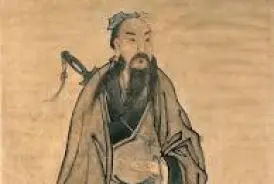
- “Guan Zi” contains a number of ideas that are centered on the economy
- Light/Heavy theory is an anticipation of supply/demand theory: when one of the supplies of goods is high in the market the price goes down which was taken as light and when supply is less, demand is high those goods are heavy and the price goes up. The movement of Goods in the market depends upon the light and heavy attributes of the goods. Thus, the market always works to maintain the equilibrium position (tendency to maintain one price)
- “Quantity theory”: connection of money with light/heavy theory: if the money is heavy the price is increasing, and the value of the currency. The price of goods goes down. This means the money supply is decreasing. In vice versa, if the money is light, the value of money is decreasing i.e. the currency value is decreasing. The price of goods is going up. This means the money supply is increasing. This creates fluctuations in the market. Thus, the state must buy and sell the goods with the value of currency fluctuations. ie. fiscal policy
- Countercyclical fiscal policy
- Working of market
- Guan Zhong's main idea of economics was that the prosperity of a country depended on the development of agriculture and the efficient use of resources ( resources management) and government intervention in promoting economic growth and prosperity
Hesiod Theogony (800 BC)
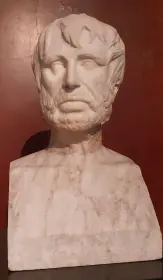
- Greek philosopher and poet
- “ an accounting of the birth of gods”, “Theogony”
- His economic ideas laid down the guidelines for managing a farm in works and days: guided how to manage agriculture
- Scarcity doesn’t happen with human conditions and limited resources. Humans' desires are unlimited and the available resources are limited thus, is scarcity but he argued that scarcity occurs with the evil release, “Pandora open the box”. If evil activities increase these changes the human condition bringing scarcity in the market.
- Efficiency: when there was talk on scarcity, he was the one to talk about efficiency (introduced), if there is a scarcity of resources there needs to be efficiency
- His main idea lies in that labor and hard work are the main key to wealth and prosperity.
- He believed that the best way to get achieve economic success is through agriculture. He emphasized the use of technology and hard work to improve agricultural productivity.
- He also believed in trade and commerce. He argued that the exchange of goods and services was essential for economic growth and development.
Xenophone (420-355 BC)
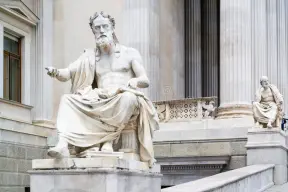
- Was an Athenian leader, philosopher, and historian
- The word economics, derived from Greek was used by Xenophon as the title of his book “Oeconomicus”( Oikonomikon) which means efficient management at the level of producers and household
- After 400 years from Hesiod, Xenophon applied efficiency and virtue in promoting economic growth and development
- According to him, household management can be used to manage the state’s economy.
Plato (427-347 BC)
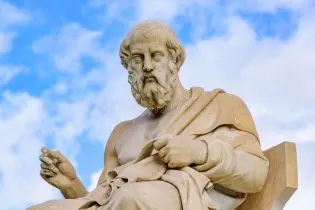
- Students of Socrates
- “The republic and the laws” are the source of economic thoughts
- Economics is the aspect of social organizations. Principles of society
- Plato traced the origin of the state to economic considerations. Plato said,” a state arises out of the needs of mankind. No one is self-sufficient. All of us have many wants” The state in order to supply the necessary commodities to satisfy human wants gathered together.
- Just system and division of labor. According to him, the system is just where everyone does the work they are assigned with.
Aristotle (384-322 BC)
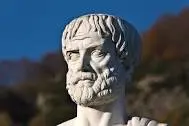
- Laid the foundation of economics as a science
- Student of Plato: PLATO: the ruling class must not possess private property to avoid conflicts over private property
- Aristotle derived a number of economic ideas from axiomatic (self-evident) concepts: the necessity of human actions, the pursuit of ends, the allocation of resources
- Basic Philosophical analysis of humans' means and ends: how people must earn and do expenditure?
- Exchange of commodities and use of money in this exchange: Aristotle believed that the value of goods is not inherent. It depends upon the needs and wants of the people.
- People’s need is limited and their desires of people are limitless. Production of commodities to satisfy the needs is right and natural. And the production of commodities to fulfill desires is unnatural.
Chanakya (350-275 BC)
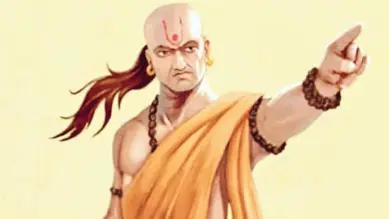
- “Arthashastra”: economic principles and guidelines for a progressive economy
- Details of the political, social, economic, and military organization of the past and especially of the Mauryan empire
- Deals with the government of towns and villages, law courts, rights of women, maintenance of army and navy, diplomacy, agriculture, etc
- Wealth creation and Economic growth importance: He believed that a prosperous economy was essential for the well-being of society and the state and that economic growth could be achieved through various means of agriculture, trade, and industry
- Role of the state in regulating the economic activities of the state and ensuring a fair and just distribution of resources.
- Emphasis on ethical behavior in economical activities.
continues...............






