
One of the differences between reading Peter Pan and watching it in movie or stage format is the prominence of the narrator in the novel, which famously opens "All children, except one, grow up" (1). This assertion is obviously false even from our current perspective, and during the Victorian period that gave us Peter Pan, when one of the most visible social ills was the preponderance and plight of orphans and the related issue of child deaths, it would be even more alarming in its obvious falsehood. To adult readers. Child readers, or children listening to adults read aloud, might buy it, though. This statement signals adult readers that the narrator will be telling some obvious fibs, fibs that an adult will easily see through but that children might accept at face value. It also announces that this book will explore the terrible things that can happen to children who do not have parents to feed, shelter, and protect them.
The issue of children without parents reappears a few pages later, when the narrator describes Wendy's mother "tidying up her children's minds," stating that "It is the custom of every good mother after her children are asleep to rummage about in their minds and put things straight for the next morning, repacking into their proper places the many artifacts that have wandered during the day" (5). The good mother, the narrator asserts, organizes the child's mind, hiding "the naughtiness and evil passions with which you went to bed" (6). These denotative meaning of these statements is for the benefit of the child reader, but the narrator has alerted adult readers to watch for subtext. In this case, as adult readers, we are to wonder what happens to children, such as the Lost Boys or the many Victorian orphans, whose mothers are dead and therefore cannot tidy their childish minds. The implication is that these children must wear the unpleasant garments of their "naughtiness and evil passions."
In other texts I often rail against the misrepresentations of the unreliable narrator, but in Peter Pan I believe I may appreciate his prevarications. He is not asking us to believe his lies - he is in fact coming very close to announcing them as false by presenting them so very boldly. Instead, he is asking us to hide certain harsh realities from children, allowing them to believe themselves safe and loved so that they can spare the emotional resources to believe in magic.
Later, for example, comes the fairy lifecycle: a fairy is born every time a baby laughs for the first time and dies when a child stops believing in magic. The implication here being that adults already don't believe in fairy magic, but that it is not too late for children, and WILL NO ONE THINK OF THE ENDANGERED FAIRIES?
I have quite a lot more to say about this book, but these are my initial thoughts.
Quotations from:
JM Barrie. Peter Pan. Signet Classics Centennial Edition: NY, 1986.
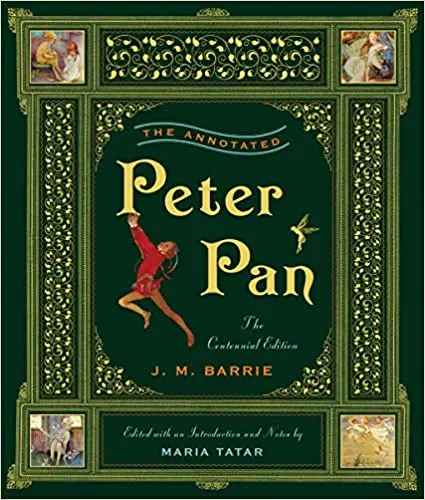
Image from:
Maria Tatar, ed. The Annotated Peter Pan: The Centennial Edition. WW Norton & Co: New York, 2011.






