
For many of us, cryptocurrencies and the emerging world of decentralized finance (DeFi) seem like concepts straight out of a science fiction novel. Up until recently, the idea of digitally storing and transferring value without centralized intermediaries like banks was nothing more than a pipe dream. But thanks to pioneering technologies like blockchain, this vision of a new financial system is becoming a reality before our very eyes.
As someone who has been actively involved in the crypto space, I can tell you that the excitement and potential are palpable. However, mass adoption of these new models has been hampered by one major hurdle: the lack of a direct connection between cryptocurrencies and traditional banking and payment systems. This is where Monerium comes in. As an electronic money institution, Monerium has created a bridge that allows seamless transfers between crypto and fiat currencies like dollars and euros.
In this essay, I hope to give you a glimpse into Monerium's work and explain how their solutions stand to benefit not only crypto users, but also unlock unprecedented opportunities for financial inclusion, commerce and innovation around the world. By the end, I'm confident you'll share my enthusiasm for this young company's vision of an open, accessible and transparent financial system of the future.
Licensed to Disrupt: Monerium's Regulated E-Money Platform
Monerium is an Electronic Money Institution (EMI) licensedby the Financial Supervisory Authority of Iceland. But what exactly does that mean in practice?
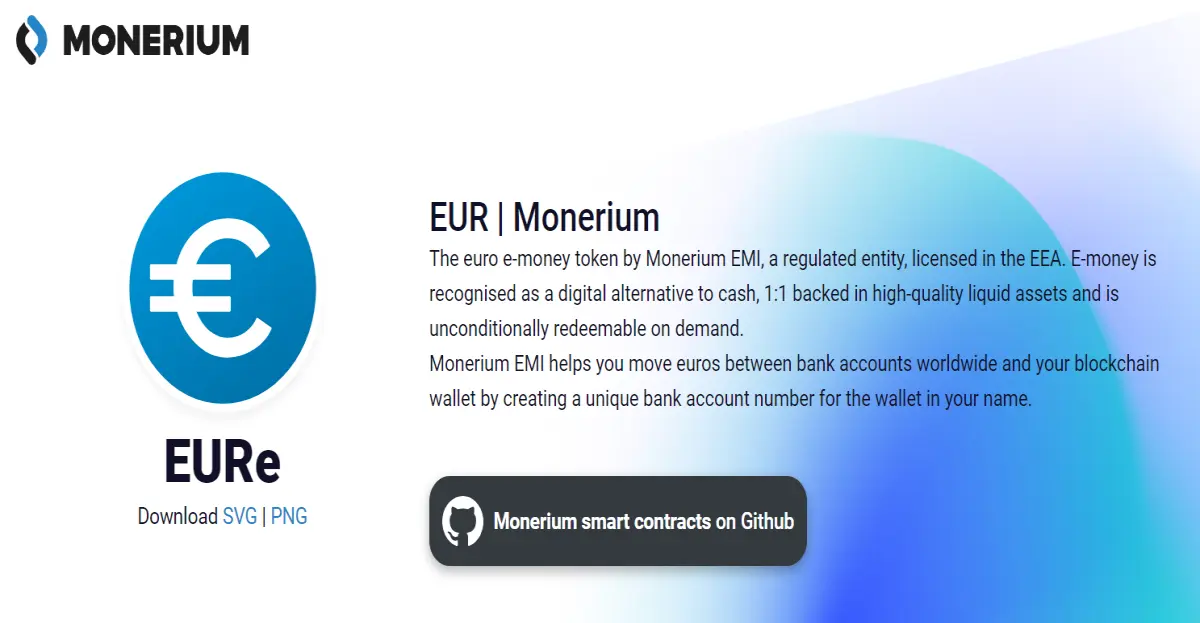
Being an EMI allows Monerium to issue electronic money, or e-money for short, which takes the form of digital tokens backed 1:1 by reserves in major fiat currencies like euros and dollars.
Note: Monerium specifically offers Euro as it's base currency and is not available to users outside of the European Economic Region
This means that for every one Monerium token $EURE in circulation, the company holds an equivalent amount in real currency in segregated bank accounts. As a result, e-money provides users with many of the same properties as physical cash.
In addition to issuing stable digital currencies, Monerium operates something called an IBAN gateway. IBAN, which stands for International Bank Account Number, is a standard for identifying bank accounts in international wire transfers. By assigning IBANs to users' crypto wallets, Monerium enables seamless transfers between blockchain addresses and regular bank accounts. This provides a convenient on-and-off ramp between cryptocurrencies and the traditional financial rails that power our daily lives.
By combining regulated e-money with an easy-to-use fiat gateway, Monerium has effectively built the plumbing needed to connect the crypto and banking worlds. In the sections to come, we'll explore how this "crypto-fiat bridge" unlocks tremendous opportunities for users, businesses and entire economies.
Cashing Out Made Easy: Turning Crypto Gains into Fiat
If you're like me, one of the biggest appeals of cryptocurrency is the ability to easily cash out your digital gains whenever you want. But up until now, moving funds between crypto and traditional banking has been a cumbersome process full of hassle and fees.
Before I discovered Monerium the process for sending my money to or from the real world(tm) onto the blockchain required multiple steps. My bank flat-out refused to allow me to send my money to accounts associated with Crypto Exchanges such as Binance or Coinbase. I had to transfer to a more progressive Fintech service first, in my case, Revolut and then withdraw from there to my crypto exchange of choice. Once there, I would then withdraw to my preferred blockchain. It's not insurmountable, but it definitely makes the user experience of moving to or from crypto a pain. This is where Monerium comes in.
By leveraging their IBAN gateway and regulated e-money tokens, users can now withdraw and deposit directly into their bank accounts with just a few clicks. Talk about convenience! For merchants, this new level of interoperability also opens the door to accepting crypto payments directly while still receiving fiat deposits.
Perhaps even more exciting is how the Monerium platform empowers decentralized finance applications. Through DeFi lending protocols, you can now earn interest on your crypto savings or take out instant loans using digital collateral like NFTs. And with Monerium's stablecoins serving as the intermediary, these new financial services become easily accessible to everyone.
By building the plumbing between crypto and traditional finance, Monerium is helping unlock DeFi's full potential for users and businesses worldwide. Exciting times ahead indeed!
The Rise of Digital Money
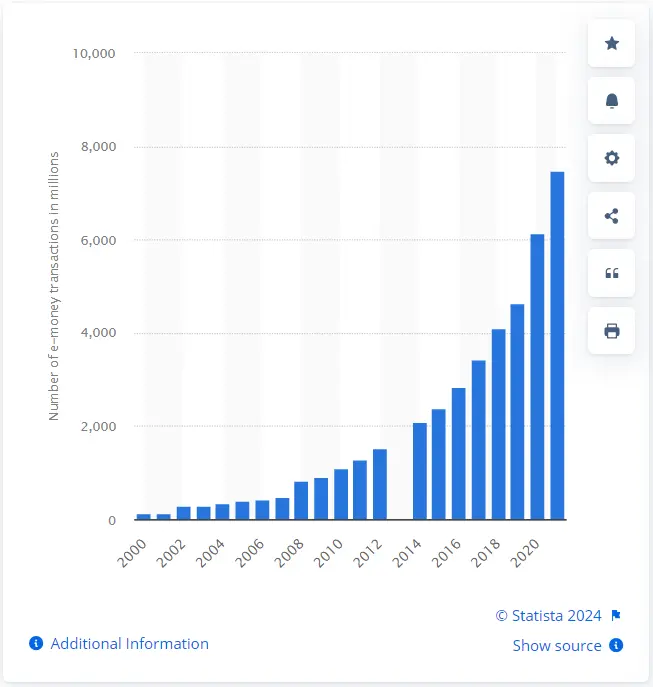
Electronic money (E-money) has established itself as a viable digital alternative to physical cash over the past two decades. First introduced by the European Union in 2000, e-money allows funds to be securely stored and transferred electronically.
Major financial institutions now treat e-money holdings from companies like PayPal, Revolut and Wise as overnight bank deposits. This integration into traditional banking systems illustrates how mainstream the concept of digital cash has become.
In the European Union alone, e-money transaction volume more than doubled between 2014 and 2019, reaching over 4.6 billion transactions.
Up Only!
This growth points to the widespread adoption of e-money by both consumers and businesses for online payments. However, despite its success in facilitating digital commerce, e-money was not yet available on blockchain networks.
Monerium takes its role and responsibilities extremely seriously. They undergo an annual external audit and make regular transparency reports to verify their financial controls and safeguarding of user funds. The majority of reserves are kept in overnight bank deposits for liquidity, with any excess conservatively invested. This regulated approach helps build confidence that digital value held on public ledgers is just as secure as money in traditional financial systems.
By pioneering a compliance-first model for digital currency, Monerium hopes to deepen participation in emerging blockchain-based economies while maintaining the stability, regulation and real-world functionality that users expect from money. Their work bringing e-money to public networks could allow for wider financial inclusion through new decentralized applications. Only time will tell how far the integration of regulated digital assets and public blockchains may progress.
Have you used any services like Monerium before? Tell me what your experience was like in the comments.
If you have read this far, I thank you.






