
“A butterfly flaps its wings in the Amazonian jungle, and subsequently a storm ravages half of Europe.” ― Neil Gaiman
‘The Butterfly Effect’ was an American sci-fi movie released in 2004. It received good commercial success. The central character named ‘Evan Treborn’ could time travel there. The film’s storyline was based on several flashbacks of Evan's early life and alternative present-day outcomes as he attempted to change the past, before settling on a final outcome. The title of the movie was inspired by the ‘chaos theory’ of mathematics, where the ‘butterfly effect’ is a hypothetical situation that illustrates small change in starting conditions can lead to vastly different outcomes. The concept is imagined with a butterfly flapping its wings and causing a typhoon. Sounds interesting? Indeed, it is! Everything in this world is connected together. A butterfly causing typhoon in real world might be very symbolic but small events can definitely cause unforeseen outcome.
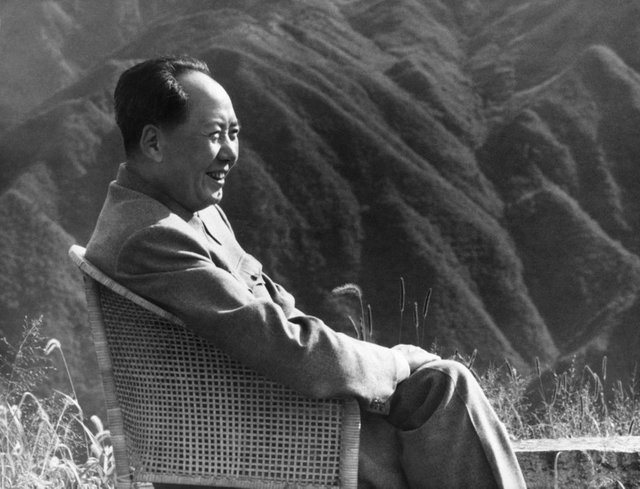
Image Source – Mao Zedong
Edward Norton Lorenz coined the term 'butterfly effect’ in the year of 1969. But 11 years before that, in 1958, a real event happened in China which showed us a real life socio-economic ‘butterfly effect’. Mao Zedong, founding father of China, led a hygiene campaign aimed to eradicate the pests responsible for the transmission of pestilence and disease. He was a son of a farmer. It was declared that "birds are public animals of capitalism". The sparrows were identified as the root cause of poor farming yield as they ate a lot of grains. The citizens started to kill sparrows to increase their farming yield. Mao Zedong wanted to make farming a state sponsored activity. He made it but ‘killing sparrow’ also became a state sponsored activity simultaneously. It is known in the history as ‘the great sparrow campaign’.
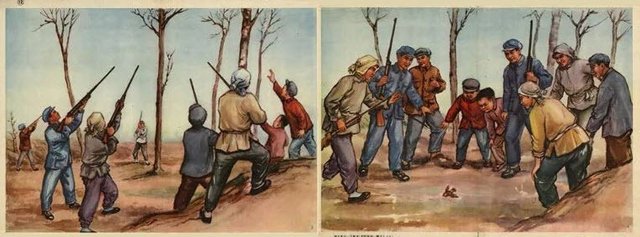
Image Source - A School poster from the late 1950s China, depicting young boys hunting sparrows for sport
Yes, the sparrows became almost extinct in China due to mass butchery. But by 1960, people started to understand that the sparrows ate a lot of insects besides eating grains. Farming yield actually decreased after killing the sparrows. Mao Zedong ordered to end the campaign but it was too late. Insect population grew like hell. The complete eco-system was damaged. The insects ate all crops and people started to starve. The imbalance in ecology caused the ‘great Chinese famine’. Almost 15 million people died as per official government figure and as per many research papers, 35 - 45 million people died in that famine.
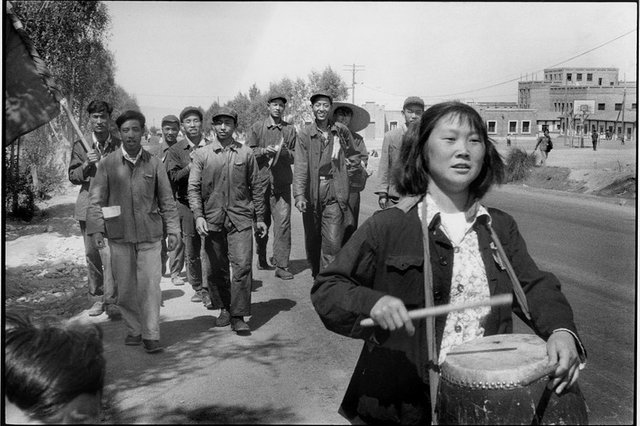
Image Source – The great famine of China
Yang Jisheng is a Chinese journalist and author of the ‘Tombstone’, which depicts events of the ‘great Chinese famine’. Yang spent a decade working undercover and secretly gathered proof of China's great famine. The realm of hunger, made people behave inhumanely. People even ate people. Yang’s book is still banned in China and Chinese history blames natural disasters for famine.
"For the want of a nail the shoe was lost, For the want of a shoe the horse was lost, For the want of a horse the rider was lost, For the want of a rider the battle was lost, For the want of a battle the kingdom was lost, And all for the want of a horseshoe-nail.” ― Benjamin Franklin
Benjamin Franklin wrote the above lines in 14th century about cascading effects of a small event while having no idea about the 'butterfly effect'. Obviously only the killing of the sparrows did not cause that great famine and many other factors also sparked the great disaster. But we can see the killing of the sparrow as a precursor of the events, which eventually brought the disastrous results. Our environment is chaotic and it changes suddenly just like ‘chaos theory’ of mathematics. Mao did not have any idea about this. His mental barrier caused the 'butterfly effect’, which changed the lives of people and brought misery.
Note: You can follow the author on twitter.







