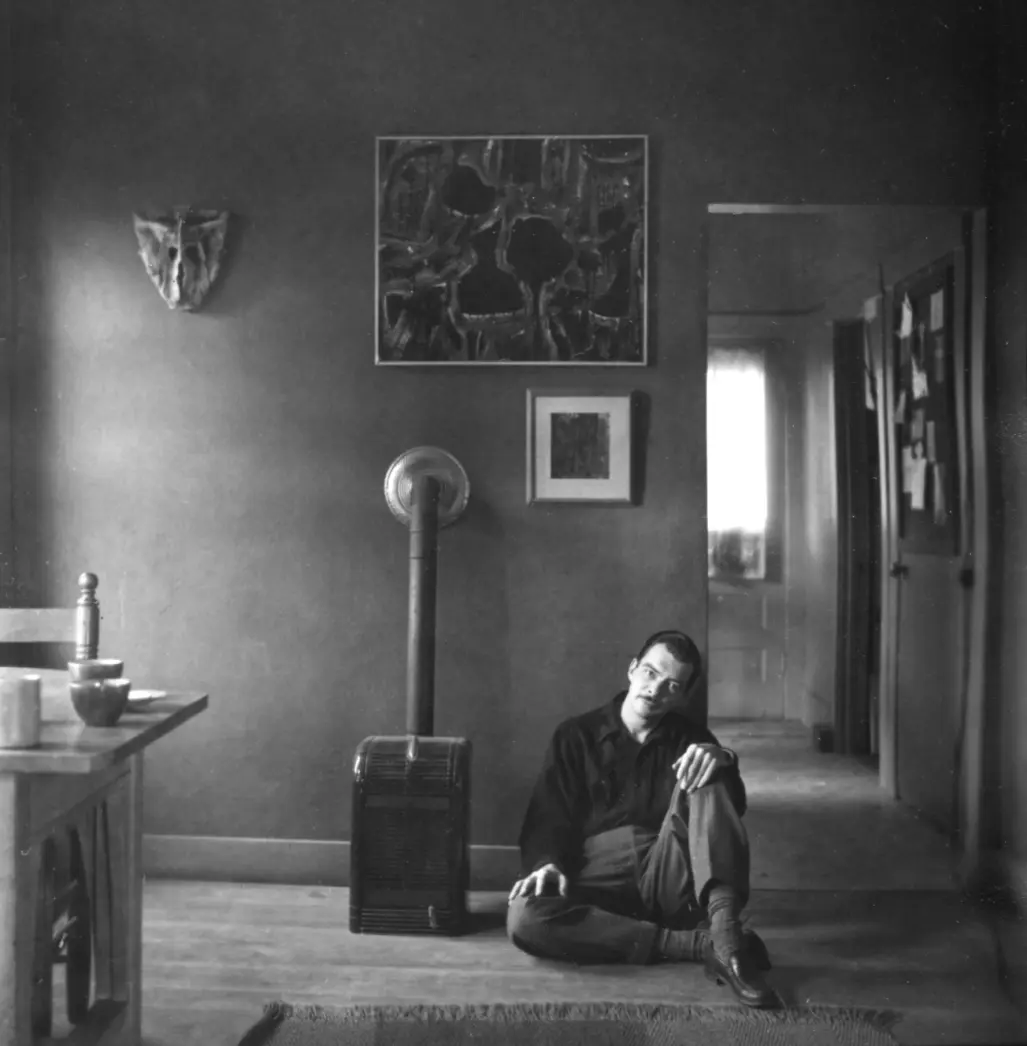
"The war is in words and the wood is the world."
Weldon Kees
Weldon Kees was a poet who disappeared in San Francisco at the age of 41. His wife was an alcoholic, and had a psychotic break while watching the McCarthy hearings on TV. She was institutionalized. After divorcing her, Kees tried to climb over the edge of the Golden Gate Bridge, but admitted to not being able to physically manage it. He considered going to Mexico, presumably as an alternative to suicide. He never made it. In July of 1955, his car was found abandoned on the Marin County side of the Golden Gate Bridge. He is presumed to have succeeded in scaling the rails of the bridge at last.
"And the world, like a beast, impatient and
quick,
Waits only for those who are dead. No death for you. You are
involved."
Weldon Kees
My name is John Keating, and I am a professor of English at the Universal Entity in which all of us are now sitting. I earned a degree in successful test-taking from the Universal Entity of Illinois at Chicago, but nothing I can teach you was ever learned in any kind of school. Which is to say, there is nothing I can teach you. I can only provide the materials necessary for you to teach yourself. The sooner you drop out of this class and wander like Hesse's Goldmund through the wilderness of joy and pain, the better. You are a sculptor of invisible flowers. You don't need me to haunt you. You haunt yourself.
"We haunt ourselves.
A shutter, pounding in the mind,
Old spiderwebs that drift behind the eyes,
A moaning in the heart that warns insistently."
Weldon Kees
As someone who makes professions of English from a country some consider less desirable than suicide, I want you to tear out the first pages of your professional confessional of the Anglo language arts, which is ghost-speak for an English textbook. The first 3 pages presume to instruct you on "how" to write a poem about God, love, and death, respectively. Because all poems are about God, love, and death, respectively, these pages have been written by the devil, to deceive and distract the true ghosts of the language arts, and turn their ecstatic, mournful bleeding into artifice. There is no artifice in poetry. Only ecstasy, horror, blunt stupidity, and guts.
The war is in words and the wood is the world. But if you want to write a computer program about how to write a poem about God and love and death, here's your template:
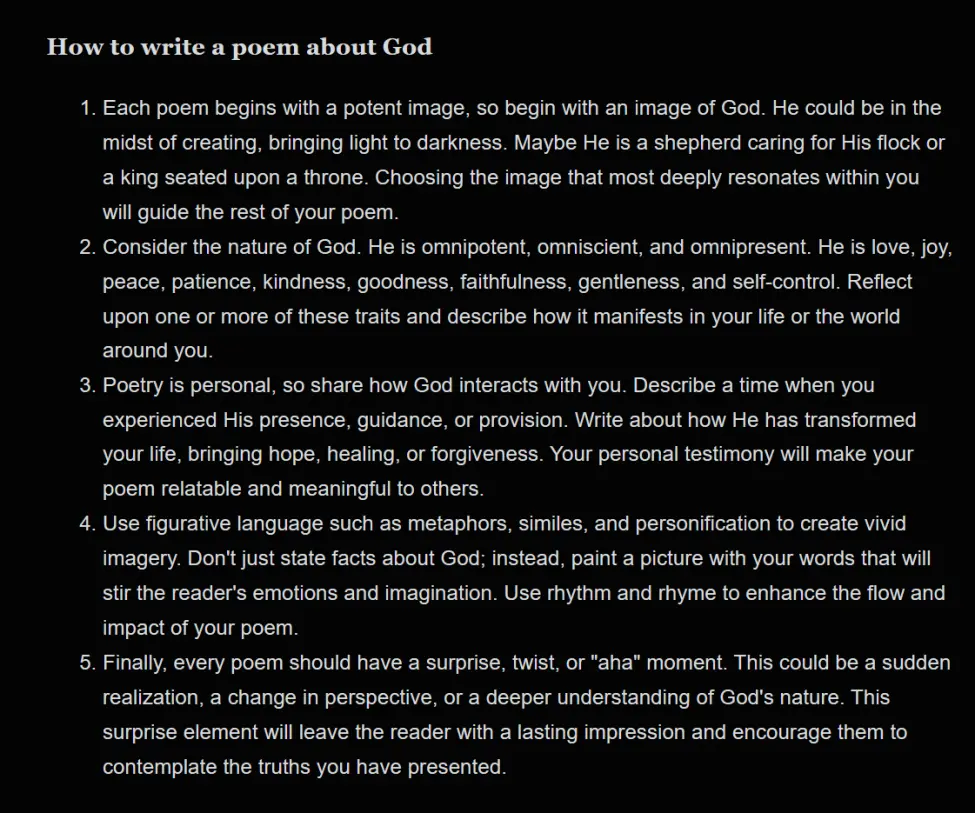
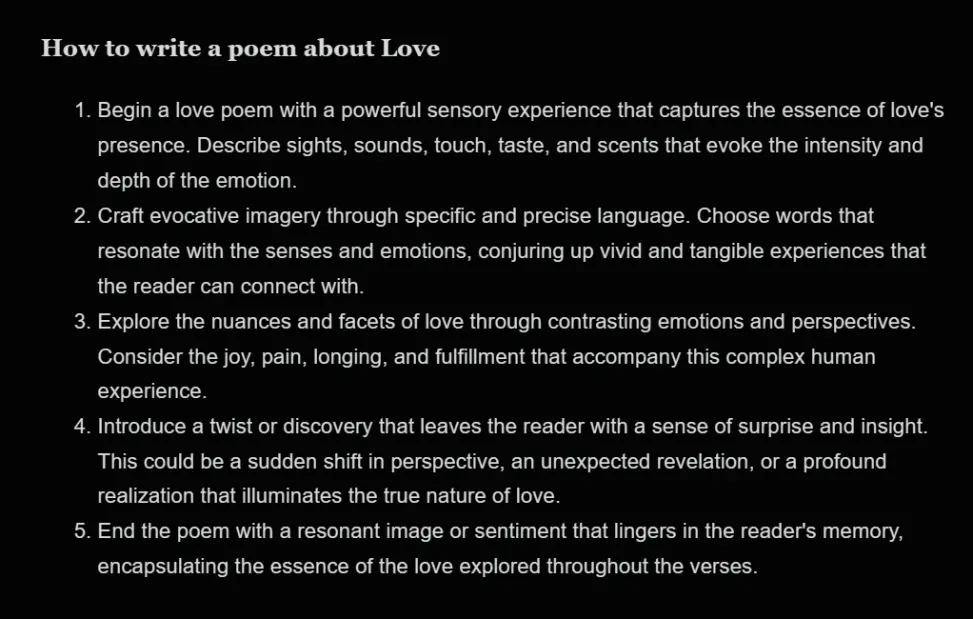
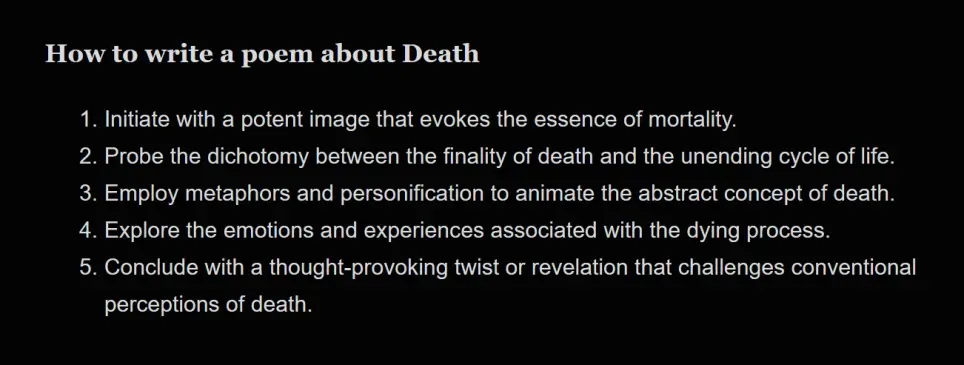
Beware of bullet points, they're deadly. The points they make are hollow. The hollow points expand like a checklist in the flesh of the target, and mangle the invisible flower weeping deep within the soul. Don't even put them in your water gun. Bullet points are dangerous. Suffice it to say, if you want to write a poem about death, write about love. If you want to write a love poem, go on a date with death. It isn't necessary to jump off the Golden Gate Bridge or move to Mexico to face your mortality. Walk into the kitchen, fill your watergun with the refreshing beverage of your choice, and point it at your head. Stare at yourself in the mirror. Stand at the gates of hilarity with your soda popgun at the ready, and dare yourself to fire. Then, do it. Fire into the sky. Unload a shot glass full of iced tea at point-blank range into your temple. Carbonate the words, sloshing in the sacrificial altar of your skull. Empty the chamber of your watergun into the ceiling until it rains rootbeer and brimstone from the starry, stupid heights of the invisible cathedral in your bathroom. Do it. Do it now. And write it down. Write about it, truly, and tell me it isn't about love, and God, and death. All wrapped up in one. Like an invisible bouquet, or a love song, or an epitaph. Then say goodbye to it.
It's gone.
"Heart, heart. I do not live. The lie of peace
Echoes to no end; the clocks are dead.
What we have had we will not have again.”
Weldon Kees
Weldon Kees was a poet who disappeared in San Francisco at the age of 41. He took a flight to Mexico from the Golden Gate Bridge. Like all ghost poets, he haunted himself. But his problem wasn't that he believed in ghosts. His problem was that he didn't believe in them. If you are a sculptor of invisible flowers, to disbelieve in ghosts is to disbelieve in yourself.
For the poet, believing in ghosts is an act of self-esteem.
"Now, sometimes I wake in the night
And hear the sound of dead leaves
against the shutters. And then a distant
Music starts, a music out of an abyss,
And it is dawn before I sleep again."
Weldon Kees
If Weldon Kees believed in ghosts, he'd be alive today. Well, maybe not today. Yesterday, for sure. He would have lived through yesterday, at the latest.
Which, of course, he did.
So much for the return of the ghost.
He's in Mexico now.
God help him.