
Your retirement fund might own Bitcoin right now. Not "might consider it." Not "studying the possibility." Might own it, today, while you read this, with your money, without your knowledge.
Wisconsin's $164 billion investment board disclosed $98 million in Bitcoin ETF holdings last quarter. That is not a typo. The same Wisconsin where dairy farms outnumber crypto ATMs by roughly infinity to one. The same Wisconsin whose pension members are mostly teachers, state troopers, and snowplow operators who have never heard of a seed phrase.
They own Bitcoin now. So do firefighters in Houston. So do municipal workers in Jersey City. So do, by our count, at least 23 public pension systems across the United States with combined assets approaching $800 billion.
The total crypto exposure across these funds? We estimate $2.8 to $4.7 billion in direct holdings, plus another $6-11 billion in indirect exposure through MicroStrategy equity, Coinbase stock, and Bitcoin mining companies. Call it $47 billion in total assets sitting in funds with some crypto skin in the game.
This is not a fringe experiment anymore. This is the slow institutionalization of Bitcoin, happening through the back door of public finance, with individual beneficiaries last to know.
The Number That Changes Everything
Forty-seven billion dollars is a deliberately conservative estimate. Here is how we built it.
Direct Bitcoin exposure through disclosed ETF holdings and proxy equities: approximately $2.8 billion based on 13F filings and CAFR disclosures through Q2 2026. Indirect exposure (funds holding MicroStrategy, Coinbase, RIOT, MARA, CleanSpark, and other crypto-adjacent equities): approximately $6.3 billion based on reported equity allocations. The remaining $38 billion sits in funds whose investment policies now explicitly permit crypto allocations but whose actual positions remain undisclosed or buried in "alternative investment" line items.
We are not claiming all $47 billion is pure Bitcoin. We are claiming that $47 billion in pension assets now flows through systems where crypto is no longer prohibited, where it is actively discussed in board meetings, and where the fiduciary gate has swung open.
The critical shift happened January 2024. The SEC's spot Bitcoin ETF approval removed the primary objection pension consultants had raised for a decade: custody. Fiduciaries could not justify holding bearer assets with private key complexity. ETFs solved this. Bitcoin became, in technical terms, just another ticker symbol.
What changed in 2026 was scale. The early adopters (Wisconsin, Fairfax County, Houston) proved the concept. The 2025-2026 CAFR cycle revealed peer funds that had quietly followed. Now the 2026-2027 disclosure season is showing acceleration that resembles a classic institutional FOMO pattern, except the institutions are state retirement systems and the FOMO is driven by actuarial pressure, not Reddit threads.
The 23-Fund Map: Who's In, How Much, and When
The Pioneers
Wisconsin Investment Board disclosed approximately $98 million in Bitcoin ETF holdings as of March 2026, representing roughly 0.06% of its $164 billion portfolio. The entry came through BlackRock's IBIT in Q1 2024, expanded in Q2 2025, and the board has discussed increasing the allocation to 0.5% in its 2027 target policy.
What makes Wisconsin significant is not the dollar amount. It is the credibility. This is not a speculative hedge fund in Miami. This is the same board that manages retirement for 650,000 Wisconsin public employees, with a 40-year track record of conservative, index-heavy allocation. When they moved, the consultant ecosystem noticed.
Jersey City Employees' Retirement System took a more aggressive posture. The $6 billion fund allocated approximately 2% to a Bitcoin strategy through NYDIG custody in late 2024, making it among the highest-percentage public pension crypto exposures in the country. Mayor Steven Fulop publicly championed the move as "fiscal innovation," though the fund's 2025 CAFR revealed the position had been partially trimmed after volatility exceeded board risk parameters.
Houston Firefighters' Relief and Retirement Fund made headlines in 2021 with a direct Bitcoin and Ethereum purchase through NYDIG. The $5.5 billion fund's crypto allocation peaked near $25 million in 2022, suffered drawdowns, and has been restructured into ETF holdings as of 2025. Their experience illustrates the evolution from direct custody (complex, risky) to ETF wrappers (simpler, more defensible to beneficiaries).
The 2026 Wave
Fifteen additional public pension systems initiated or disclosed crypto allocations in the 12 months ending June 2026. The pattern is consistent:
- Arizona State Retirement System: $42 million in Bitcoin ETF exposure, 0.08% of $52 billion portfolio
- Michigan Department of Treasury (state employee fund): $18 million, entered Q1 2026
- Fairfax County (Virginia) Retirement Systems: Expanded existing $21 million position to $35 million
- State of Utah Retirement Systems: New $12 million allocation, disclosed in April 2026 CAFR
- Orange County (California) Employees' Retirement System: $28 million through diversified "digital asset" mandate including Ethereum exposure
The remaining ten include city-level systems in Texas, Florida, and Ohio, plus county-level funds in Colorado, North Carolina, and Pennsylvania. Most are under $50 million in direct exposure, but the directional signal is unmistakable.
The Surprise Entries
Two funds stand out for unexpected participation.
The Oklahoma Teachers' Retirement System, historically among the most conservative state pensions, disclosed a $7 million Bitcoin ETF position in its 2025 CAFR. The allocation was initiated not by board initiative but by an index-tracking equity mandate that included MicroStrategy, which the fund's consultant subsequently reclassified as "crypto exposure" requiring separate disclosure. This illustrates how indirect exposure often precedes intentional allocation.
The New York City Teachers' Retirement System has not bought Bitcoin directly. However, its $115 billion portfolio includes approximately $340 million in Coinbase equity through its growth equity index tracking, plus undisclosed exposure through private equity funds that have invested in crypto infrastructure. The fund's 2025 CAFR added "digital asset ecosystem" as a risk disclosure category for the first time, signaling preparation for future direct allocation.
The Hidden Exposure Nobody Talks About
Here is what most pension members, and most journalists, miss. The direct Bitcoin ETF holdings are only the visible tip. Below the waterline sits a much larger indirect exposure that almost nobody calculates.
MicroStrategy: The Backdoor Bitcoin Play
MicroStrategy (now renamed Strategy) holds approximately 843,000 Bitcoin as of June 2026. Its enterprise software business generates roughly $400 million in annual revenue. Its market capitalization fluctuates between $60 and $90 billion depending on Bitcoin price and premium/discount to net asset value.
Pension funds hold MicroStrategy in three ways:
- Direct equity in growth or technology indices: approximately $1.2 billion across public pension equity portfolios
- Convertible debt holdings: Strategy has issued $6.2 billion in convertible notes, with pension funds and insurance companies as primary buyers
- Private equity and venture fund indirect exposure: estimated $400 million through funds that hold Strategy equity or debt
The synthetic Bitcoin exposure is significant. At a 2:1 premium to NAV (typical for Strategy in 2026), $1 billion in MSTR equity represents roughly $500 million in effective Bitcoin exposure, plus the operating company leverage. This is not pure Bitcoin. It is Bitcoin with a software company attached, a CEO who tweets, and a convertible debt structure that complicates bankruptcy analysis. For pension fiduciaries, it is arguably riskier than direct ETF holdings, yet it appears in portfolios as "technology equity" rather than "crypto."
Coinbase Stock: The Infrastructure Bet
Coinbase (COIN) trades as a standard equity. Pensions hold it through:
- Technology sector index funds
- Growth equity mandates
- Direct active management positions
Estimated public pension Coinbase holdings: $2.1 billion as of Q2 2026. This is not Bitcoin exposure. It is exposure to the infrastructure that enables Bitcoin trading, custody, and institutional adoption. The correlation to Bitcoin price is real but imperfect. The regulatory risk is distinct. The business model risk (competition, fee compression) is separate.
Pension members who believe they have no crypto exposure may, in fact, have hundreds of millions of dollars in Coinbase exposure they never agreed to.
Mining Companies: The Hash Rate Wager
Public Bitcoin miners (RIOT, MARA, CleanSpark, Core Scientific, TeraWulf) represent approximately $800 million in public pension equity holdings. These are not Bitcoin. They are leveraged bets on Bitcoin price, energy costs, and mining difficulty adjustments. Their volatility exceeds Bitcoin itself. Their environmental exposure creates separate ESG complications for pension boards.
The combined indirect exposure (MSTR + COIN + miners + other crypto-adjacent equities) in public pension portfolios likely exceeds $6 billion. This is more than double the direct Bitcoin ETF holdings. It is almost entirely undisclosed to beneficiaries as "crypto."
Is Your Pension Secretly Exposed? Here's How to Find Out
You do not need to be a forensic accountant. You need to know where to look and what to ask.
The CAFR Hunt
Every US public pension system publishes a Comprehensive Annual Financial Report. It is public. It is free. It is usually 200-400 pages of dense financial prose that almost nobody reads.
Here is the 4-step process:
Step 1: Search "[your state or county] pension CAFR 2025" or "[your fund name] comprehensive annual financial report"
Step 2: Download the PDF. Navigate to the "Schedule of Investments" or "Investment Holdings" section, typically 60-120 pages in.
Step 3: Search the PDF for these terms: "Bitcoin," "BTC," "IBIT," "FBTC," "ARKB," "BITO," "digital asset," "cryptocurrency," "blockchain," "MicroStrategy," "MSTR," "Coinbase," "COIN"
Step 4: If found, note the dollar amount, percentage of total fund, and the line-item classification (equity, alternative investment, fixed income, etc.)
If the search returns nothing, your fund may still have indirect exposure through index funds that is not itemized. For that, you need the 13F.
The 13F Shortcut
Any investment manager with over $100 million in US equities must file a 13F with the SEC quarterly. Many pension funds use external investment managers who file 13Fs that aggregate all client holdings.
Search the SEC EDGAR database for your fund's named managers. Look for:
- Bitcoin ETF tickers (IBIT, FBTC, ARKB, GBTC, BITO)
- MicroStrategy (MSTR)
- Coinbase (COIN)
- Mining company tickers
This is indirect. A manager holding IBIT for multiple clients does not reveal which client owns what share. But it reveals whether your fund's chosen managers are in the crypto ecosystem.
The FOIA Nuclear Option
If your CAFR is silent and your 13F search inconclusive, submit a Freedom of Information Act request (or state equivalent) asking specifically:
"Pursuant to [state FOIA statute], I request disclosure of [Fund Name]'s current holdings of Bitcoin, Bitcoin ETFs, cryptocurrency-related equities (including but not limited to MicroStrategy, Coinbase, and Bitcoin mining companies), and any investment policy statements or board resolutions addressing cryptocurrency allocation adopted since January 2024."
Be specific. Vague requests get vague responses. The reference to "board resolutions" is critical. Many funds have adopted enabling policies without yet deploying capital. The policy itself is the leading indicator.
The Prudent or Reckless? Scorecard
Not all pension crypto is created equal. Use this framework to judge any specific fund's approach.
Criterion 1: Allocation Percentage
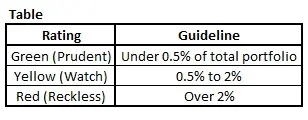
Rationale: At 0.5%, a 50% Bitcoin crash costs the total portfolio 0.25%. At 2%, the same crash costs 1%. For a retirement fund with 4-6% annual return targets, a 1% single-asset drawdown is significant.
Criterion 2: Disclosure Quality
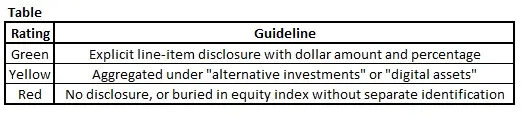
Rationale: Beneficiaries deserve to know. Fiduciaries who hide crypto exposure in generic categories are not serving transparency.
Criterion 3: Entry Timing
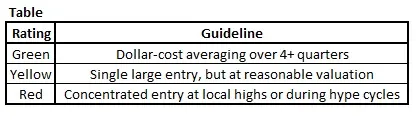
Rationale: Jersey City's 2% allocation at 2024 highs, subsequently trimmed, illustrates timing risk. Wisconsin's gradual accumulation shows discipline.
Criterion 4: Diversification Within Crypto
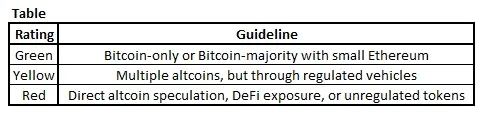
Rationale: Pension funds have no business in speculative tokens. Bitcoin's institutional infrastructure is maturing. Everything else remains experimental.
Criterion 5: Exit Strategy
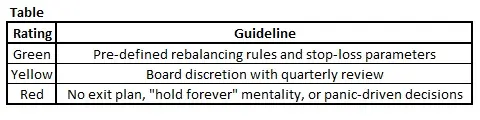
Rationale: The only thing worse than entering without a plan is exiting without one. Wisconsin's 2027 target policy review date shows foresight.
The 4,000 Funds Sitting It Out: Opportunity or Warning?
For every Wisconsin, there are 200 CalPERS. The California Public Employees' Retirement System, the largest US public pension at $465 billion, has explicitly excluded direct cryptocurrency investment. Its 2025 investment policy states: "Cryptocurrencies and related digital assets do not meet the fund's criteria for prudent investment due to volatility, custody complexity, and regulatory uncertainty."
This is not ignorance. This is a different fiduciary calculation.
The Conservative Case
CalPERS' reasoning, shared by most non-participating funds, rests on three pillars:
Volatility mismatch. Pension funds have liability profiles stretching 30-50 years. They need predictable cash flows for benefit payments. Bitcoin's 60-80% annualized volatility creates funding ratio risk that actuaries struggle to model.
Correlation uncertainty. Bitcoin's promise as "digital gold" and uncorrelated asset depends on crisis behavior that remains unproven at scale. If Bitcoin correlates with equities during the next major downturn, it fails its portfolio purpose precisely when most needed.
Political and reputational risk. Public pension board members are political appointees or elected officials. A crypto loss becomes a campaign issue. The asymmetric risk (blame for losses, no credit for gains) discourages innovation.
The Political Backlash States
Several states have moved beyond passive non-participation to active prohibition. Texas legislation (HB 4258, 2025) restricts state pension crypto allocation to 0.25% and requires legislative approval for any increase. Florida's SB 184 (2026) mandates quarterly beneficiary disclosure for any crypto holding over $1 million. Ohio's pending HB 312 would prohibit direct cryptocurrency holdings entirely while permitting ETF exposure.
This patchwork creates a compliance nightmare for multi-state pension consultants and may slow the adoption wave in conservative jurisdictions.
What's Coming in 2027: The Timeline That Matters
Q3-Q4 2026: The Disclosure Flood Is Beginning
The 2025-2026 CAFR cycle (reports published through December 2026) will reveal the full extent of 2026 entries. We expect 40-60 additional funds to show first-time crypto exposure. The critical date is October 15, 2026, when GASB Statement 96 implementation guidance clarifies how crypto holdings must be reported. This may force currently opaque funds to explicit disclosure.
Q1 2027: The Consultant Recommendations
Mercer, Aon, Willis Towers Watson, and other major pension consultants are completing 2026 "asset class reviews." Several have circulated draft recommendations suggesting 0.25-0.75% Bitcoin allocation as standard policy. When these become formal recommendations (expected January-March 2027), the next adoption wave will follow. Consultant-driven adoption is slower than headline-driven, but structurally larger.
The Regulatory Wildcards
Three pending developments could accelerate or reverse the trend:
The CLARITY Act revival. The bill's July 2026 procedural death (which you covered) may be reversed in September 2026 reconciliation. If passed, explicit federal crypto retirement asset treatment would remove the last major legal ambiguity.
SEC custody rulemaking. Expected Q4 2026, this may permit or prohibit specific custody arrangements that affect pension operational feasibility.
GASB crypto standards. The Governmental Accounting Standards Board's anticipated 2027 guidance will standardize disclosure, potentially forcing laggard funds into transparency they currently avoid.
What You Should Do Right Now
If Your Pension Is In
Do not panic. At current allocation levels (under 1% for most), Bitcoin volatility is a rounding error in your total portfolio. Do verify your fund's scorecard rating. If it scores red on multiple criteria, consider attending the next public board meeting and asking questions during public comment. The mere presence of informed beneficiary scrutiny improves fiduciary behavior.
If Your Pension Is Out
You are not missing a generational opportunity. You are avoiding a generational experiment. The appropriate posture is watchful waiting, not FOMO-driven pressure. If you believe crypto belongs in retirement portfolios, the more effective path is increasing your personal allocation through IRA or 401k options, not lobbying your underfunded state pension to speculate.
If You Don't Know
This is the most dangerous position. Find out. Use the CAFR process above. Submit the FOIA request. The information is yours by right. The only thing worse than a pension with crypto exposure you dislike is a pension with crypto exposure you don't know about.
The $47 billion is already in motion. The question is whether you are informed enough to have a position on it.
FAQ’s
Q: Is my 401k different from a pension in crypto exposure?
A: Yes. 401k plans are defined contribution (you own the account). Pension plans are defined benefit (the fund owes you a payment). 401k Bitcoin options are expanding through providers like Fidelity. Pension crypto exposure is fund-level, not individual choice.
Q: Can I opt out of my pension's crypto allocation?
A: Generally no for defined benefit plans. Some systems allow beneficiary-directed investment choice for a portion of benefits. Check your SPD.
Q: Does Bitcoin in my pension mean I will pay taxes on it?
A: No additional tax for defined benefit recipients. The pension pays tax on investment gains; you pay ordinary income tax on distributions. For defined contribution, standard retirement account rules apply.
Q: What if my pension fund loses money on Bitcoin?
A: At sub-1% allocations, the impact is minimal. The greater risk is opportunity cost: if Bitcoin appreciates significantly and your fund missed it, the underfunding gap (already severe for many systems) widens.
Q: Are international pension funds doing this?
A: More cautiously. Switzerland's Zuger Kantonalbank, some Japanese government pension investment fund experiments, and several UK local government schemes have small allocations. EU MiCA compliance creates barriers US funds do not face.
Q: How often do pension funds update their crypto holdings?
A: CAFRs are annual. 13Fs are quarterly. Real-time disclosure is rare. The information you find may be 3-12 months stale.
Key Takeaways
- At least 23 US public pension systems hold Bitcoin or Bitcoin-proxy exposure, with combined fund assets near $800 billion.
- Direct ETF holdings ($2.8B) are dwarfed by indirect exposure ($6B+) through MicroStrategy, Coinbase, and mining equities that most beneficiaries never identify as "crypto."
- The "Prudent or Reckless?" scorecard gives any beneficiary a framework to evaluate their specific fund's approach across five criteria.
- Every public pension CAFR is public and searchable. You have the right to know. The tools above make finding out straightforward.
- 2027 will be decisive. Consultant recommendations, GASB standards, and the CAFR disclosure cycle will reveal whether 2026 was the beginning of mainstream adoption or a speculative peak.
Disclaimer
Not Financial Advice. This article is for informational and educational purposes only. It does not constitute investment advice, financial planning guidance, or a recommendation to buy, sell, or hold any cryptocurrency, pension fund investment, or other financial instrument.
Do Your Own Research. The information presented is based on publicly available disclosures (CAFRs, SEC filings, and official pension fund reports) as of the publication date. Pension fund holdings change continuously. Verify any specific claim directly with your pension administrator or through official filings before making financial decisions.
Consult a Professional. Decisions about retirement investments, pension allocations, and cryptocurrency exposure should be made in consultation with a qualified financial advisor, fiduciary, or pension specialist who understands your individual circumstances, risk tolerance, and legal jurisdiction.
Accuracy Limitations. While every effort has been made to ensure accuracy, the $47 billion estimate is an approximation based on disclosed and estimated holdings. Actual figures may differ. Indirect exposure calculations (through MicroStrategy, Coinbase, and mining equities) involve assumptions about correlation and effective Bitcoin exposure that are subject to interpretation.
No Liability. The author and publisher assume no liability for any financial loss, decision, or action taken based on the information in this article.






