
Listen to my Nifty Buckles Folklore Podcast please click on the link.
https://www.buymeacoffee.com/niftybuckles/lammas-lughnasdah-ancient-celtic-harvest-festival
Lughnasadh pronounced Loo-NAS-ah is an ancient Celtic, early pagan, harvest festival it’s cited in early Irish literary works. Lughnasadh, represents Lugh the Gaelic pagan, three-faced god that embodies life, death, and rebirth. It was observed throughout Ireland, Scotland and on the Isle of Man. Lugh is depicted as a Raven in Irish Folklore. His mythical foster mother Tailtiu is depicted here too. Folklore cites that Tailtiu (earth mother) was said to have cleared the lands of Ireland to make way for the planting of crops yet died abruptly after planting the crops.
Lammas is the Anglo-Saxon name it means “Loaf Mass.”
Below a picture of The Wheel of The Year depicting August 1st Lugh short for Lughnasadh or Lammas.

Lughnasadh is also named Lúnasa (Modern Irish)
Lùnastal (Scottish Gaelic)and Luanistyn (Manx Gaelic).
According to early Irish mythology, the smith is called Goibhniu and is teamed with two brothers to create a triple god-form. The three craftsmen construct weaponry and carry out repairs on Lugh’s behalf as the entire tribe of the Tuatha De Danann prepares for war. In a later Irish tradition, the smith god is seen as a master mason or a revered builder. In some legends, Goibhniu is Lugh’s uncle who saves him from Balor and the monstrous Fomorians.
Lughnasadh is the first of the three harvest festivals. It’s the grain harvest, which led to the name Lammas – “loaf mass.” But before we can bake the loaf, the grain must be cut down.
There were three men came out of the West,
Their fortunes for to try,
And these three men made a solemn vow:
John Barleycorn must die.
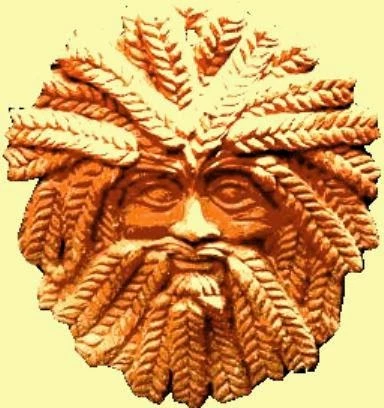
Above Photo of a Bread loaf of John Barleycorn in the Public Domain
John Barleycorn must die originated in the 1300’s.
Lammas is the Anglo-Saxon name for Lughnasadh meaning “Loaf Mass.”
It was originated from Old English era where the farmers and village folk, that marked the first harvest bounty by baking bread loaves in honor of their deities.
Lughnasadh, is one of four periodic festivals, besides Imbolc, Beltane, and Samhain. It is similar to Welsh Gŵyl Awst and the English Lammas, European harvest festivals.
According to Irish myths, Lugh began this festival as a funeral feast, accompanied by funeral games of athleticism. In honor of his mother or stepmother “Tailtiu” an earth mother goddess who died from exhaustion clearing the Irish landscape for agriculture. These athletic games also named Tailteann or Óenach Tailten similar to ancient Greek Olympic games.
During the 18th century into the mid 20th century, several articles of Lughnasadh customs and folklore were recorded.
In the 1962 Festival of Lughnasadh, a study of Lughnasadh by folklorist Máire MacNeill, was published. MacNeill studied surviving Lughnasadh customs and folklore as well as the earlier accounts and medieval writings about the festival. She concluded that the evidence testified to the existence of an ancient festival around 1 August that involved the following:
“It involved great gatherings that included religious ceremonies, ritual athletic contests (most notably the Tailteann Games), feasting, matchmaking, and trading. There were also visits to holy wells. According to folklorist Máire MacNeill, evidence shows that the religious rites included an offering of the ‘first fruits’, a feast of the new food and of bilberries, the sacrifice of a bull and a ritual dance-play in which Lugh seizes the harvest for mankind and defeats the powers of blight. Much of the activities would have taken place on top of hills and mountains.”
Lugh the three faced god altar pictured below.
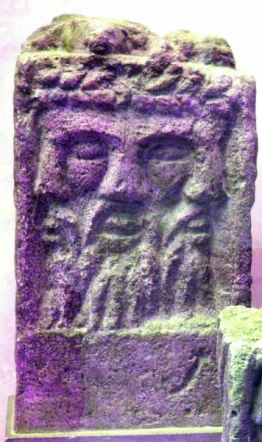
Lughnasadh customs continued throughout the 20th century, with the festival sporting various names such as ‘Garland Sunday’, ‘Bilberry Sunday’, ‘Mountain Sunday’ and ‘Crom Dubh Sunday’.
The climbing hills custom during Lughnasadh has endured in areas, it has been re-jigged as a Christian pilgrimage. The most popular is the ‘Reek Sunday’ pilgrimage to the top of Croagh Patrick on the last Sunday in July.
Several fairs are also believed to be survivals of Lughnasadh, for example, the Puck Fair. Today’ since the late 20th century, Celtic neopagans have observed Lughnasadh, or similar based on it, as a spiritual, holiday.
Presently, in some regions, aspects of this harvest festival is now rekindled as an inspirational custom.
In several folklore traditions, sunflowers are considered good luck. Planting them around your home and garden will bring superb fortune your way. It is also said that if you pick a sunflower at sunset, then wear it on your person, it will bring you enchanting luck the next day.
Sunflowers are linked with truth, loyalty, and honesty. If one wishes to know the truth about an issue or someone, sleep with a sunflower under your pillow – and the next day, before the sun goes down, the truth should be revealed to you.
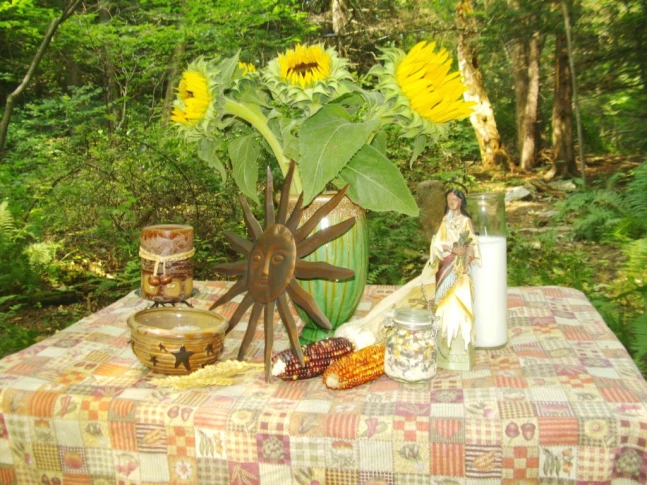
Have a blessed Lammas! 😊
Sources & References:
Grundy, Valerie; Cróinín, Breandán, Ó; O Croinin, Breandan (2000).- The Oxford pocket Irish dictionary: Béarla–Gaeilge, Gaeilge–Béarla / English–Irish, Irish–English. Oxford University Press. ISBN 0-19-860254-5.
MacKillop, James (1998). Dictionary of Celtic mythology. Oxford University Press. ISBN 0-19-280120-1.- Featured photo of a Lammas Festival held in East England, UK.
- Images in Public Domain






