
Since artificial intelligence has become an integral part of our lives and has been harnessed to serve humanity, there has been a lot of debate about its pros and cons, but, this is not the point of my modest article, rather the important point is to what extent a person can use artificial intelligence without violating copyrights if they exist really?
Usually, when we read a book or any piece of literature, science or else, we come across the famous notice that all rights are reserved and no commercial use is permitted. In fact, the writers or creators, in general, claim copyrights for their contents because they own the idea of the creation, and they are the ones who had used all their energies and skills to obtain a valuable content that reaches fame or becomes known on the scene as a source of knowledge .

But the permanent question that arises is : Who is claiming the copyrights of the content generated by artificial intelligence?
It is natural for a writer or any creator to defend his content or invention because he has dedicated all his strength and talent to it. It makes no sense for someone to just take contents and label them unfairly and tirelessly. However, when it concerns the content of the artificial intelligence, things change somehow . There are some views who say it has no copyright, yet, at the absence of a claim by the owner of the original content, chatbot generators can be copyrighted to individual users or companies that developed the AI.

It seems a bit confusing, whether we are permitted or not to benefit from the artificial content. All this jumble makes us wonder what is the point of the invention of artificial intelligence if we do not exploit it in all areas of our life, including writing and creativity in all its forms?!!
The highly advanced artificial intelligence technologies have facilitated many tasks for humans and have been able to reduce the burden of some jobs and shorten the time, in addition to reducing the costs, for example writing articles , essays, forming pictures, paintings, designs, and many other stuffs.
Accordingly, each year the world celebrates Intellectual Property Week to emphasize on the content copyrights. Publishing laws protect the rights of companies, editing houses, and writers. They are always highly effective in preventing outright forgery and plagiarism. Nonetheless, these laws face great challenges today, to keep pace with digital development, specifically with the artificial intelligence systems.
Actually, the principle of copyright law is based on the protection of human-generated content. Just for reference, the duration of the author's copyrights remain preserved and extend throughout his life, and after 50 to 100 years of his death, then the edition and copyrights end.

On the other hand, the algorithms behind ChatGPT were developed at OpenAI, in a way or another it appears that the company has copyright protection on those algorithms. In connection with this, some cases were really excluded, and the US Copyright Office indicated that the material created by artificial intelligence can be protected if the publisher shows that he is involved and the one who created it making efforts on it , or if he confirms that the role of the artificial intelligence was only an auxiliary role for him . Thus, the products of the artificial intelligence cannot be subject to copyrights, because they are not protected except under some specific conditions as mentioned above .
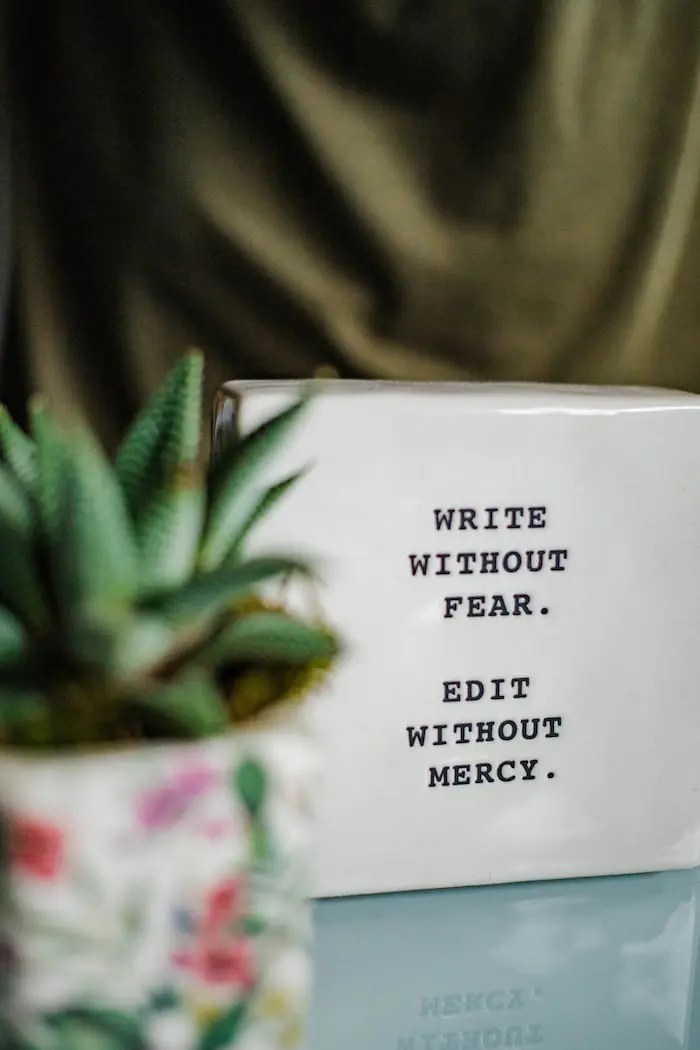
The artificial intelligence may help us to refresh our thoughts or correct our spelling or grammatical mistakes, but no matter how skilled it seems in writing, its energy is limited, in addition, it doesn't got that sense or feeling to grasp all aspects of the subject, therefore, it cannot overcome the power of the human being brain. Indeed, we may not write articles at a high level as well as the artificial intelligence, but when we use our own thoughts and rely on our selves to write a specific topic with our own efforts, we feel proud of it even if others don't like it. The use of the artificial intelligence has become widespread across all platforms including publish0x, well I guess, and I hope I am mistaken. Although its use is prohibited, I think there are many who rely on it even the famous authors do . Whether the artificial intelligence has copyrights or not, this is no longer the matter. For me, using it is firstly, so humiliating because it only means a lack of self-confidence, creativity and the inability to write down our visions of things in a simple and an impartial way without recourse to ChatGPT, secondly, it will become a habit to rely on a robot to write for us which will, undoubtedly, lead to some kind of laziness of the brain's activity.
To conclude, the artificial intelligence maybe helpful in many ways to write or else, it may either got copyrights since it's human's reproduction or mechanical without copyright content , but whether we are permitted to use this robotic creativity or not remains up to each one's opinion and mentality about the real sense of creativity thinking and his notion about the art of writing.
Thanks for taking time to read.
Resources :
https://theconversation.com/generative-ai-is-a-minefield-for-copyright-law-207473
https://hbr.org/2023/04/generative-ai-has-an-intellectual-property-problem






