

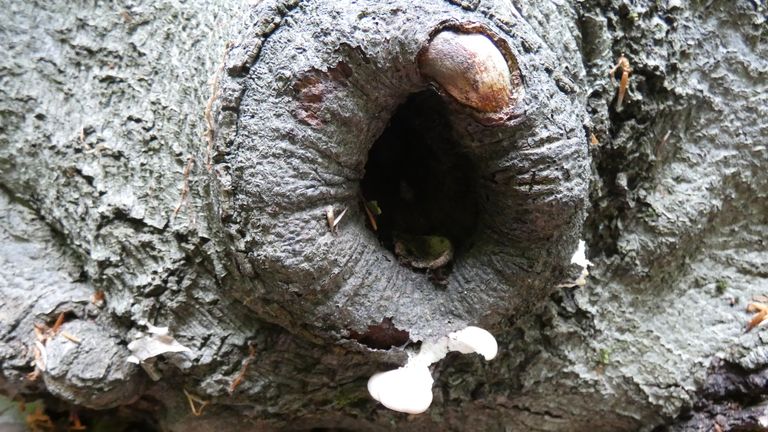


I found these tasty and very healthy mushrooms in the "Góra Chełm" nature reserve. Theoretically, you should not meet them at this time of year, because they are fungi that like low temperatures and high humidity, and their appearance falls on late autumn.


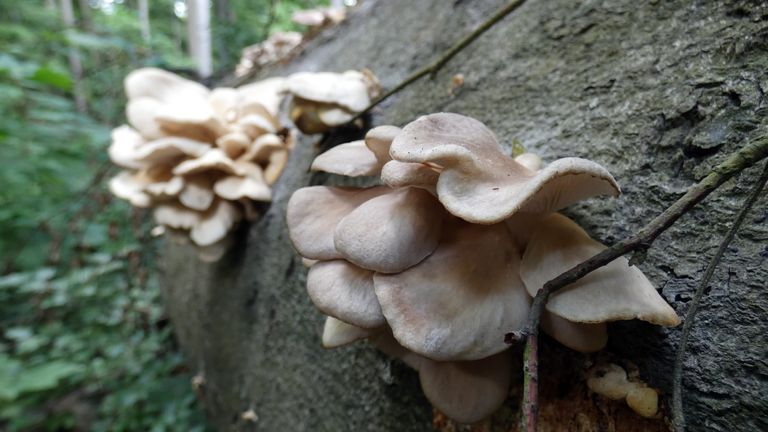

Nevertheless, the mountain on which the reserve was created is a very specific place, located in the area of the Jura Krakowsko-Częstochowska. Although it is only 50 km from my house, the growing season starts there with a big delay of about 2 weeks. When the first buds on the trees appear at my house, it is still winter there, it is gray and gloomy.


The second element that affects the appearance of late-autumn mushrooms there in spring is the specific climate.


It is always cooler at the top, and even in the dry summer there is a lot of humidity up there. Such conditions are created due to the fact that no work is carried out there. Trees that have died for various reasons will always be there. Grass that grows luxuriantly and lack of light keep the place very humid. Juices contained in huge fallen beeches enable the vegetation of all kinds of nature.

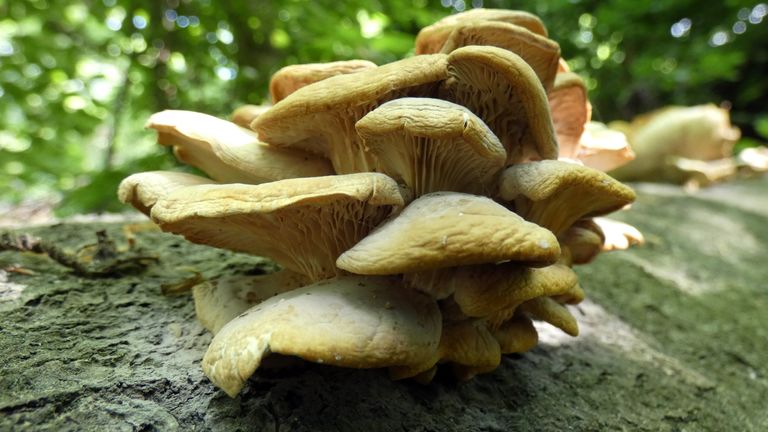
Indian oyster, also called pulmonary oyster mushroom, is not a very common fungus. There must be appropriate weather conditions.


It can be found in the Carpathian beech forest, on fallen beeches, ashes, poplars, oaks, sometimes on willow or rowan. It does not occur in conifers. It grows in clusters, in groups.


It is a very tasty species of mushroom, and I had the opportunity to obtain it in June and eat it in scrambled eggs.


The mushroom can have a fairly large cap, up to 15 cm in diameter, but such specimens are hard, stringy, and generally inedible.


The hat is spoon-shaped, later scalloped, bent. The color of the cap is white, cream or light gray. Over time, exposed to the sun, it turns yellow and wrinkles.


The lamellae are dense, converge on the stem. The leg is placed on the side and is white in color. The flesh has a sweetish taste and a mushroom smell.






