

Neoboletus erythropus - from toddler to old man
Krasnoborowik ceglastopory - od malucha do starucha

The hat can be up to 20 cm in diameter, the color of the hat in most individuals is dark brown, dark brick red, sometimes with a greenish tinge. The surface of the hat is dry and dull.
Kapelusz może mieć średnicę nawet do 20 cm, kolor kapelusza u większości osobników ma kolor ciemnobrązowy, ciemno-ceglasty, czasami z zielonkawym odcieniem. Powierzchnia kapelusza jest sucha, matowa.


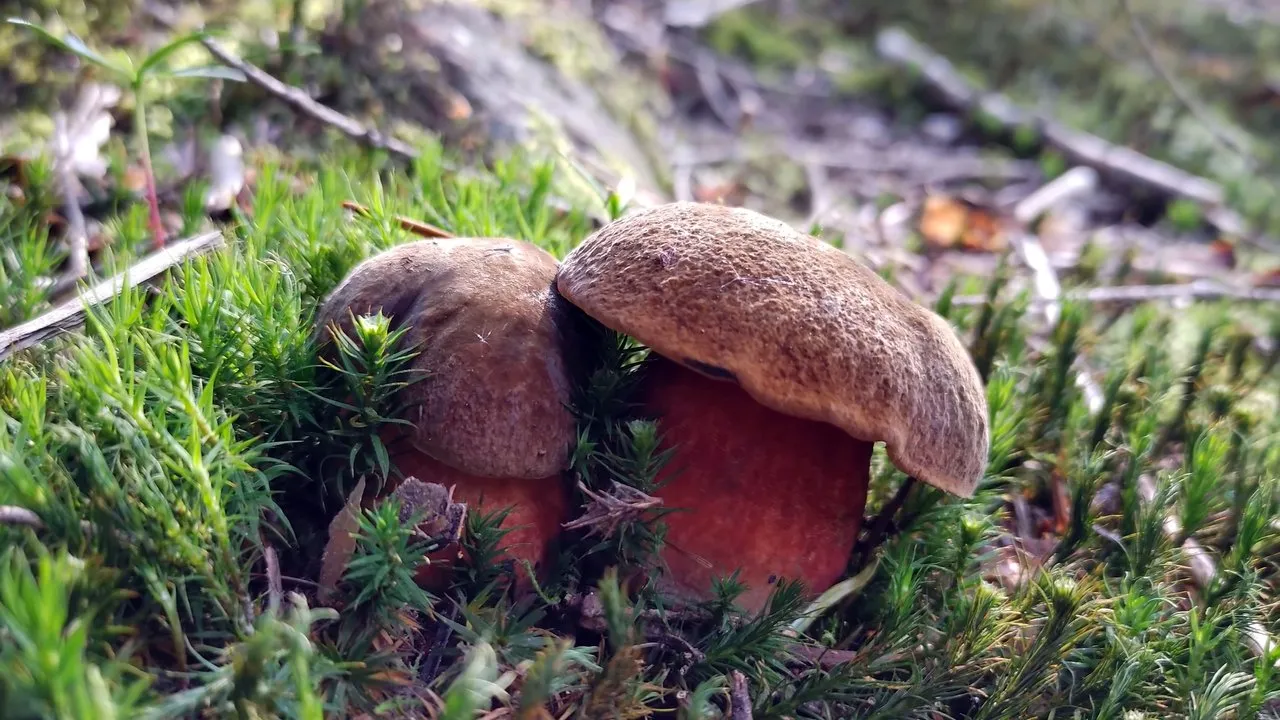
Growth phases of the brick red boletus
Fazy wzrostu krasnoborowika ceglastoporego
The shape of the hat in young fruiting bodies is spherical, then hemispherical, cushion-shaped. In old fruiting bodies, the cap becomes flat and even turned upwards. The hat is very hard fleshy.
Kształt kapelusza u młodych owocników jest kulisty, potem półkulisty, poduszkowaty. U starych owocników kapelusz staje się płaski a nawet wywinięty do góry. Kapelusz jest bardzo twardy mięsisty.


In young mushrooms, the tubes are yellowish-olive, then orange, and finally brick red, blood red. When pressure is applied or the tubing is damaged, it turns brown.
U młodych grzybów rurki mają kolor żółtawooliwkowy, później pomarańczowy, aż w końcu są ceglasty, krwisto czerwony. Przy nacisku lub uszkodzeniu rurki sinieją.


The leg of young fruiting bodies is yellow, with a visible delicate mesh, red villi. In mature specimens, the color of the strainer is dominant. The young fruit body has a massive leg, becoming cylindrical over time. It is full inside and turns dark blue when damaged.
Nóżka u młodych owocników ma żółty kolor, z widoczną delikatną siateczką, kosmkami w kolorze czerwonym. U dojrzałych osobników kolor siateczki dominuje. Młody owocnik ma nóżkę masywną, z czasem staje się cylindryczna. W środku jest pełna, po uszkodzeniu zmienia kolor na ciemnogranatowy.


The flesh is yellow in color, it changes color when damaged or cut to become bluish gray, bluish. It is very hard and firm. Slightly mushroom and mild in flavor and aroma.
Miąższ ma kolor żółty, zmienia barwę po uszkodzeniu lub przecięciu na sino-szarą, sinoniebieską. Jest bardzo twardy, jędrny. W smaku i zapachu lekko grzybowy, łagodny.


Occurrence. Most often it can be found in mountain areas, in spruce and fir forests. It often grows under beeches and oaks. It likes acidic soils, but it is also found on calcareous soils, e.g. in the vicinity of the Kraków-Częstochowa Upland. This is one of the first porcini mushrooms that can be found in the forest. It appears in May and grows until November.
Występowanie. Najczęściej można go spotkać na terenach górskich, w lasach świerkowych, jodłowych. Często rośnie pod bukami, dębami. Lubi kwaśne gleby, ale spotykany również na glebach wapiennych, np w okolicy Jury Krakowsko - Częstochowskiej. To jeden z pierwszych borowików jakie można spotkać w lesie. Pojawia się już w maju, a rośnie aż do listopada.


Application. A very tasty edible mushroom after boiling or frying. Valued for its hardness, resembling meat in texture, which remains even after heat treatment. When raw, it is slightly poisonous and can cause stomach problems.
Zastosowanie. Bardzo smaczny grzyb jadalny po ugotowaniu lub usmażeniu. Ceniony za twardość, przypominającą w konsystencji mięso, która utrzymuje się nawet po obróbce termicznej. W stanie surowym jest lekko trujący i może spowodować problemy żołądkowe.






