
This week, with annoying cold weather ahead and rain in the morning, around noon, we decided to cycle to the village of Kharajgil.
I, personally had never been there before and I knew that if we wanted to go till the end of the route, we would have a steep mountain ahead, but we just went up the riverside. Also, most of our friends refused to come because of the bad rainy weather.


The route was relatively crowded and many cars were moving on both sides. Many cafes and shops were closed because of the COVID-19, but to compensate for all these bad fortunes, the river had a magnificent color.
A soft pale blue-green color that bore no resemblance to the roaring waves that were passed through it. My cellphone couldn't catch the beautiful color I was seeing, probably not enough quality, but the lenses in my eyes were perfectly qualified.
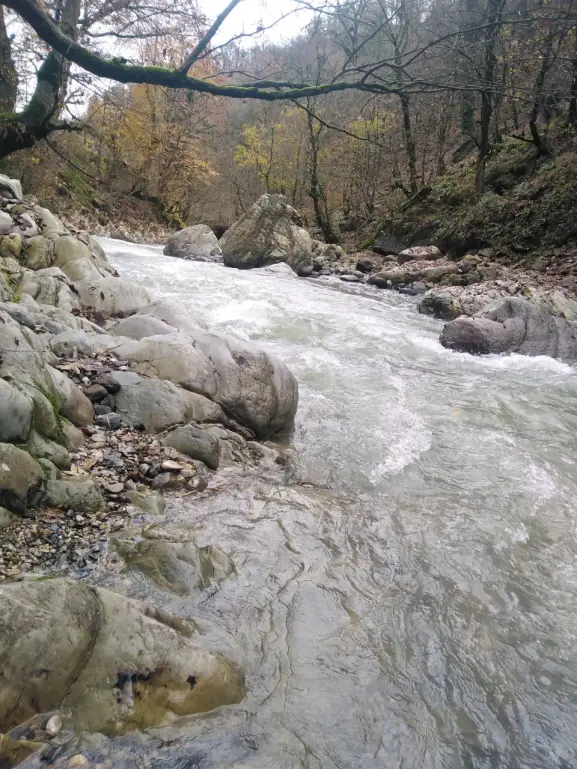
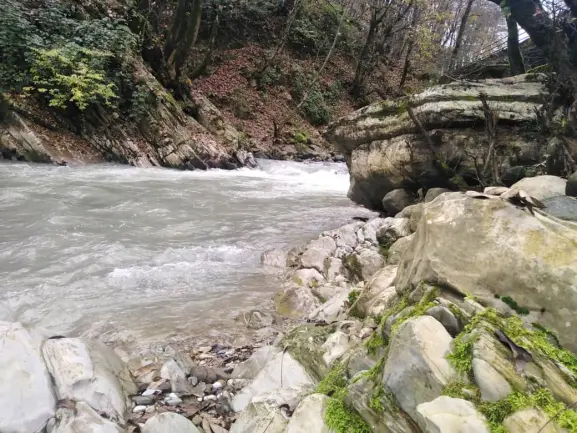
My friends and I had to get back as soon as possible, but I told them I must go by the river and spend some time there before returning. I have come all this way and this is my reward. The air was cold, the wind was brutal, and staying still was making my body weak. No way I could wait there for a long time, and we had to move quickly. Coming up the riverside, I turned back and took another look at the river … it was absolutely amazing.

Kharajgil is a village in Talesh County, Gilan Province of Iran.
Kharaje is the local name of a plant that is found in abundance in the plains and inside the rice fields here and Gil means mud. So, Kharajgil means the soil on which Kharaje grows.
Another meaning attributed to this place is derived from the name of a woman named Khadijah who seems to have disappeared in this place and gin means lost.
The people of this region speak the Taleshi language, and most of them are from the Taif tribe, they are poor and many have migrated. Given that this is one of the green areas with beautiful and untouched nature, for many years, people have been making a living by renting their houses to tourists, baking local bread, selling dairy products, cobs, honey, and handicrafts, building cafes, hookah houses, and so on.






